
ICU of the Future
A bold project to reimagine the ICU environment to optimise patient outcomes

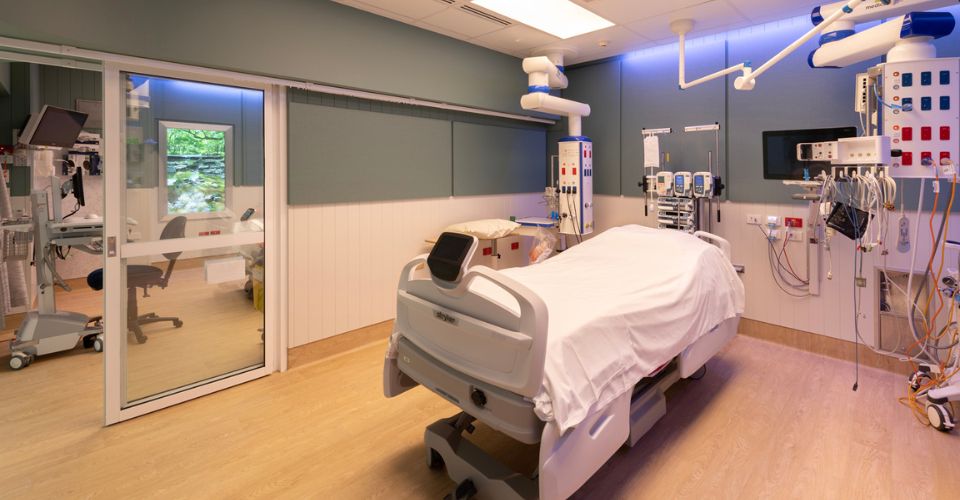
Advances in modern medicine and exceptional patient care mean many critically unwell people survive following a period of treatment in the Intensive Care Unit (ICU). However, a significant percentage of them describe experiences like hallucinations, nightmares, cognitive decline, PTSD and long struggles to return to work or daily life. In fact, globally, up to 80 per cent of people who survive their stay in an ICU experience cognitive, psychiatric, and/or physical symptoms after their critical illness.
Internationally-renowned intensivist Professor John Fraser AO, who is Founder and Director of the Critical Care Research Group (CCRG) headquartered at The Prince Charles Hospital, had seen these devastating consequences first-hand. He set out on a mission with other clinicians and researchers to find out why surviving the ICU does not always mean thriving and how the ICU environment itself contributes to patients’ recovery. After several years of research, collaborative development, and support by many, including hundreds of the Foundation’s generous donors, two reimagined ICU bedspaces, called the ICU of the Future (ICUOTF), were opened at The Prince Charles Hospital.
Sara Bodlak is one of more than 300 patients who have been treated in these bedspaces since their unveiling in 2022.
In 2023, a then-17-year-old Sara began experiencing cold and flu-like symptoms.
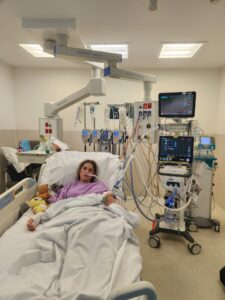
Over the next couple of weeks, her health progressively deteriorated, and she became so lethargic and unwell that she was admitted to The Prince Charles Hospital, where she was later diagnosed with atypical pneumonia.
“She went into the thoracic ward in the evening … she was in quite a bad state and about 4:00 am she started coughing to the extent that she couldn’t breathe,” recalled Pavlina, Sara’s mother.
“I quickly buzzed someone. The doctor came, he checked the machines and realised that she wasn’t receiving enough oxygen. He called the medical emergency team (MET). From that point, it went really quickly. The whole team turned up, and when she started coughing again, they realised how serious it was.”
That night, Sara stayed in one of the standard beds in the Intensive Care Unit (ICU).
Sara’s mum said, “We’d never been to an ICU before. There were all these state-of-the-art machines and a large care team attending to her. The care she received was amazing.”
Sara moved to the ICU of the Future bedspace
The following day, Sara was transferred into one of the ICU of the Future bedspaces.
Among the differences between the standard ICU beds and the ICUOTF bedspaces that Sara and her mother remember most were the significantly reduced noise levels, privacy, and the digital screens that display images of nature.
“It is quite a comfortable space. Also, I was too sick to watch TV, and I was incapable of walking, so just the digital window and the roof were lovely, watching the trees sway back and forth, rather than just staring up at the ceiling,” explained Sara.
“Honestly, I don’t think my sister even realised how sick I was. She said, ‘You were in a nice room, and there were no beeping machines.’”
The hope of those in the ICUOTF team was to develop a redesigned ICU environment that optimises healing and recovery while ensuring clinical efficiencies remain at the highest standard.
“It almost felt like home. The first thing is that it’s fully enclosed, insulated from any noise and anything that’s happening outside. So, you could close the doors, well, almost close the door and leave a small gap, but this still pretty much removes all the noises. There was enough space for me to be there as well. Plus, for the night, they brought in an additional bed so I could sleep on a proper bed, which was great,” recalled Pavlina.
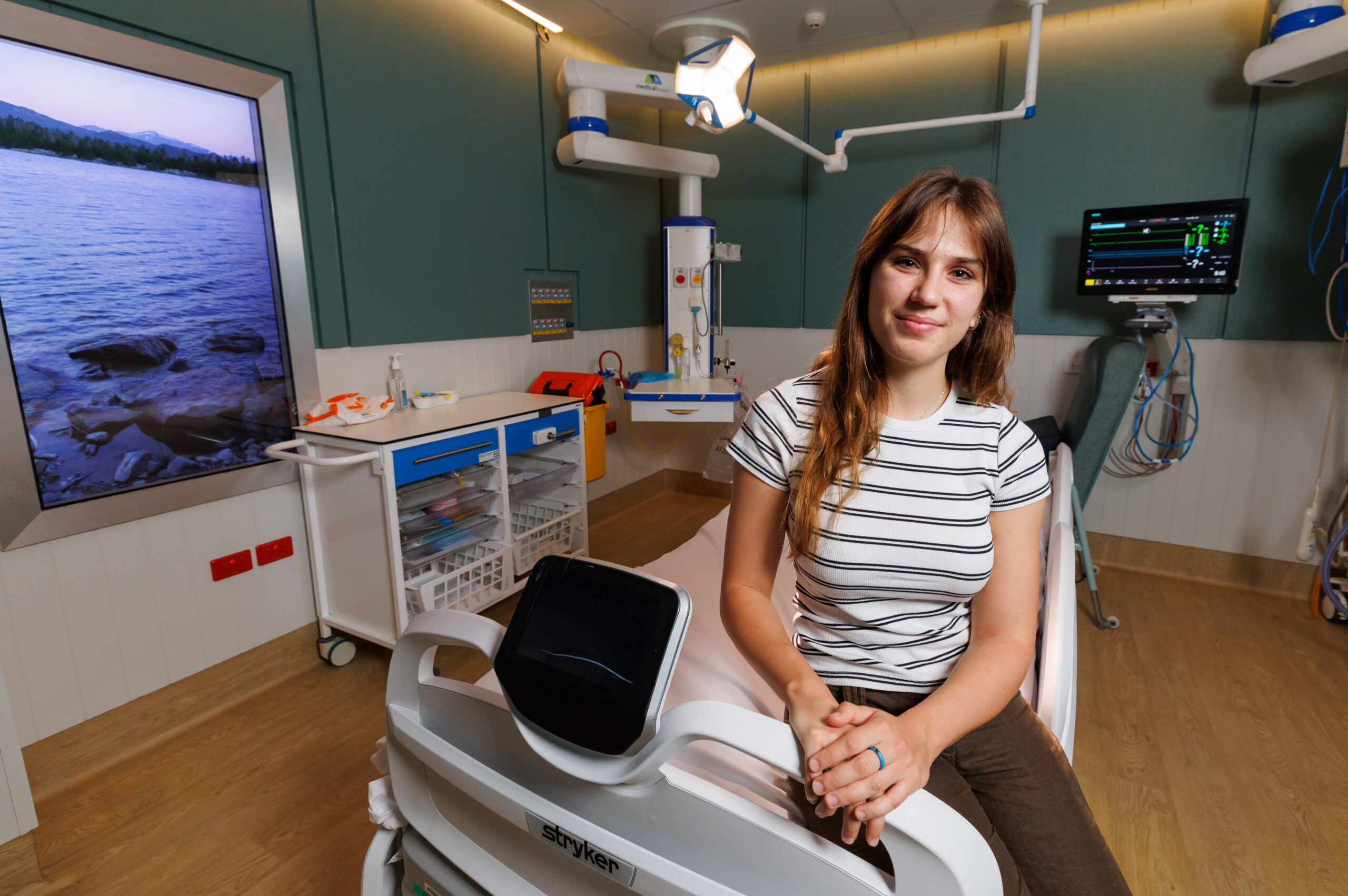
Former ICU patient Sara Bodlak returned to the ICU of the Future at The Prince Charles Hospital. Picture Lachie Millard, The Courier Mail
It is quite a comfortable space. Also, I was too sick to watch TV, and I was incapable of walking, so just the digital window and the roof were lovely, watching the trees sway back and forth, rather than just staring up at the ceiling.
– Sara, ICU of the Future patient
About the development of the ICU of the Future
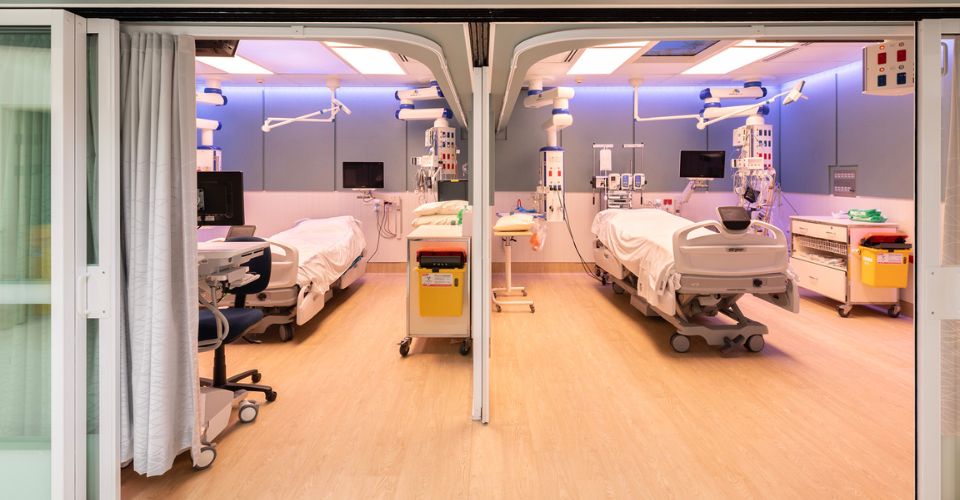
Professor John Fraser AO first conceptualised the idea in 2017.
Following this, there were five years of collaborative development, powered by the generosity of the Foundation’s supporters. The process involved engineers, architects, builders, medical companies, ICU staff, and researchers, with patients and their families essential members of the team throughout the whole project, sharing their stories to enable a better understanding of the stressors that affect people during an ICU stay.
“Each year, an estimated 15–20 million patients are admitted to intensive care units worldwide. While survival has traditionally been the benchmark of success, growing evidence shows many patients leave the ICU with devastating complications. Up to 80 per cent of ICU patients experience ongoing physical, cognitive or psychological challenges following discharge, with many cases linked to environmental factors within ICU settings,” explained Professor Fraser.
Project Manager and Clinical Research Lead for CCRG, Dr Oystein Tronstad, says that challenges faced by ICU patients, such as sensory overload during their stay and sleep deprivation, are being increasingly recognised as preventable.
Research confirmed that at night in a standard ICU bed, peak noise levels were of similar loudness to common power tools, constantly disrupting patients’ sleep, and during the day, it was likened to trying to sleep in the middle of a motorway.
Dr Tronstad said, “By targeting modifiable factors such as noise, lighting, acoustics, and exposure to nature, the initiative aims to reduce delirium, improve sleep quality, and support better long-term recovery outcomes.”
Features of the redesigned spaces
 Early research findings suggest that the changes have created a quieter and calmer space, with an 80 per cent reduction in monitor alarms.
Among the considered features included in the redesigned spaces are:
- Circadian lighting to mimic natural daylight and help people maintain their normal day-night rhythms.
- Acoustic panels to absorb noise.
- State-of-the-art beds and reconfigured equipment that improve comfort and clinical efficiency.
- Digital windows that create views of nature in rooms without windows.
- A softened architectural design that reduces the clinical feel and helps patients relax.
- Reducing the number and location of the alarms to avoid disturbing patients.
“These changes are helping to create more restorative environments for critically ill patients – an essential factor in reducing stress, improving sleep, and enhancing recovery,” said Dr Tronstad.
For Sara, she was extremely grateful to spend most of her ICU stay in these bedspaces.
“I’ve been back there twice now, as a healthy visitor, not as a patient, thank goodness. And, you know, I have no negative associations with the space at all, or any sort of nervousness going in or any sort of those that you might describe as PTSD symptoms,” said Sara.
Local application – global impact
Data collection and long-term patient follow-up is ongoing, and it’s expected that this evidence collection around these innovations could shape the next generation of intensive care design.
For now, the ICUOTF has captured interest across Australia and the world over the past couple of years, with St Andrew’s War Memorial Hospital, Brisbane, Gold Coast University Hospital and South Korea’s Hallym University Sacred Heart Hospital announcing they are adopting variations of the initiative.
“As ICUOTF continues to evolve, Queensland stands at the forefront of a global movement to redesign intensive care – not just to save lives, but to ensure patients can truly recover and thrive,” said Prof Fraser.
“We are incredibly grateful for people who’ve contributed their time, their expertise, and given money to this project. Without their support, this wouldn’t have happened,” Dr Tronstad said.
Powering today, reinventing tomorrow – your support contributes to life-changing research and patient care initiatives. Donate today and help people live healthier for longer for the next 40 years and beyond.