
Ned Powell:
From life-saving surgery
to giving back


Ned Powell was born with a life-threatening heart defect and required surgery at The Prince Charles Hospital when he was just ten days old. Now 26, he is living a fulfilling life and is extremely grateful for the care he received as a baby and the medical research that made this early life-saving intervention possible.
When Sal Powell was at her 18-week scan for her second baby, the doctor lingered a little too long when examining the baby boy’s heart. As a nurse herself, this behaviour made her nervous.
“They asked me where I was having the baby. I told them The Wesley and I asked why. Knowing that The Wesley didn’t have an ICU, I was becoming more concerned,” she recalled.
The obstetrician told her that her baby may have a heart defect and wanted her to see a paediatric cardiologist as soon as possible.
“We saw the cardiologist the next day, and he confirmed Ned had Transposition of the Great Vessels and that he would require surgery in his first week of life to repair the defect.”
Transposition of the Great Vessels, or Transposition of the Great Arteries as it’s also known, is a rare and serious heart defect where the placement of the two main arteries leaving the heart are switched.
It is life-threatening and meant his little developing body wasn’t receiving the oxygen-rich blood it needed. Before Ned was born, his parents were planning for the worst.
“I recall the first few days of Ned’s life being very, very emotional. Relief that he was alive but anxious about the days and weeks ahead,” Sal recalled.
“We found out that Ned also had a hole in his heart. Everyone seemed to think this was a good thing as it allowed the oxygenated blood to mix. To his mother, it felt like another complication. Ned went to intensive care, then special care.”
As a newborn, Ned was allowed to return home for six days.
“Ned did all the normal newborn baby things; however, he needed to be fed more frequently. As the week went on, things deteriorated. It was very hard to keep Ned awake to feed, and his colour started to change. He was starting to go into heart failure, and he needed to have surgery,” she said.
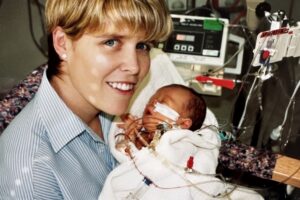
Surgery on Ned’s tiny heart at 10 days old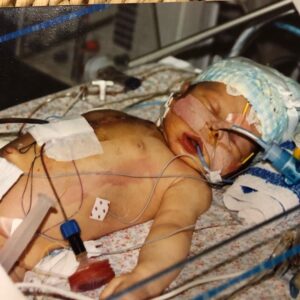
He was taken to The Prince Charles Hospital for surgery at 10 days old.
Doctors worked to mend Ned’s tiny and extremely delicate heart, which would have been about the size of a walnut.
“It was incredibly difficult handing Ned over to the nurses before surgery, and very overwhelming seeing him in intensive care post-operatively, looking like a Christmas tree. On both occasions, the nursing and medical staff at The Prince Charles Hospital were exceptional. I had full confidence that they were doing everything possible to ensure his survival and a positive outcome,” she said.
Ned’s childhood unaffected by his heart condition
The life-saving intervention in his earliest weeks meant that Ned’s life has not been impacted by his health and his heart.
“I had absolutely no barrier to playing sport. I was able to play rugby, run, swim, and do absolutely everything that anyone else could,” Ned recalled.
“There was a big scar down the middle of my chest, but that’s the only memory I have.”
Ned’s mum said he did, in fact, make the most of his unique start in life at times.
“Ned actually enjoyed his yearly check-ups and looked forward to seeing his heart on the screen. He was also very proud of his scar and would tell people it was his shark bite!” she explained.
Ned and his family give back to research
At 26, Ned now works in finance and has utilised his corporate connections to give back to the hospital and the medical research that saved his life.
“We are so incredibly grateful for the gift of life that early intervention surgery gave Ned. It was not that long ago that babies with a heart condition like Ned’s died soon after birth. Without medical research, new techniques, technologies and lifesaving discoveries would not occur,” said his mother, Sal.
“The dedication of research teams, their relentless pursuit to find new treatments, better techniques and outcomes, must be valued.”
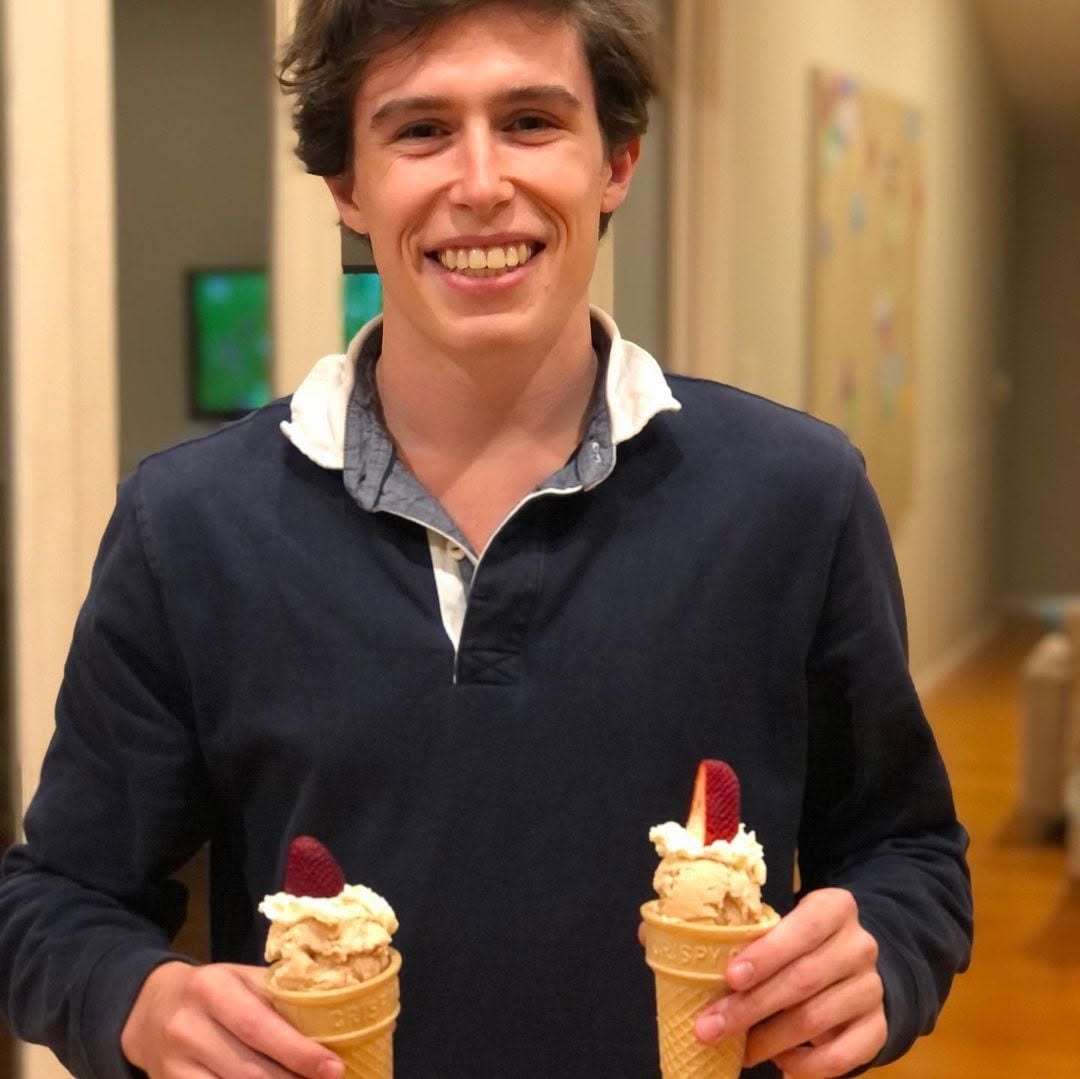
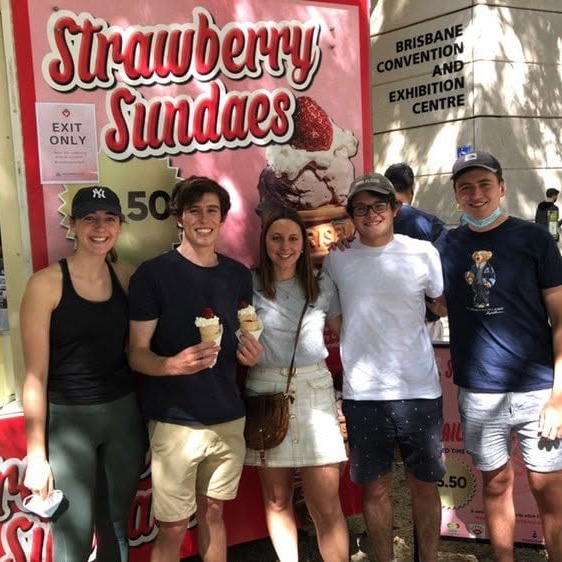
Our family story would be very different without Ned in it. We will be forever grateful.
– Sal Powell, Ned’s mum
Powell family connecting to the hospital during COVID-19 pandemic
The Powell family became involved with The Common Good during the COVID-19 pandemic, when they first bought a ‘make-your-own Ekka Strawberry Sundae pack’.
“That’s when I first reached out to The Common Good… saying, “Hey, look, this is such a great initiative,” said Ned.
“They set up temporary stalls outside the vaccination clinic at the Convention Centre, which is where I volunteered for the first time. People who were lining up for their COVID vaccine could stop and buy a strawberry sundae… all my mates booked in their vaccination times there and came past the stall to get ice cream.”
 Volunteering with KPMG at Ekka
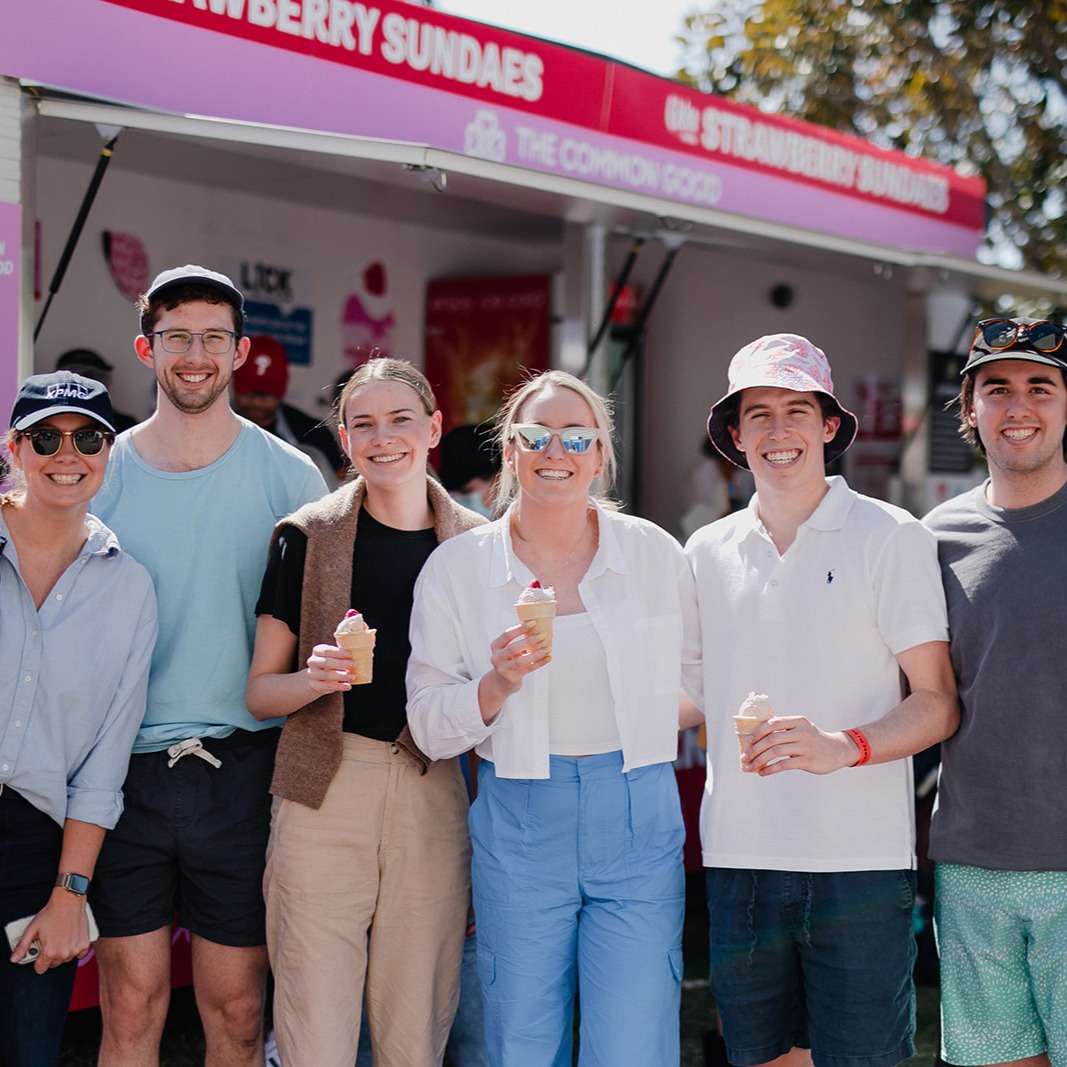
At the time, Ned worked at KPMG. His gratitude for the care he received, which stems from medical research, encouraged others in his office to donate their time to volunteer scooping strawberry sundaes when the Ekka returned.
“All big corporations encourage their staff to get involved in volunteering initiatives, and my team was excited to do something as a group. So, I suggested the EKKA,” Ned recalled.
Ned and his colleagues from KPMG scooped ice cream, chopped strawberries and served customers during their volunteer shifts at the 2022, 2023 and 2024 Ekka.
“The goodness of people was really eye-opening. If you don’t have a direct involvement to medical research, you know someone who does,” said Ned.
Care at TPCH continues into adulthood
Ned’s annual check-ups at The Prince Charles Hospital continued into adulthood.
“Dr Chris Whight was always so calm, always so great to be around. It’s a big reason why I was going to a paediatric cardiologist when I was 24. It always just felt very comfortable, and they really know your story,” said Ned.
We were told that down the track, he may need a valve replacement, but that wouldn’t happen until he stopped growing. Thankfully, he hasn’t required any further surgery and is living his best life.
– Sal Powell, Ned’s mum
Powering today, reinventing tomorrow – your support contributes to life-changing research and patient care initiatives. Donate today and help people live healthier for longer for the next 40 years and beyond.