
‘Big Jon’ Twartz:
Why he calls The Prince Charles
Hospital his second home

In 2011, ‘Big Jon’ Twartz had been working hard to improve his diet and exercise after a diabetes diagnosis, but a blister from his sandshoes led to an infection that was the beginning of a life-altering health journey. He developed sepsis and ended up in the Intensive Care Unit in a coma for several weeks. He was later diagnosed with an extremely rare chronic neurological condition which can cause many issues including muscle weakness, loss of mobility and difficulties with balance and coordination. It’s been 15 years since this diagnosis, and he credits the hospital for being here today.
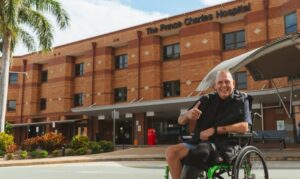 “I was going to the gym two nights, three nights a week, trying to improve my diabetes. I got a blister on my left toe. And then, yeah, I went to work on Wednesday, and within an hour or two, customers were saying, ‘Mate, you look like a ghost.’ I felt really sick, like I had the flu, like it was just a fever…So, I rang the manager and went home. We had a nanny at the time. I got him to take me to the doctors, and when we got there, the doctor said, ‘ You’re in the third stage of sepsis – septic shock,’ said Jon.
The GP called an ambulance, which rushed Jon to The Prince Charles Hospital.
Jon woke up nearly a month later in the Intensive Care Unit.
This was the terrifying beginning of a continuing health journey for Jon, who has now been hospitalised in The Prince Charles Hospital more than 400 times since.
“The sepsis infection started in the toe, went to the shoulder, and no one knew,” Jon recalled.
Along with the sepsis, Jon was diagnosed with Chronic Inflammatory Demyelinating Polyneuropathy or CIDP – a condition that affects the peripheral nervous system and breaks down the nerves of his body.
“What CIDP is, it’s an autoimmune disease that my body is fighting and trying to attack my nervous system. So, a good way of explaining it is like a jug cord. That cord’s got wires inside. Well, that’s your nerves. The plastic around would be the myelin sheath. So essentially, my immune system is trying to eat the plastic around the wires to get to the nerves. And that’s what my body’s doing right now… So, unfortunately, with the CIDP, your protective layer around the nerves is damaged and the treatment to slow the condition means I’m more susceptible to infection,” Jon explained.
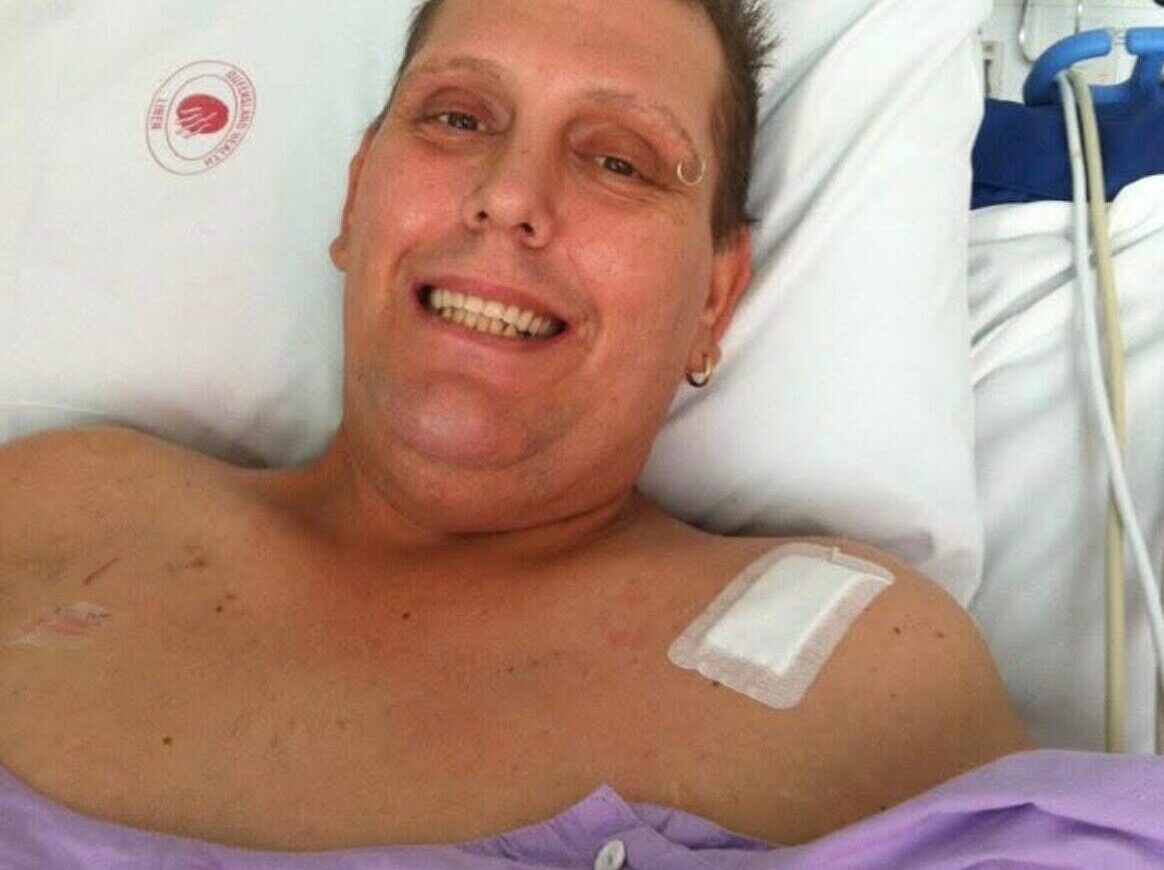
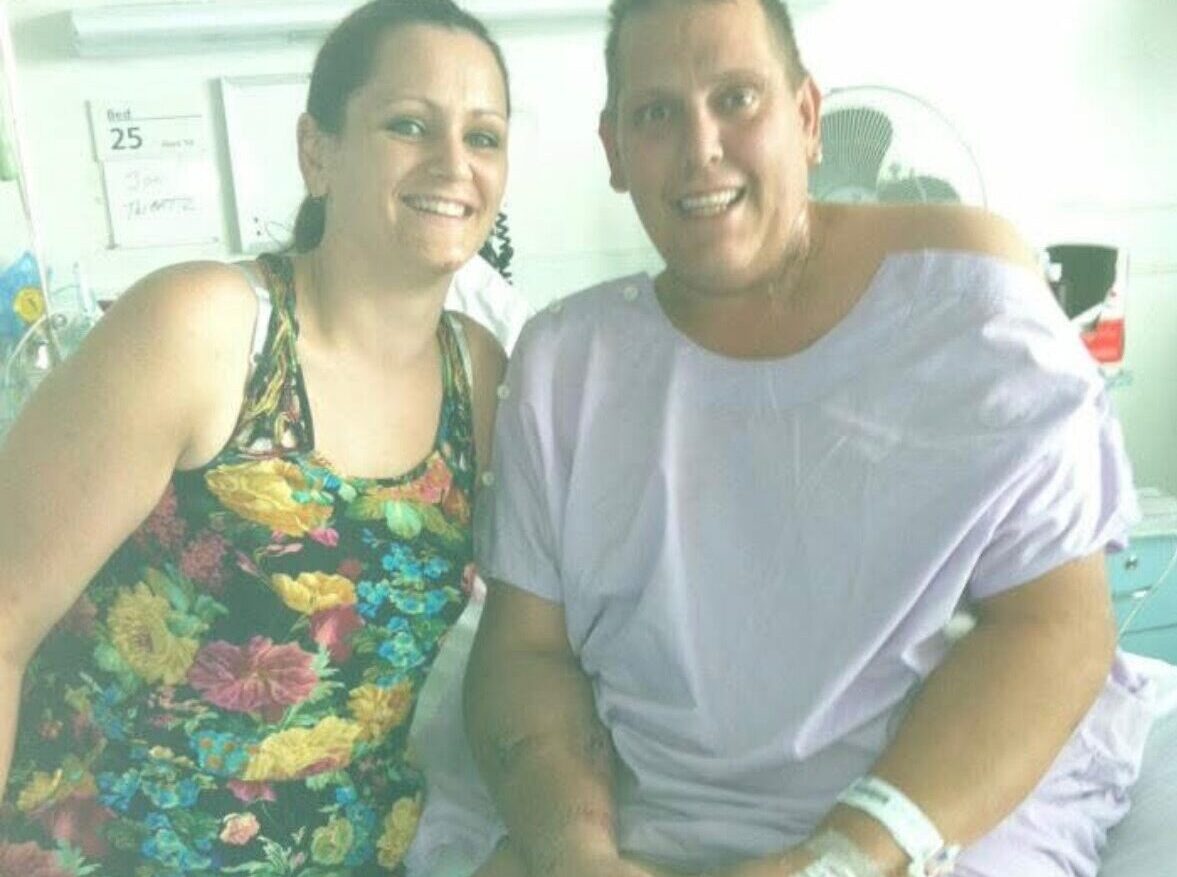
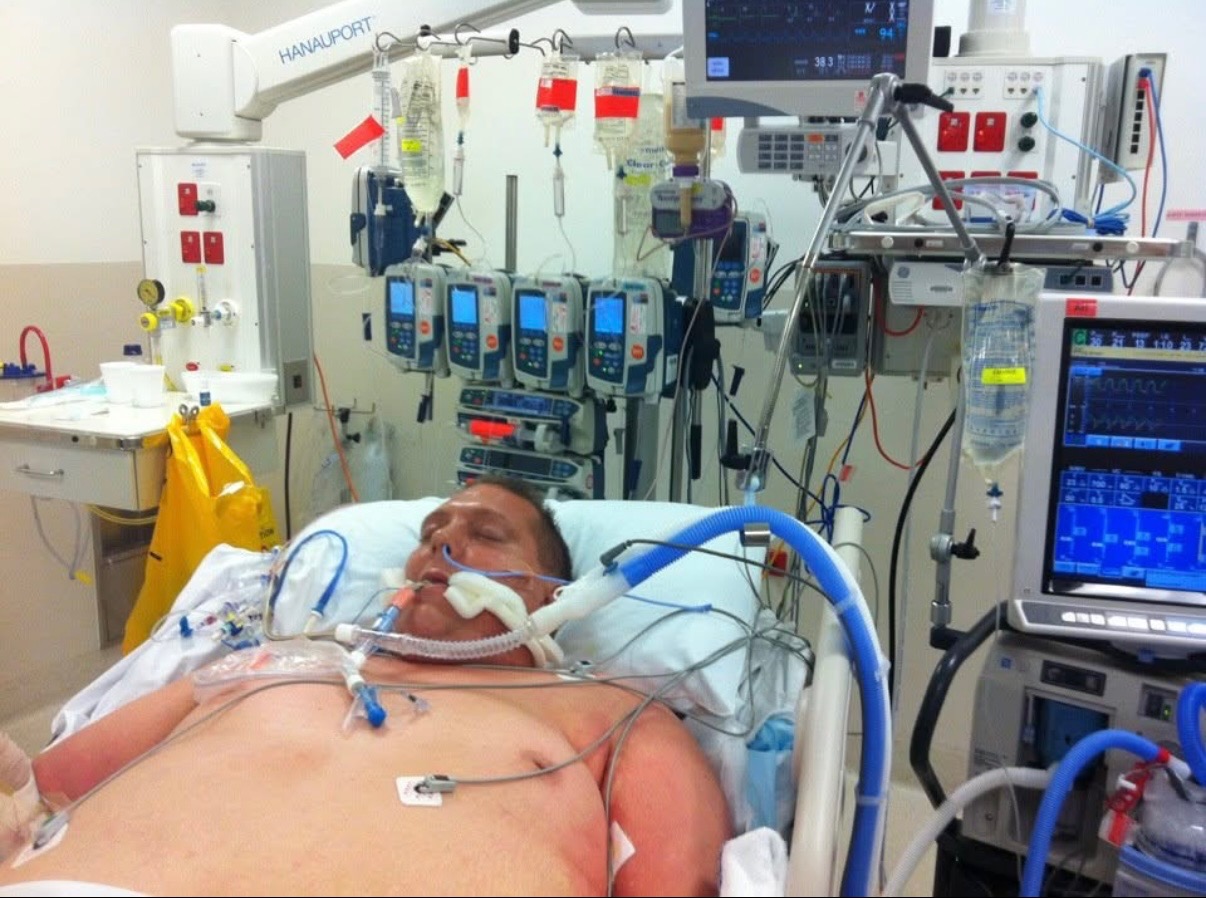
For that condition, Jon comes to the hospital every fortnight for treatment. And will be doing so for the rest of his life.
“He comes into the infusion clinic and gets a product called Immunoglobulin, which is aimed at regulating the immune system and slowing the progression of his condition,” says Lachie McKay, Clinical Nurse Facilitator.
Jon has had sepsis more than 25 times.
“I’ve walked in this hospital where I’ve been feeling like I was almost drunk but hadn’t had a drop. I’d be leaving home at 38-degree temperatures. By the time I get here, it’s hitting 42 degrees, and I’m convulsing. I’d get to the hospital, and I’d be lying on a bed just convulsing…I’ve had seven Medical Emergency Team (MET) calls in the ward,” said Jon.
He’s also had Cellulitis, a common bacterial skin infection, 20 times.
“I looked at it like sunburn. Your leg would get really hot. Fluid would build up in your leg. You’d have to have antibiotics. I would get a PICC line put in, and I’d have what looks like a baby bottle, a Baxter bottle, it was called, and I’d have to wear that around my neck for continuous infusion of antibiotics… I wear them quite regularly because I need to be on antibiotics all the time with all the different infections and stuff I get,” said Jon.
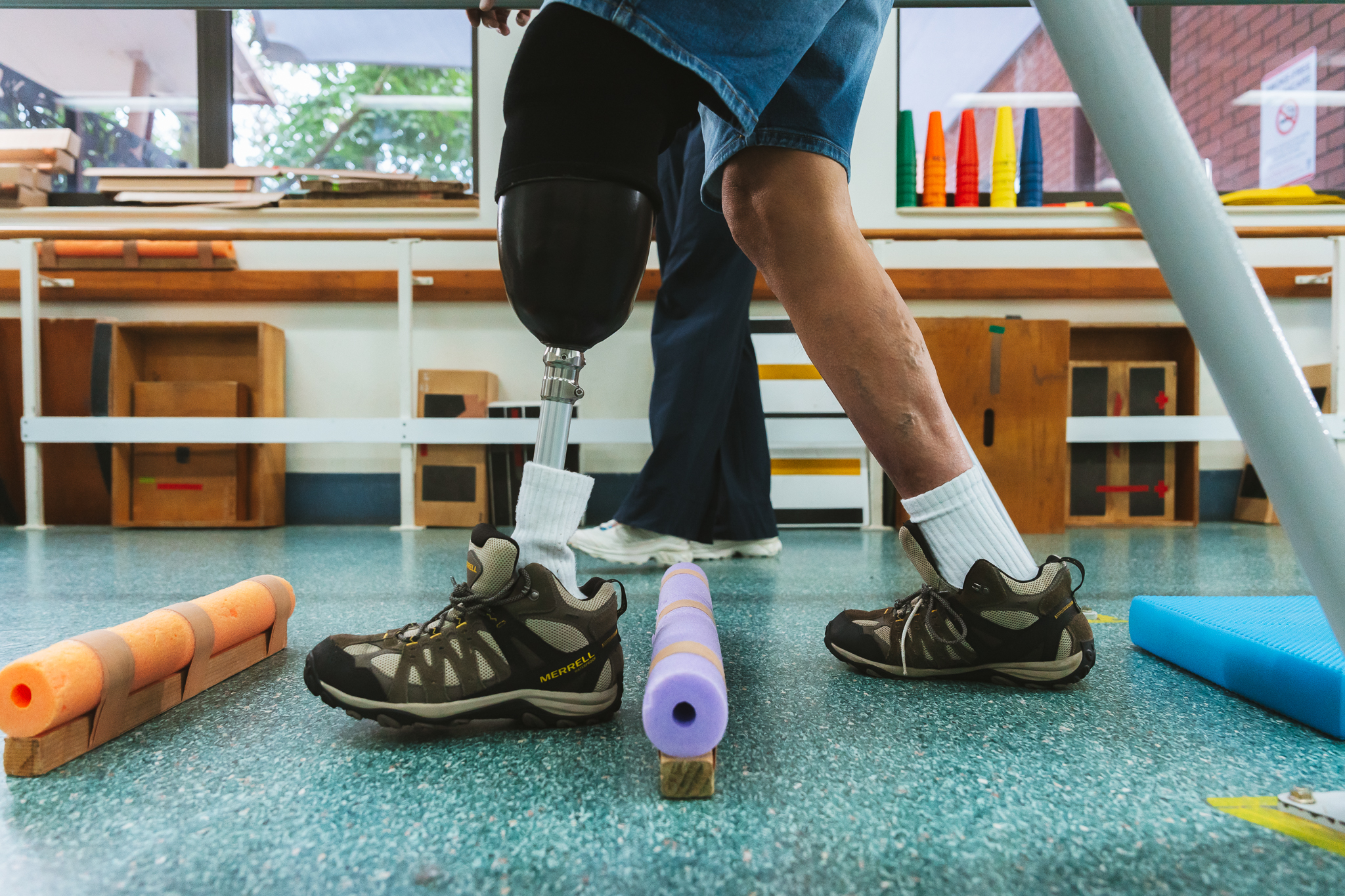
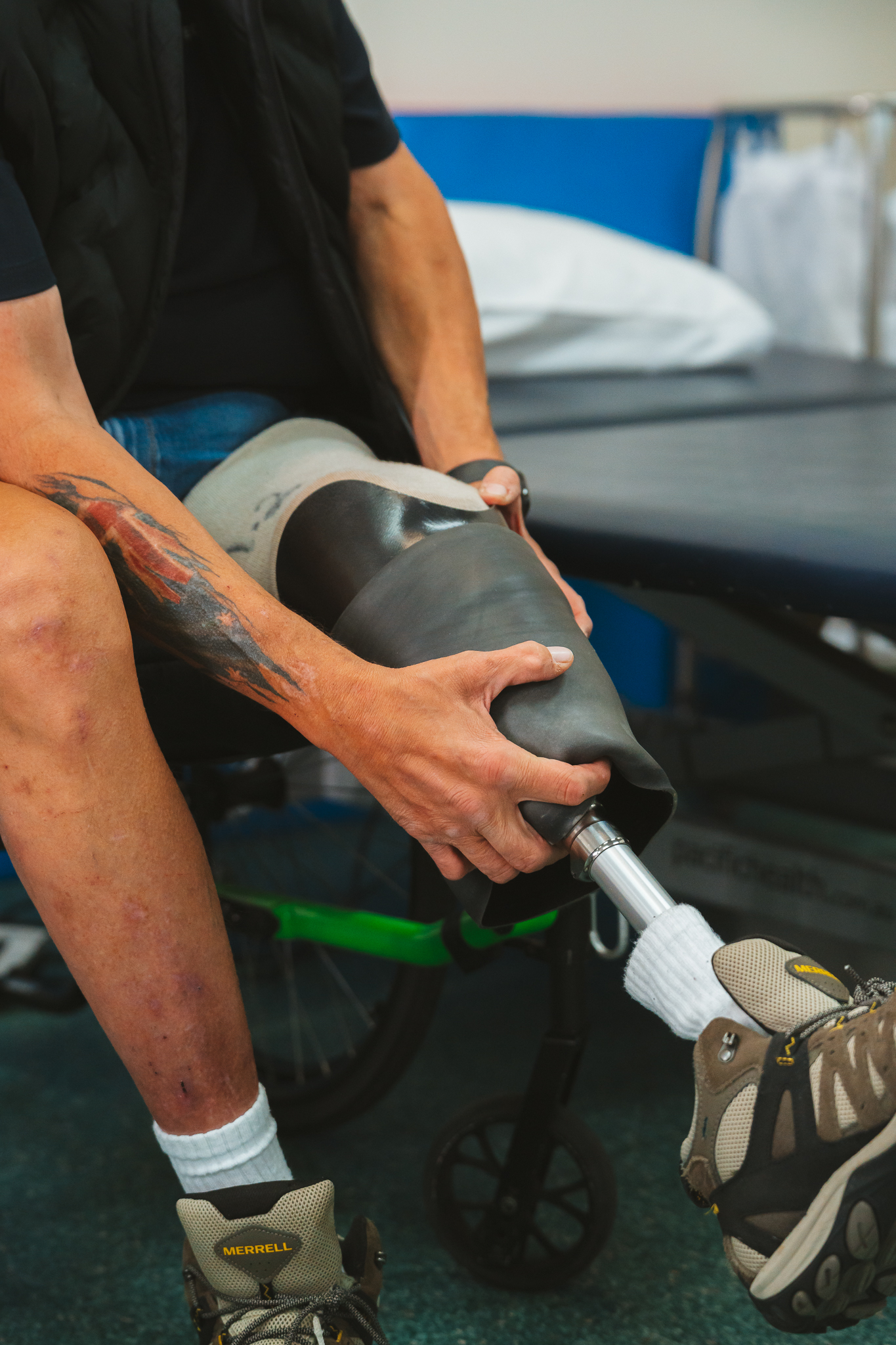
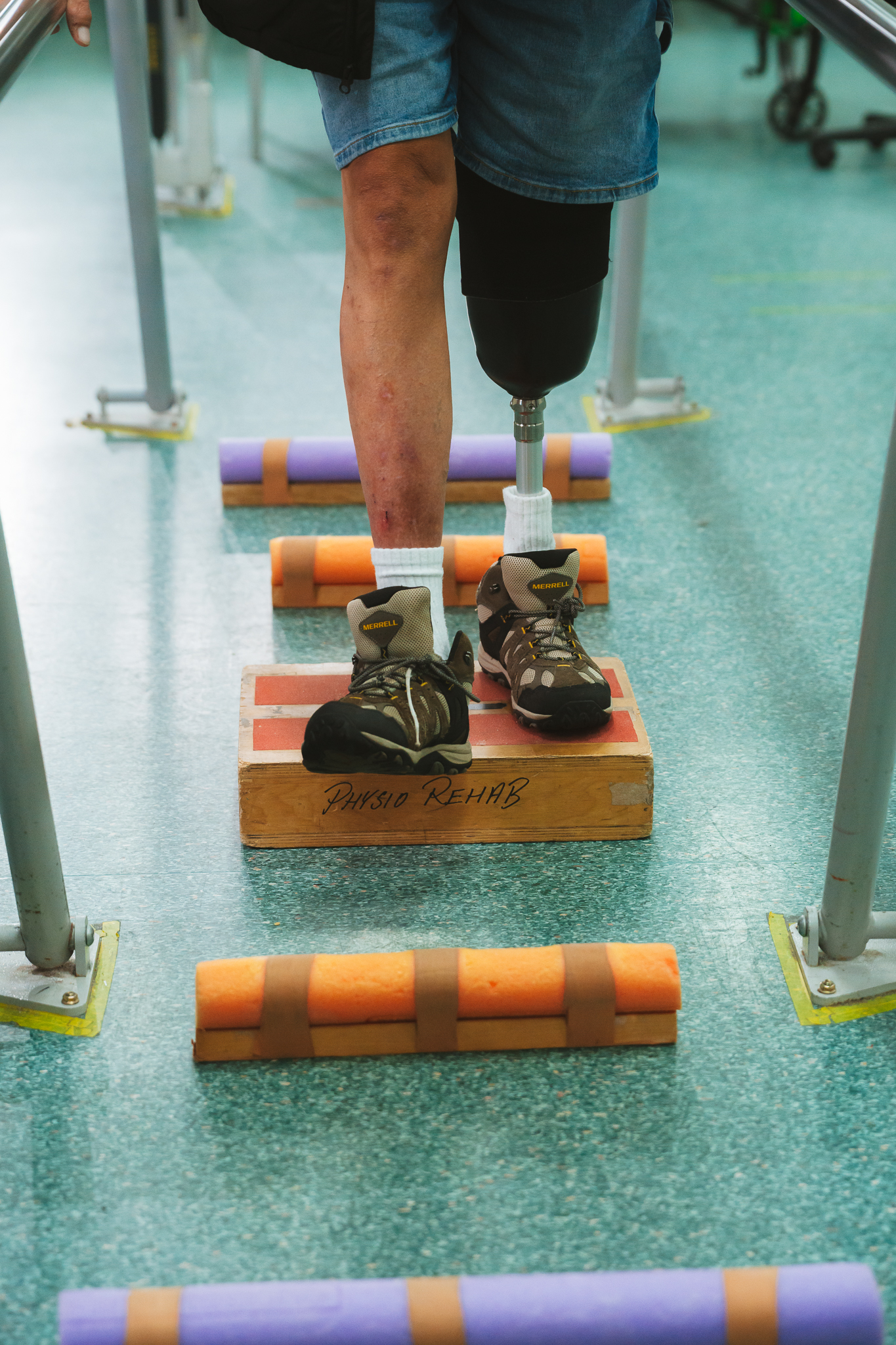
Osteomyelitis – an infection of the bone, led to Jon’s leg being amputated in 2024. He’s been told he will eventually lose the other leg for the same reason.
This is my second home, and I live in the bloody place. But it was an absolute honour to be asked to be an ambassador, and I mean that.
– Jon
Multidisciplinary care teams integral to Jon’s treatment
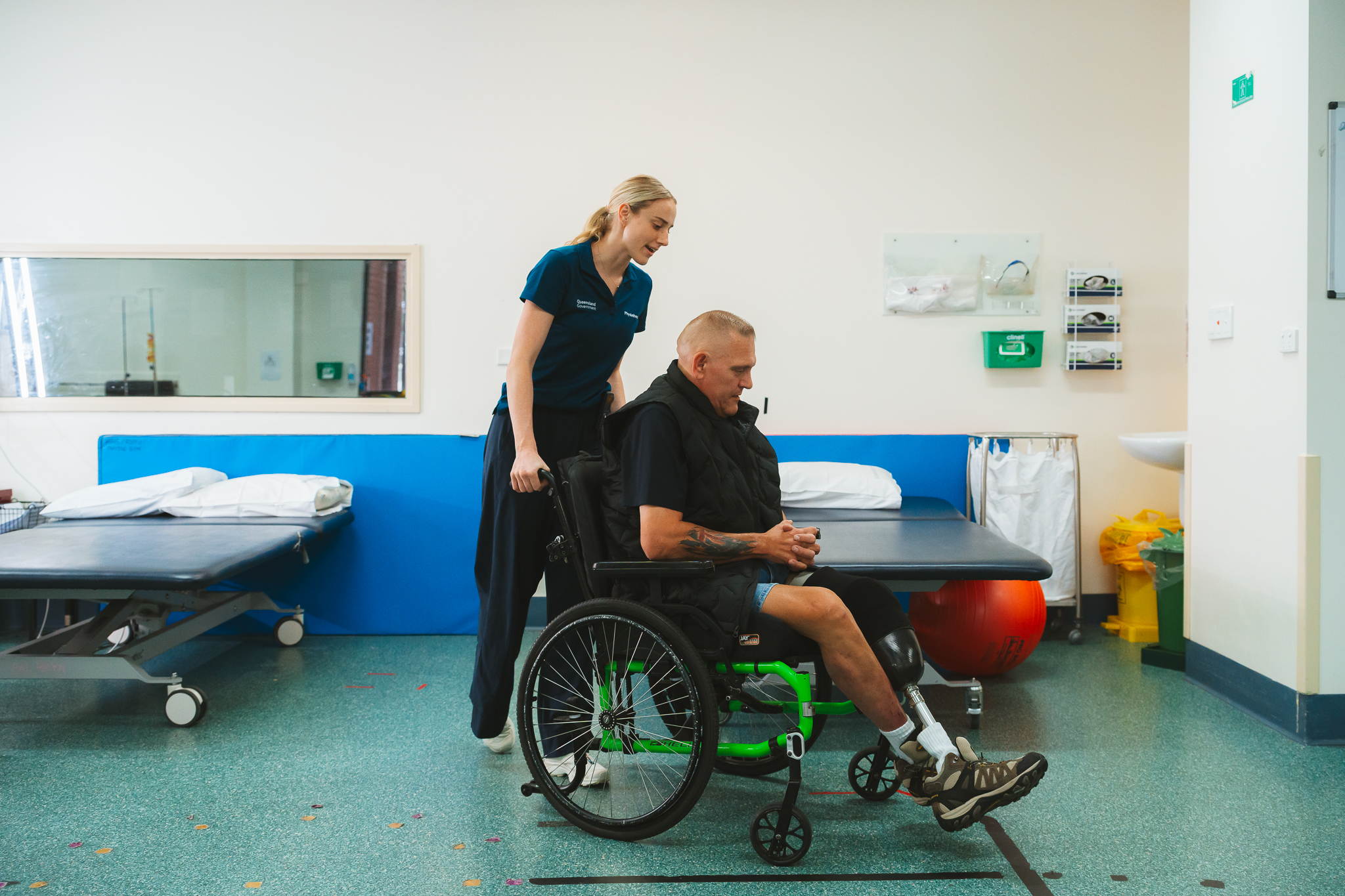
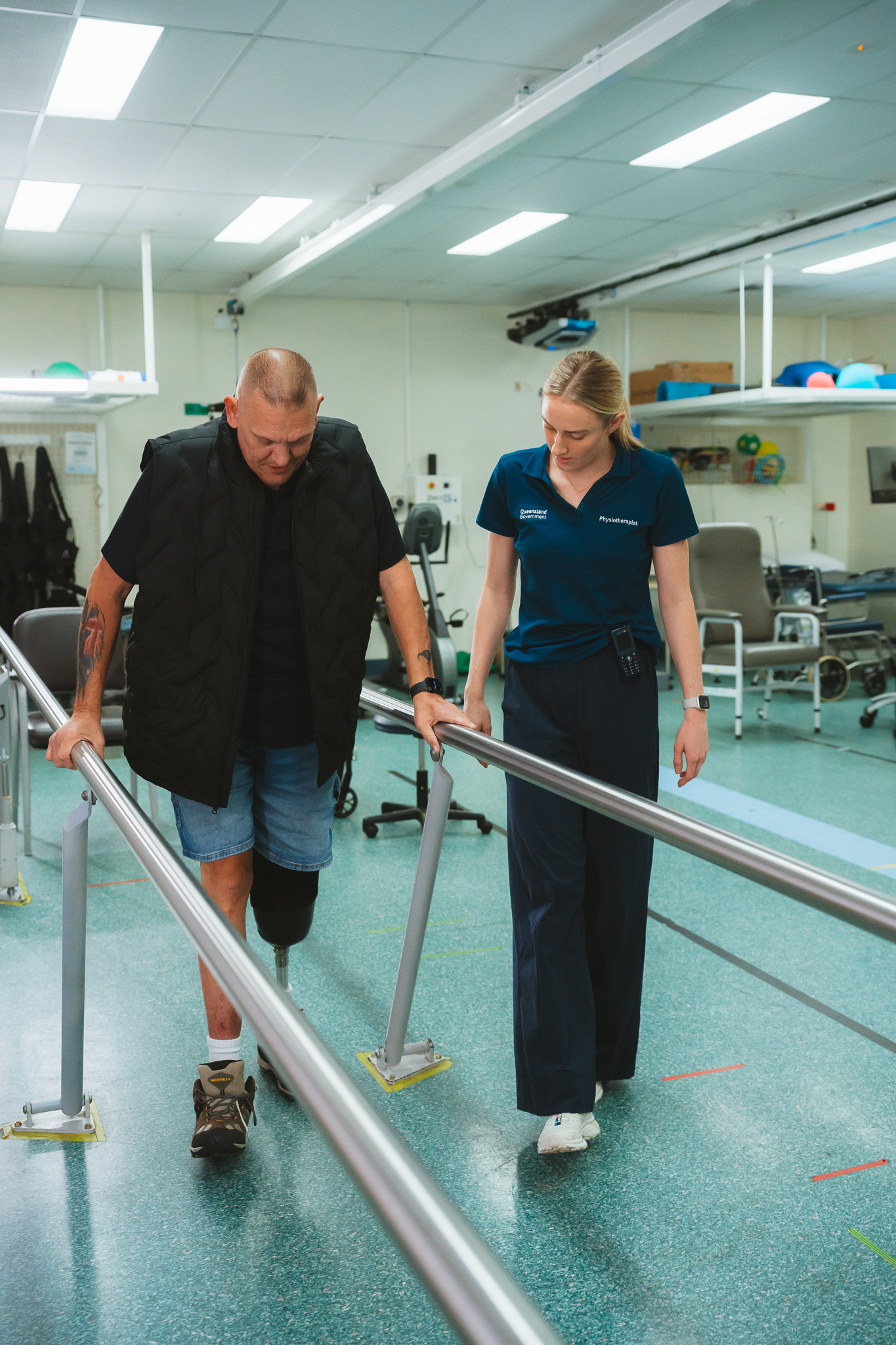
Jon has needed care from many specialists over the years, during his many admissions, including re-learning how to perform basic daily tasks following multi-organ failure and learning to walk again following his leg amputation.
“When I first met Jon in 2012, he was very weak. He was a young fellow at that stage, but he had a severe disability when he survived the septicaemia with multi-organ failure, and he ended up in a rehab ward with hoist transfer,” said Dr Ling Lan.
“So, when he came to us, he was totally bedbound. He required full nursing care, including grooming, eating, drinking, toileting, and showering. He stayed with me for nearly two months, and these were eight weeks of inpatient intensive therapy.”
Carrie Bailey, Advanced Physiotherapist at The Prince Charles Hospital, also initially met Jon in 2012.
“I met him when he spent almost 2 months in rehab. He went from needing 3 people and a ‘lite gait’ to being able to walk out independently with a stick. Jon was always the first to the therapy gym and would have spent all day there if he could. Over the last 14 years, I continue to run into Jon in various parts of the hospital and his positive attitude, despite all he has been through, always makes me smile,” she recalled.
Jon’s family has stood beside him every step of the way
Jon’s children were just six and eight when he was first rushed to the hospital with stage three septic shock, and his children and his partner Michelle, have been there every step of the way.
“We went in every day to see him, because we thought that, well, I thought that we were at home. How horrible would it be for him to be there with nobody to support him, giving him something to look forward to when we came in for visits? And then it gave us a bit of peace of mind as to what he was going through as well. And I was able to tell the kids, “This is what’s going on with dad today, and this is what he looks like, but it’s all for a good reason.” This is what it’s for, this is going to help him,” said Jon’s partner, Michelle.
His daughter spent much of her childhood in The Prince Charles Hospital and has many fond memories of visiting her dad.
“I never associated it as a clinical space, but more a place where dad is all the time,” said Jess, Jon’s daughter.
“When we were kids, he’d go in for his infusions and for rehab, and I’d go in with him, especially during school holidays. And I remember watching the movies on the TVs in the sitting areas.”
Her experience witnessing her father’s care and treatment at The Prince Charles Hospital influenced her decision to become a nurse.
“I remember feeding him like puddings and ice creams and jellies and stuff and feeding him his meals all the time. And it’s a full circle, because I do some of it now…I never saw myself doing anything other than health and nursing or anything like that. So being in this space growing up, and it just felt like the right thing to go into,” she said.
 Jon lights up the hospital corridors with his smile and positivity
Jon is well known around the hospital, having spent so much time here over the years, and his personality and optimism are admired by many.
“Jon’s inspirational. You might have a room full of people getting infusions. They’re all just sitting there quietly on their phone. John walks in, and he lights up a room, and he’s definitely not afraid to talk about his conditions and how they’re impacting his life. And he gets people to open up about their journey and reassures them. He makes people feel like everything’s okay… Some patients actually book their appointments to be there with Jon while he gets his infusions,” said Lachie.
The positivity he emits is ingrained in his whole family, who are all extremely grateful to have a hospital like The Prince Charles Hospital so close to home.
“I think if you’re coming in with a good attitude, it’s better for you. He has such an impact in the community because he brings that positivity and the positive experiences out of something that can be perceived as something not so positive,” said Jon’s partner, Michelle.
“I also think if you’re going into a hospital, you’ve just got to have a great attitude and enjoy the space because we’re all humans. The people who work here are humans. We all want to have a nice time while we’re at work. So I think being a nice patient, a nice family to the staff and everyone here, I think, is really important.”
I think if you’re coming in with a good attitude, it’s better for you. He has such an impact in the community because he brings that positivity and the positive experiences out of something that can be perceived as something not so positive.
– Jon’s partner, Michelle
Jon giving back as a Community Ambassador
Jon credits this hospital and the medical professionals who’ve treated him over the years for saving his life and allowing him to experience unforgettable memories and moments over many more years with his loved ones.
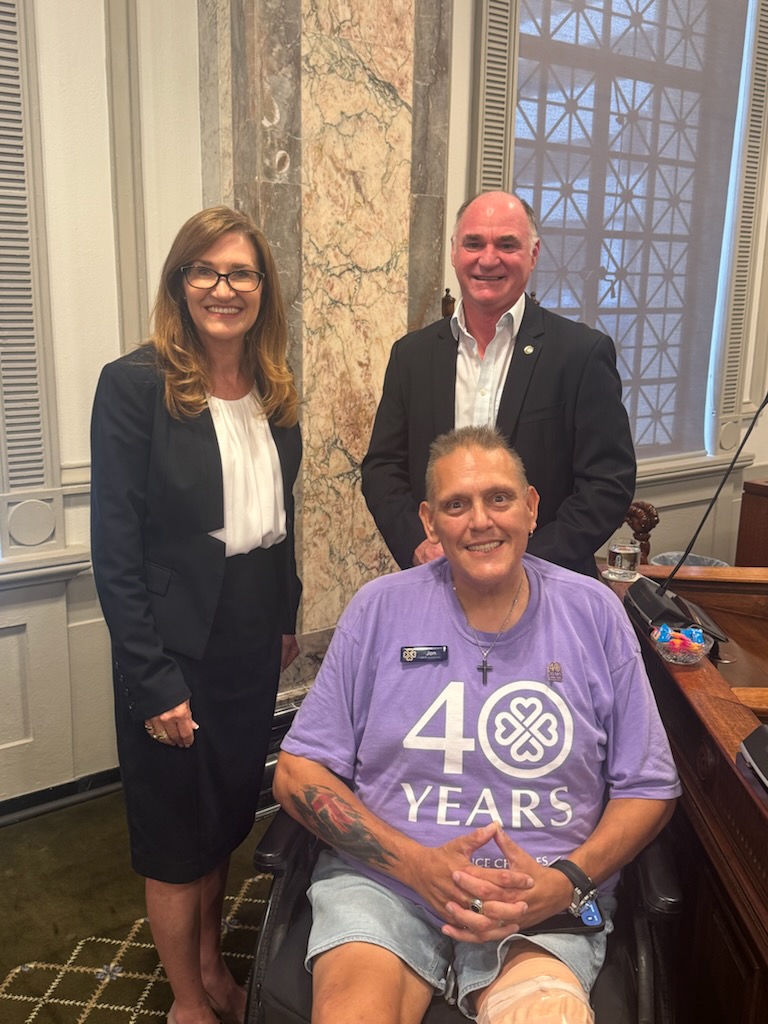
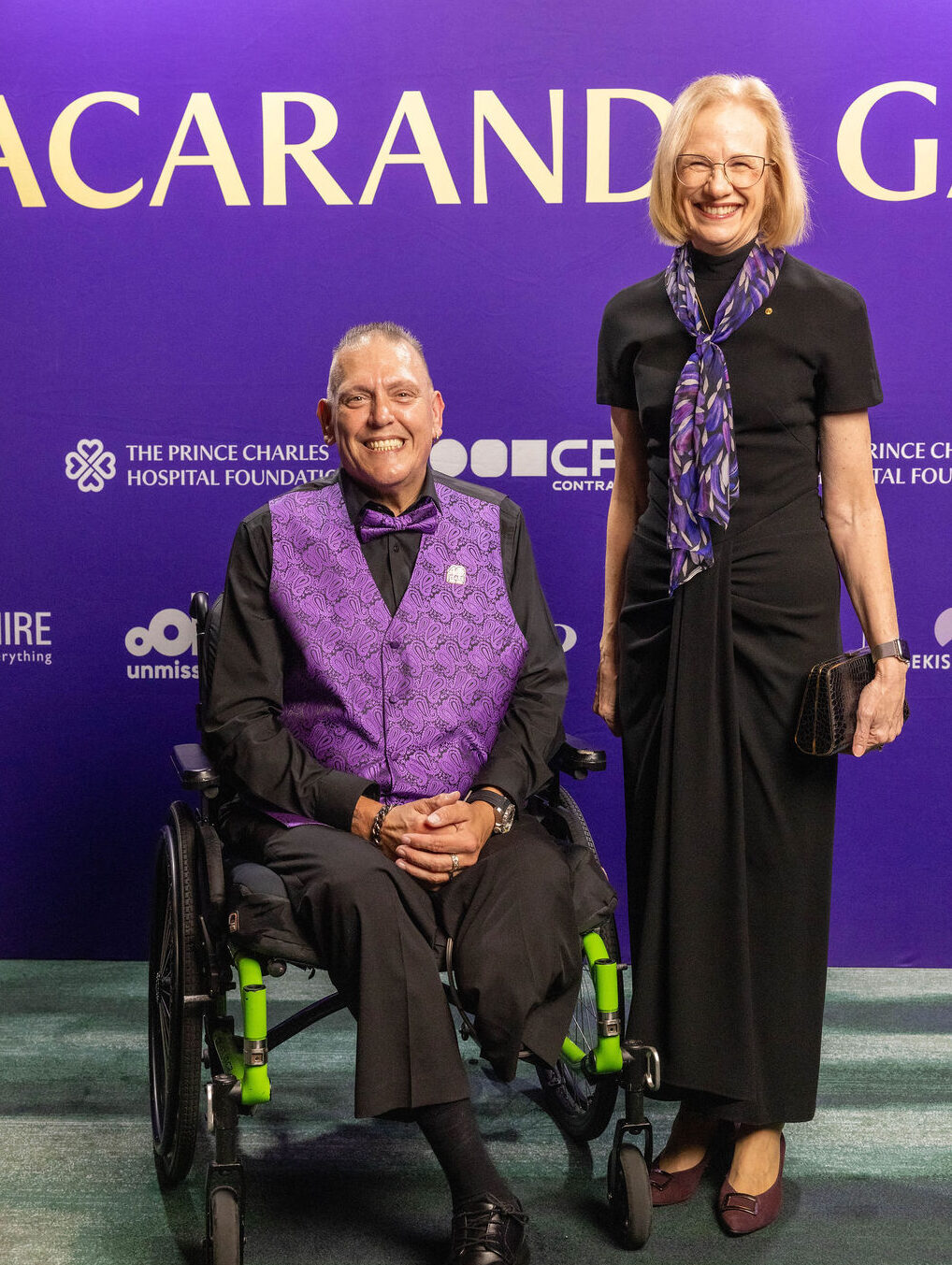
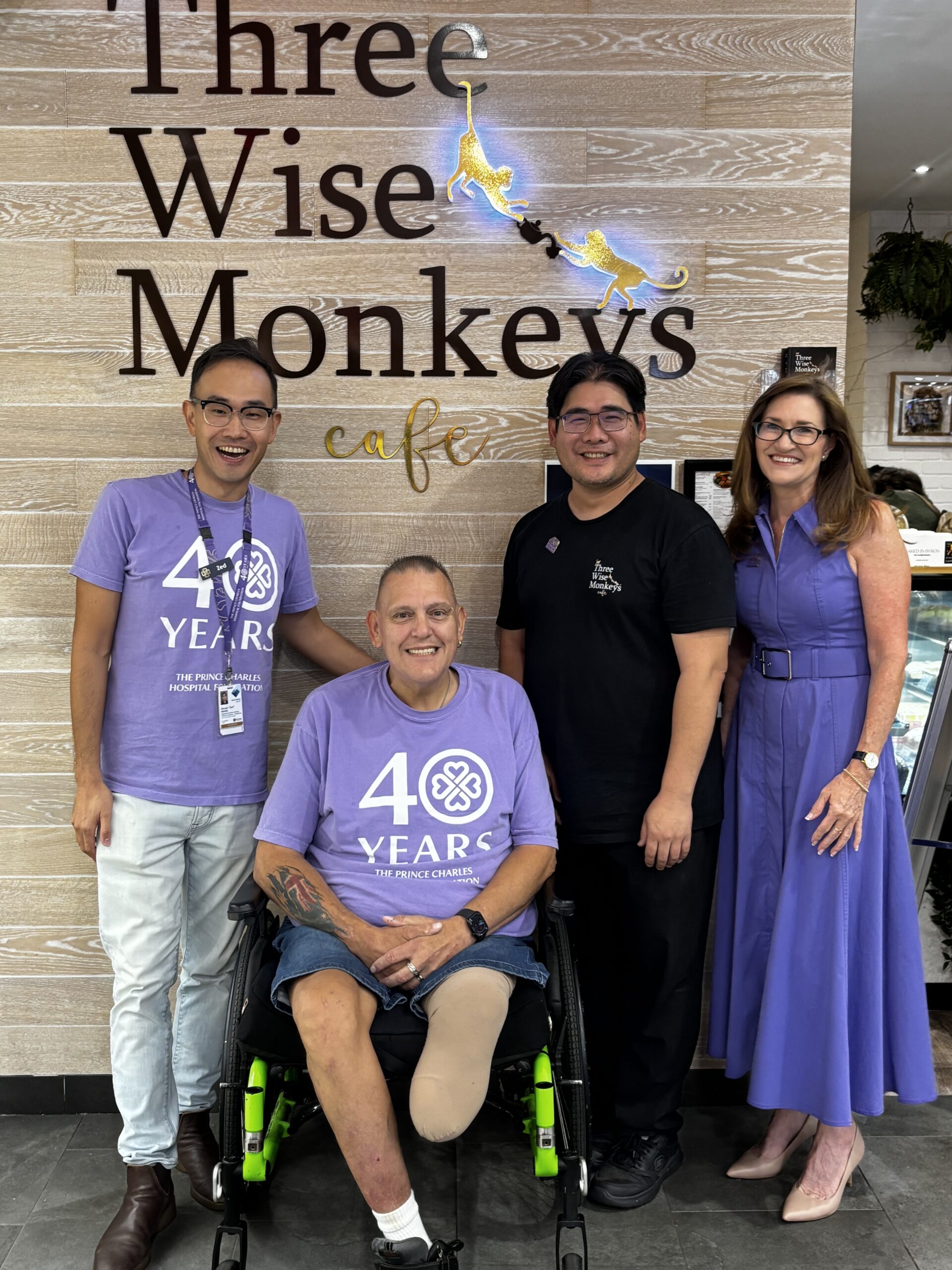
He shows his gratitude in ways that he can, giving his time, sharing his story, and by becoming one of the Foundation’s inaugural Community Ambassadors.
“This is my second home, and I live in the bloody place. But it was an absolute honour to be asked to be an ambassador, and I mean that,” said Jon.
“We’re lucky to have this public hospital system in Australia that’s free. But we’ve got to be able to get other things we need to make treatment more homely and support the research, by raising money for The Prince Charles Hospital Foundation.”
Chloe Nguyen, Chief Communications and Philanthropy Officer at The Prince Charles Hospital Foundation said, “When we launched our Community Ambassadors program as part of our 40-year milestone, we were looking for incredible people with lived experience who were willing to share their stories and inspire others to give generously to the research and patient care that had made a difference in their own lives.”
“Stories like Jon’s remind us that behind every hospital door is someone in our community who needs care and compassion. Philanthropy is, at its heart, a love of humanity – and by donating today, you can turn that care into action and help make a difference for the people who need it most.”
Powering today, reinventing tomorrow – your support contributes to life-changing research and patient care initiatives. Donate today and help people live healthier for longer for the next 40 years and beyond.