
Pause for Menopause:
Exploring women’s experiences and
organisational solutions


Menopause can be an extremely challenging time in a woman’s life, and with more than 70 per cent of women being in the workforce when they go through this transition, researchers are trying to better understand its impact on productivity and wellbeing.
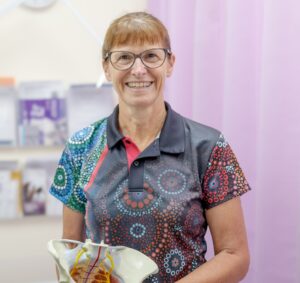
“Given the societal importance of supporting skilled women to remain in the workforce for longer, understanding the impacts of menopause-related symptoms (MRS) on work performance and how the workplace can influence these impacts (make better or worse) is imperative,” says Helen Edwards, Pelvic Health Physiotherapist at Caboolture Hospital.
Helen, who has experienced menopause and some of its long-term health consequences herself, says this transition is individual and diverse, and that the stigma about menopause needs to be addressed. Opening the conversation about menopause may normalise this transition, assisting staff to seek support and increase awareness of the related symptoms and longer-term health consequences after menopause.
“Some women may not notice any symptoms; however, up to 40 per cent of women experience difficulties coping with menopause symptoms in the workplace. Onset of symptoms can be gradual over several years for natural menopause, or sudden following induced or surgical menopause, which may leave women unprepared,” she says.
“Bringing menopause out into the open lets women know they are not alone and opens pathways for them to start conversations with their supervisors about workplace support during this transition.”
Research supported by the Foundation
Helen was awarded a research grant from the Foundation in 2024 to support her project, Asking the Questions – Exploring experiences of menopause at Caboolture Kilcoy and Woodford Health.
The research team includes Associate Professor Mia Schaumberg from the University of the Sunshine Coast, (UniSC), Dr Andrew Hislop (The Prince Charles Hospital) and Dr Prudence Millear (UniSC).
‘Asking the Questions’ explores staff understanding, attitudes and culture around menopause within the Caboolture, Kilcoy and Woodford Directorate (CKW).
Peri- and postmenopausal staff were also asked about the bother of menopausal symptoms in the workplace and how symptoms are perceived to impact their work performance, care-giving ability, job satisfaction and engagement in and/or intention to leave the workforce.
Data was collected for this research through staff surveys, with valuable insights gained from their investigations.
Given the societal importance of supporting skilled women to remain in the workforce for longer, understanding the impacts of menopause-related symptoms (MRS) on work performance and how the workplace can influence these impacts (make better or worse) is imperative.
– Helen Edwards, Pelvic Health Physiotherapist at Caboolture Hospital.
 Menopause symptoms ‘bothersome and impact on work performance’
While nearly all respondents agreed that menopause is a normal part of life and individual for each woman, menopause-related symptoms (MRS) were found to be common and bothersome in the workplace.
“Two or more MRS were reported by 97.9 per cent of peri- and post-menopausal respondents, with 49.5 per cent reporting 10 or more MRS,” Helen said.
“Sleep concerns, exhaustion, hot flushes and musculoskeletal problems affect over 80 per cent of peri- and post-menopausal respondents at work at least occasionally to always. Bladder and bowel symptoms were also reported in 20-25 per cent of peri- and postmenopausal respondents, which were bothersome in the workplace at least frequently to always.”
Among the other findings, only 52 per cent of male and pre-menopausal supervisors felt confident they could talk with another staff member about menopause in a helpful way compared to 81 per cent of peri- and post-menopausal supervisors.
“Only 1 in 10 peri- and postmenopausal staff feel supported in the workplace,” Helen reported.
“Almost 70 per cent of peri- and post-menopausal staff agree that MRS are perceived to affect work performance. Work engagement and risk of burnout were significantly associated with psychological MRS.”
The results have helped improve understanding of the impacts of menopause and its symptoms on healthcare staff and have sparked deeper conversations about supporting this transition in the workplace.



PhD support for further research
Helen is currently undertaking a PhD at UniSC with stipend support provided by the Foundation, with her project titled Navigating Menopause at Caboolture, Kilcoy and Woodford Health Directorate (CKW): A participatory exploration of women’s experiences and organisational solutions. “Pause for Menopause”.
The overarching goal of her PhD is to co-design a prototype to address workplace factors influencing the impacts of MRS in the healthcare workforce.
“The findings from ‘Asking the Questions’ inform our next study, ‘Let’s Talk’, understanding the workplace factors that mitigate or exacerbate the impacts of MRS on work performance,” Helen explained.
The ‘Let’s Talk’ study will involve staff with lived-menopause experience, non-lived experience and healthcare consumers in a co-design team.
“Co-designing solutions to address the workplace factors influencing the impacts of MRS on work performance has the potential to amplify the conversation around menopause in the workplace and generate practical solutions,” said Helen.
This research will identify and prioritise the workplace factors influencing the impacts of MRS on the workplace to inform the final study of this PhD, ‘Let’s work together’.
“The co-design team in ‘Let’s work together’ will develop and prototype solution(s) to address the prioritised workplace factors from ‘Let’s Talk’. A summary of all three studies will then be prepared to inform a pilot feasibility trial of the prototype,” Helen explains.
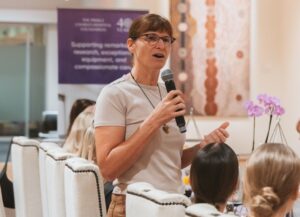
This work will further strengthen existing strategic partnerships with the University of the Sunshine Coast (UniSC), supporting collaborative research, workforce capability development and the translation of research into clinical practice across CKW.
Her goal extends beyond the health system she works in. Helen hopes her research helps women across the country.
“What I would like to see in Australian workplaces is a supportive culture around menopause transition, dispelling myths, recognising and celebrating menopause as a time of personal growth and acknowledging the wisdom and experience of menopausal staff as an asset to the organisation,” said Helen.
“I would also like to see menopause as a workplace opportunity to focus on preventative health.”
Expanding awareness around biological changes after menopause that increase women’s risk for chronic disease, e.g. coronary heart disease, osteoporosis, cognitive changes and diabetes, provides an opportunity to make lifestyle changes, helping women live healthier for longer.
Funding research for the future
“As a woman with lived menopause experience working as a clinician researcher in women’s health, funding to undertake research to improve health outcomes of working women is invaluable,” says Helen.
Supporting research at Caboolture Hospital empowers researchers like Helen to tackle important health challenges and develop practical solutions that improve workplace wellbeing, strengthen healthcare delivery and enhance patient care for Caboolture patients, families and staff.
Find out more about our support of Caboolture Hospital here.
As a woman with lived menopause experience working as a clinician researcher in women’s health, funding to undertake research to improve health outcomes of working women is invaluable.
–Helen Edwards, Pelvic Health Physiotherapist at Caboolture Hospital
Powering today, reinventing tomorrow – your support contributes to life-changing research and patient care initiatives. Donate today and help people live healthier for longer for the next 40 years and beyond.