
Shaun Gregory:
From New Investigator to
$50Million MRFF Grant Recipient

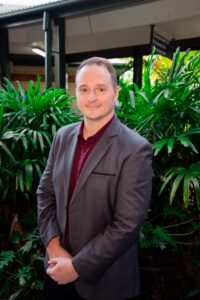 No one in Shaun Gregory’s family had finished high school or attended university, but when his grandfather passed away when he was a teenager, the profound loss set him on a path that would see him break that trend and devote his life to helping others. Although his initial goal was to find a cure for the type of cancer his grandfather had died from, he ended up studying biomedical engineering.
Now, twenty years after he first walked into The Prince Charles Hospital’s Clinical Sciences building, he has been a named investigator on 108 research grants totalling more than $65 million dollars. His research has, on several occasions, changed clinical practice and assisted in obtaining Therapeutic Goods Administration (TGA) approval for medical devices.
Of those 108 grants, in which Shaun was a named investigator, 40 were awarded by The Prince Charles Hospital Foundation. His first in 2010 was a New Investigator Grant.
More recently, Shaun was named the co-director of the Artificial Heart Frontiers Program, which is funded by a $50 million grant from the Medical Research Future Fund. Through this program, Shaun’s main focus is on the design and translation of a mini heart pump for patients suffering from heart failure with preserved ejection fraction (HFpEF).
“I am 100 per cent confident that I would not be anywhere near where I am today without the support of The Prince Charles Hospital Foundation,” Shaun said.
Twenty years ago, a then 20-year-old Shaun Gregory was in the final year of his Medical Engineering degree. It was that year that he first stepped into the Clinical Sciences building at The Prince Charles Hospital.
“In the final year of the degree, you have to do an honours project, and there was an advertisement to work on some artificial hearts, designing a test rig to test them with Dr Daniel Timms, the BiVACOR inventor, at The Prince Charles Hospital, to work between him and Emeritus Professor Mark Pearcy – the Gandalf of medical engineering in Brisbane,” he said.
“I loved the project and decided that’s the kind of field I wanted to be in, and I wanted to be in research. I wasn’t sure if I wanted to do a PhD yet, so I enrolled in a Masters by Research first, still working with Dr Daniel Timms and Emeritus Professor Mark Pearcy and adding Professor John Fraser AO to the team. That was about developing mock circulation loops – mechanical representations of the heart and circulatory system.”
That project truly propelled his passion for medical and cardiovascular engineering. Once Shaun had finished his Masters, it wasn’t a difficult decision to continue down this research pathway and pursue a PhD to develop better tools and methods for implanting and connecting artificial heart-assist devices in patients.
“The PhD came around because Professor John Fraser AO had said how important it was to engage with the clinicians and the patients, and being so close to the hospital, we could actually go up and watch surgeries. And it was amazing – I was watching devices go into the patients and how difficult it was to implant them, and I thought, surely there’s got to be a better way to use engineering technology to solve that.”
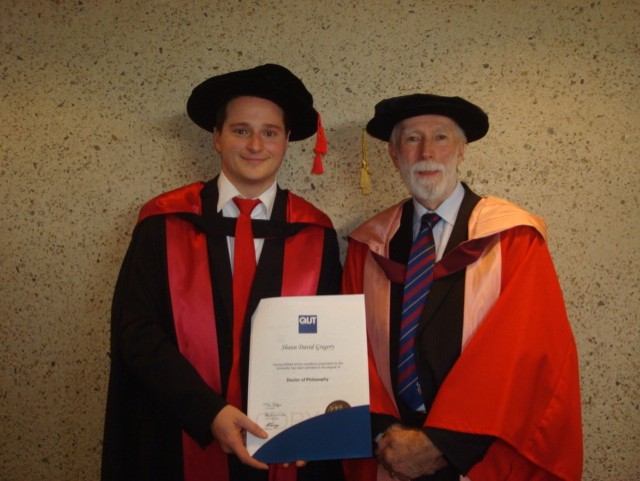
It was during his PhD that he received his first grant as lead investigator. That was a New Investigator grant from The Prince Charles Hospital Foundation in 2010.
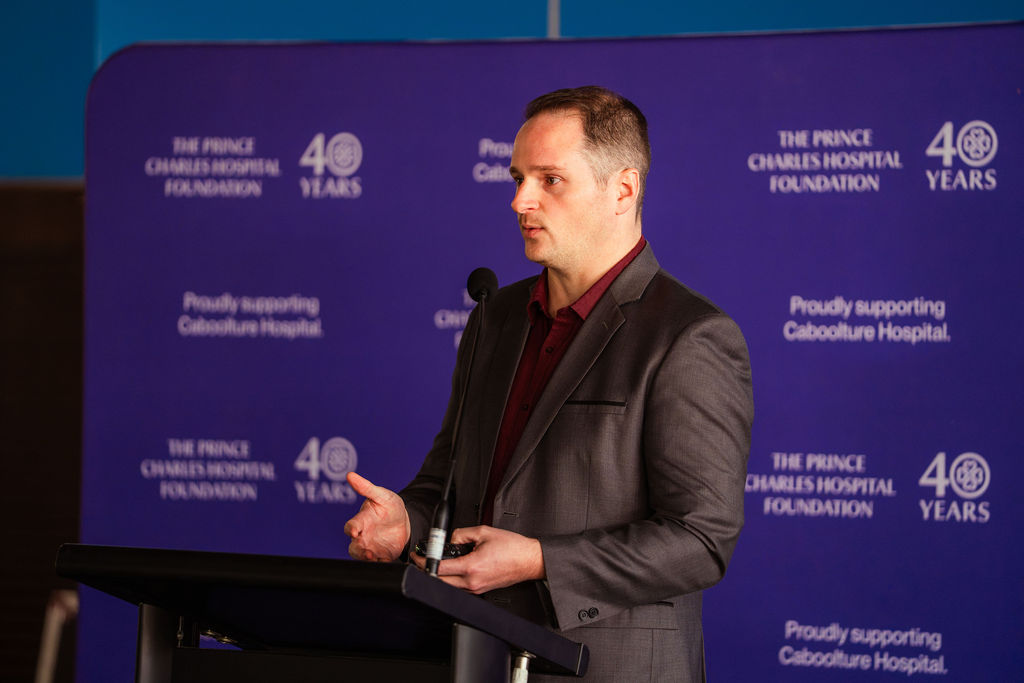
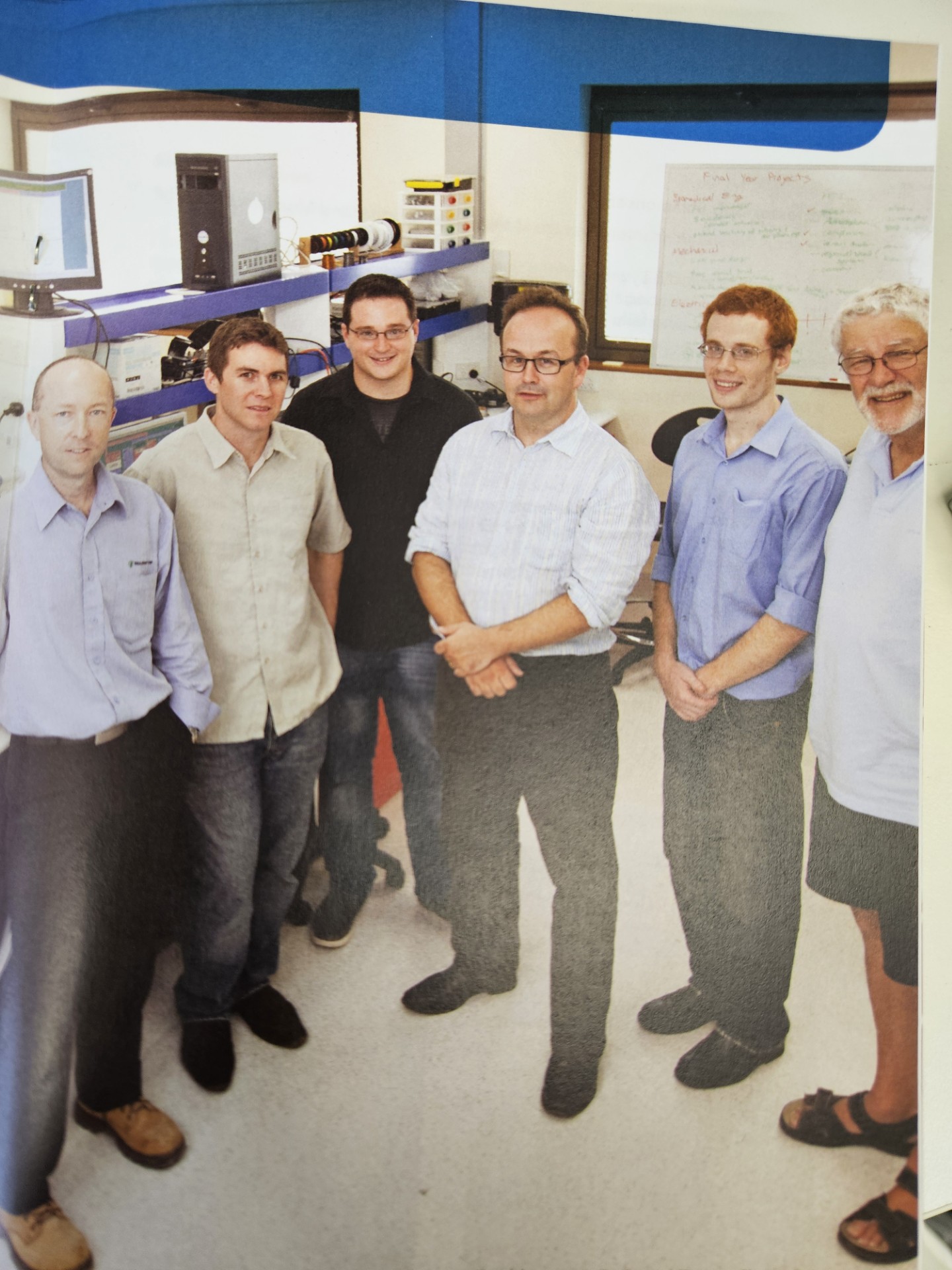
“Working within the Critical Care Research Group’s Innovative Cardiovascular Engineering and Technology Lab (ICETLab), we developed this really nice mock circulation loop, and just that proximity of the Clinical Sciences Building being on The Prince Charles Hospital campus meant that John would frequently bring clinicians down and they would say, “I have an idea, can you test it?” And we would do two weeks of experimentation, write the paper up in a couple of weeks, and it’d be something completely unrelated to my PhD that would result in another publication. I think I got 12 publications out of my PhD – three of which were PhD-related, nine of which were peripheral studies,” said Shaun.
“So that was just the advantage of being so close to the hospital, having engineering, science, an animal lab, and clinic all in the one place – which is incredible.”
Shaun completed his PhD in 2013, and at that time, there was an opportunity to take on a leadership position within the ICETLab.
“I was lucky enough, because I published a lot of papers during my PhD, to receive a Postdoctoral Fellowship from the University of Queensland’s School of Medicine and then ran the ICETLab for the next five years.”
“During those five years as a post-doc as well, the Foundation supported me to grow the team because there were several, I think probably around 20 New Investigator grants, that were supported by the Foundation that were in my group at the time. That really allowed us to do a lot of research, publish a lot of content, bring in interns from overseas, etc. It was just absolutely brilliant.”
In 2017, Shaun was the lead investigator on a Team Grant awarded by the Foundation, which he described as a huge support for the lab.
Shaun had no intention of leaving the ICETLab, but when an opportunity arose with Monash University, he relocated to Victoria and stepped into an ongoing teaching and research academic position with a prestigious Heart Foundation Future Leader Fellowship.
I am 100 per cent confident that I would not be anywhere near where I am today without the support of The Prince Charles Hospital Foundation.
–Professor Shaun Gregory
50-million-dollar grant from Medical Research Future Fund (MRFF)
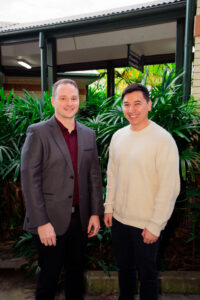
In 2024, Shaun, along with Professor David Kaye, was awarded a $50 million grant from the Medical Research Future Fund (MRFF) for the Artificial Heart Frontiers Program to help position Australia as the home of next-generation cardiac devices.
This program focuses on assisting with the development and Australian clinical trials of the BiVACOR Total Artificial Heart, along with the next-generation MiniPump aimed at reducing heart failure deaths here and around the globe.
Shaun’s focus is the MiniPump – a small device that’s used alongside the heart and is designed for patients with Heart failure with preserved ejection fraction (HFpEF).
“Approximately half of people with heart failure have HFpEF, and half have reduced ejection fraction (HFrEF). The HFpEF population have no solution at the moment. Most of the pharmacological treatments don’t work. There’s no proven device on the market. For most of the HFpEF population, the alternative is often palliative care. For reduced ejection fraction, they have bigger hearts, and it’s easier to implant existing devices on the market into those patients, and they cope with the surgeries well,” said Shaun.
The MiniPump is much smaller and designed specifically for people with HFpEF to be implanted in a minimally invasive way that doesn’t require open-heart surgery.
The hope is to have a prototype pump for human trials by 2030/2032 and then a full commercially available device a few years after that.
“We want to see these patients running around with their grandkids. At the moment, they can’t. Giving them 10 years of better life running around with their grandkids – that possibility is what excites me,” said Shaun.
“None of it would have happened without the support of the Foundation.”
“If I think of a research career, so much of it is like this snowball effect, where you start as a little snowball at the top of the hill and then you’re rolling down, and you’re gathering more and more momentum. The earlier you can start and the more success you can have, the bigger the snowball you are. And you have to be the big snowball to win those big fellowships and grants. It’s really hard to do it without that … And so, if I hadn’t been awarded that New Investigator Grant in that first year of my PhD, I wouldn’t have received all of those other grants.”
If I hadn’t been awarded that New Investigator Grant in that first year of my PhD, I wouldn’t have received all of those other grants.
– Professor Shuan Gregory
 Supporting the next generation of biomedical engineers
So far, Shaun has been involved in supervising more than 300 research staff and students, including 21 PhD students to completion.
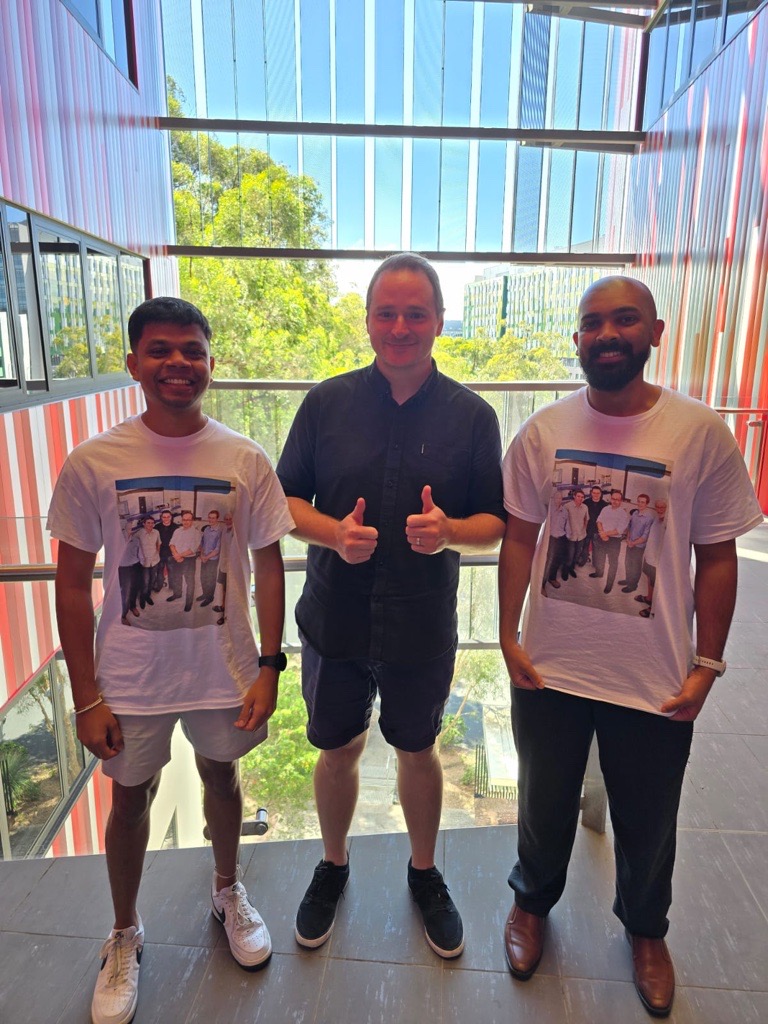
“Shaun gave me an opportunity as a research student when others may have appeared more qualified on paper. He then supported me to gain experience at leading international research institutes and industry, which gave me the confidence to pursue a translational career. His continued guidance, constructive feedback and career advice (from new investigator grants to fellowships) have had a lasting influence on my development,” said Dr Eric Wu, whose PhD was supervised by Shaun and who now leads the Critical Care Research Group’s ICETLab, following in the footsteps of his PhD supervisor.
And he considers himself very fortunate to have had the mentors he did, and to have the opportunity to help others on their own unique journey.
“I acknowledge the path I took is not the same for everyone else, so I try to help design their own golden paths with them and mentor them along those paths, linking them up with other people, treating them as individuals and tailoring my mentoring style to suit their goals and them as people,” said Shaun.
Founding the Heart Hackathon
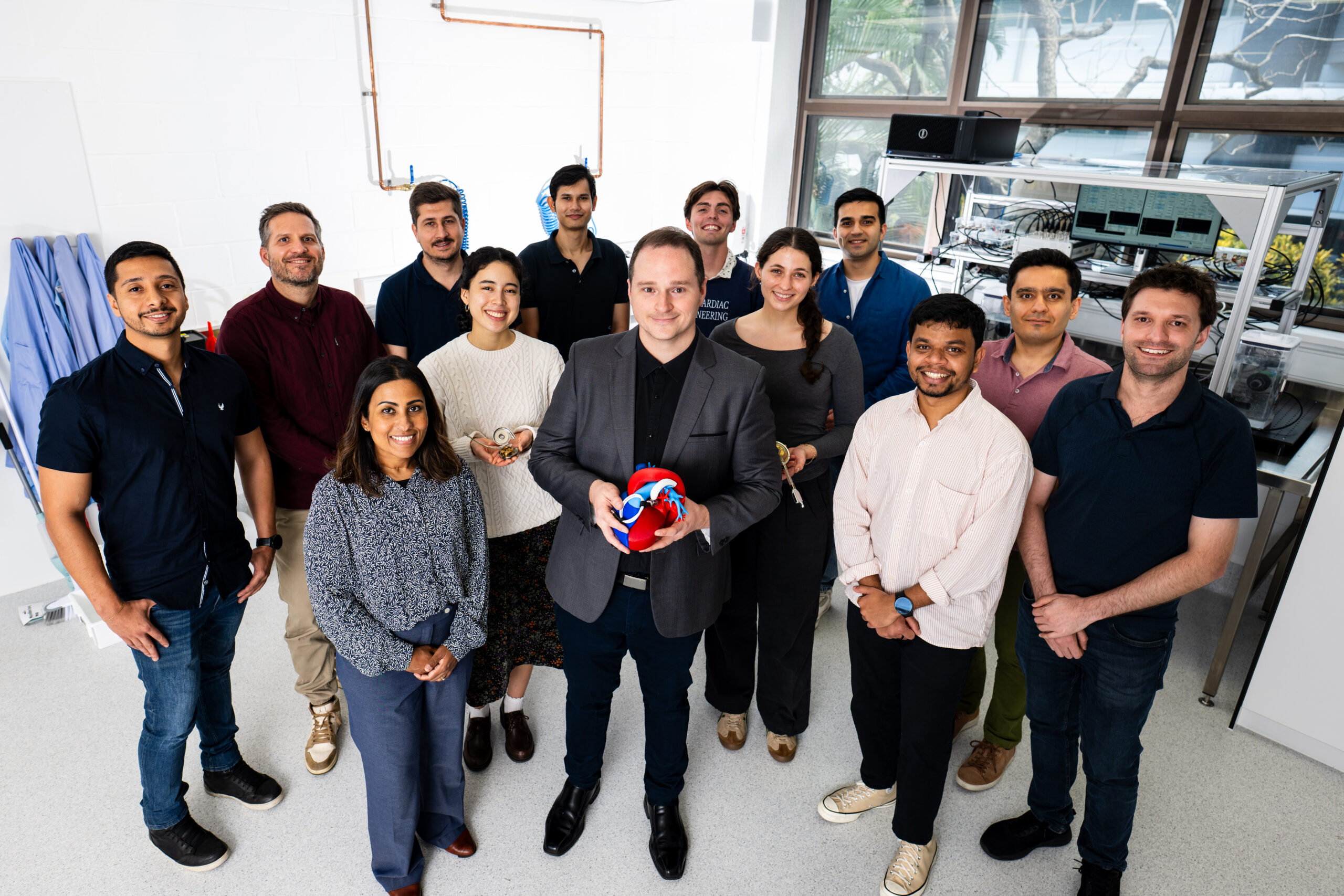
In 2020, Shaun conceived an international student competition called Heart Hackathon, which involves teams from around the world designing and building prototypes of artificial hearts.
This year, 17 teams from 15 different countries took part, comprising 650 students.
“In other engineering disciplines, for example, robotics engineers, there are competitions to design and build Mars rovers; in biomedical engineering, there was a lack of such options,” he said.
“In teams, students design and build complex prototypes of a total artificial heart, test them, and write a technical report. They also develop a full commercialisation plan to get the device to market, answering questions about what the population is, what kind of regulatory approvals they will need, what evidence they have to show, what reimbursement looks like in these jurisdictions, manufacturing, packaging, sterilisation, all of those kinds of things, their budgets, and their projections.
“Then we have industry, academic and clinical experts from around the world judge their reports and host an in-person finale with a pitch. Grades from the report and pitch are combined. The competition is also a day before the International Society for Mechanical Circulatory Support (ISMCS) conference, so experts attending the conference arrive early to watch the students present, and students can then stay for the conference.”
Shaun’s advice for the next generation
- Make the most of every opportunity you get, and publish as much as you can while you’re doing your PhD (early on in your career).
- Have supervisors who are good mentors, but also have mentors who aren’t supervisors, so they can give advice without having a conflict of interest.
- When receiving a rejection on a grant, paper, or job opportunity, take a moment to process and reflect and look internally at how you could improve.
- Be nice to everyone. Opportunities come from many people and places.
What’s next for Shaun?
Shaun is now back in Brisbane taking on the role as Director of The Centre for Biomedical Technologies at QUT and is enjoying this challenge, but there will, no doubt, be more on the horizon for this humble man.
“I like to think I’m still the same person as I was when I first walked into the Clinical Sciences Building. I love what I do, but I don’t celebrate my success, and I don’t look back at it much, as I don’t want to be caught up in the past,” he said.
“I have young kids who remind me every day that I’m just a normal dad. 5 and 7. As soon as I get home, I don’t think about work.”
Powering today, reinventing tomorrow – your support contributes to life-changing research and patient care initiatives. Donate today and help people live healthier for longer for the next 40 years and beyond.