
Robotic-assisted Joint Replacement Surgery:
Precision care for life-changing outcomes

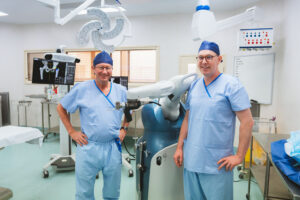 The Prince Charles Hospital carried out close to 2700 orthopaedic surgical procedures in 2025 and currently sees the second-highest number of hip fracture patients in the country each year.
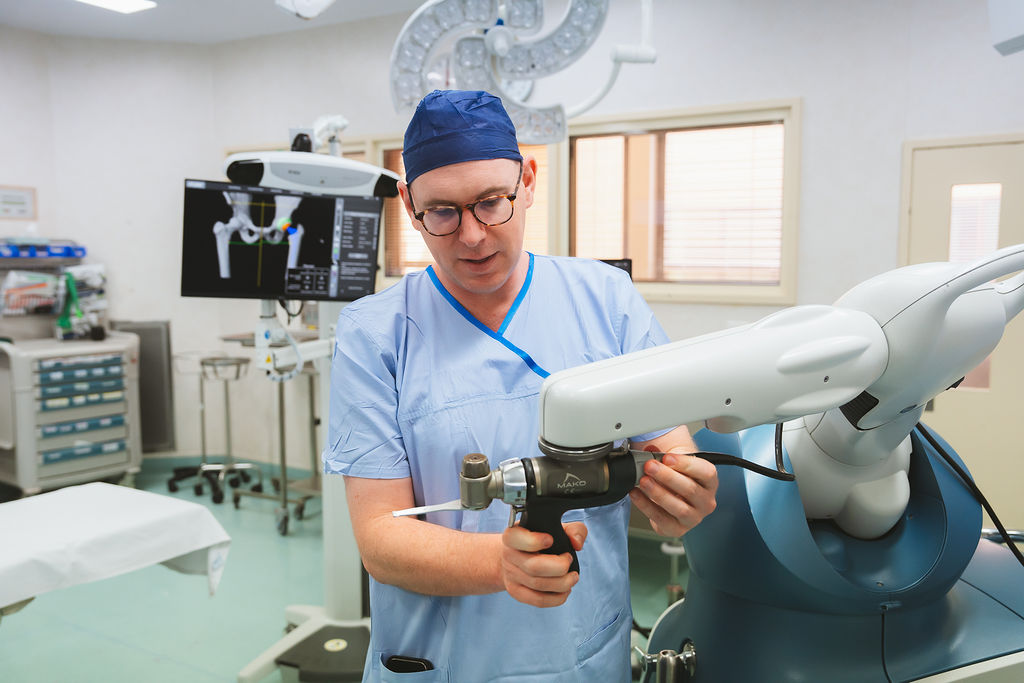
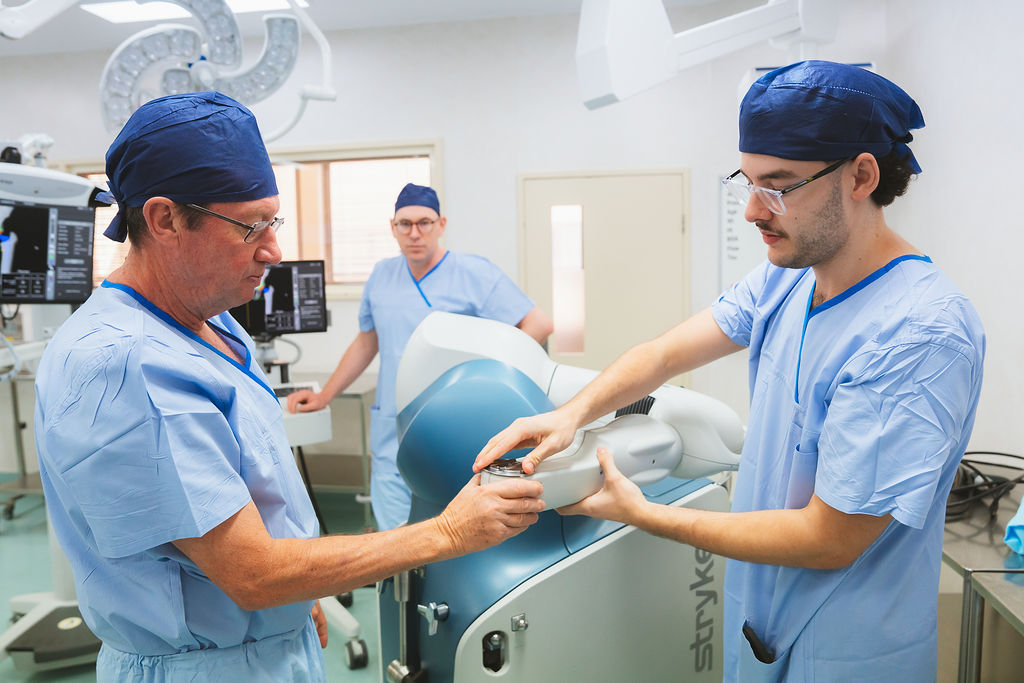
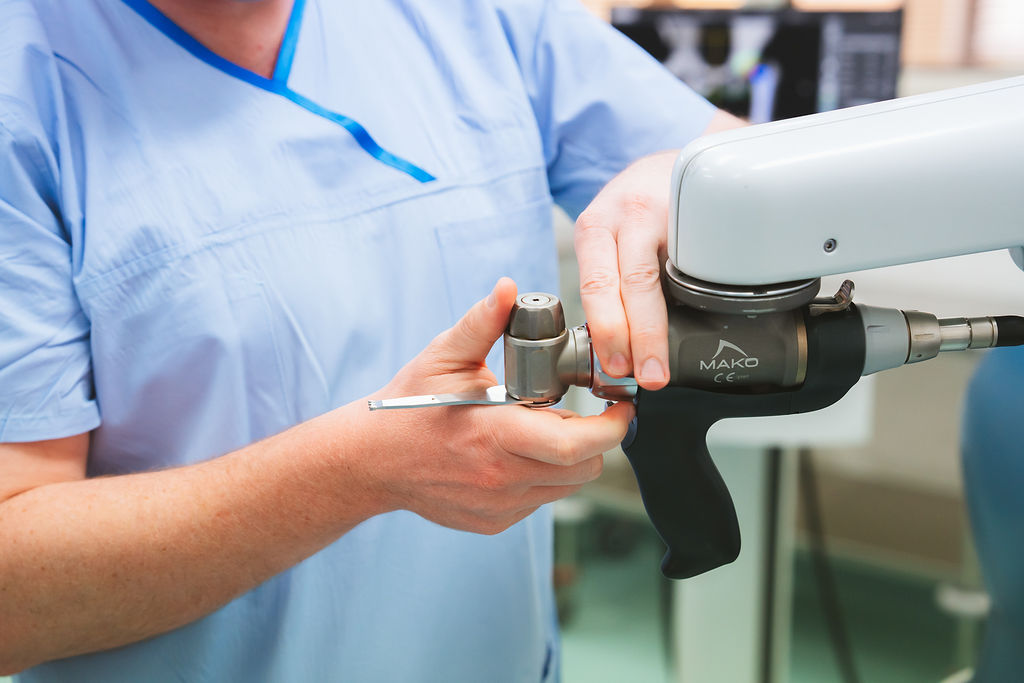
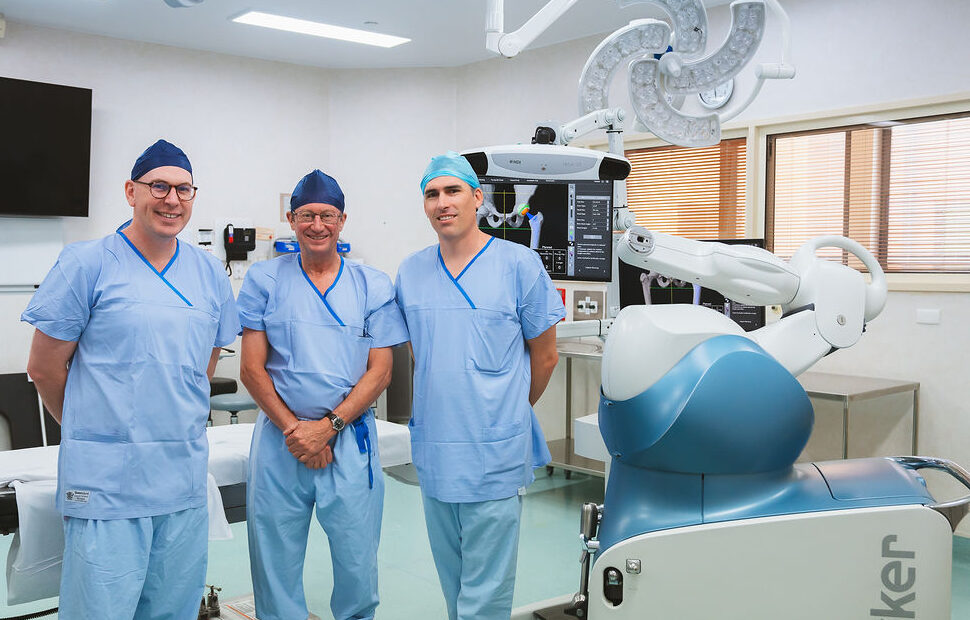
For seven years, orthopaedic surgeons at The Prince Charles Hospital (TPCH) have been performing robotic-arm-assisted joint replacement surgery with a machine funded through The Prince Charles Hospital Foundation. This state-of-the-art machine has transformed the lives of thousands of patients who have undergone partial or total knee replacements and hip replacements, as it enables surgeons to plan and perform surgeries more accurately than manual procedures. There are many benefits as a result this precision – the chance of soft tissue damage is reduced, infection rates are lower, inpatient complications are decreased, patient reported outcome measures are improved, while shortening hospital stays.
After five years of debilitating knee pain, Kim Boyter concluded that a total knee replacement was her best chance of getting back to moving and feeling like herself again.
“I tried everything I possibly could prior to making that decision. I had injections, I had artificial cartilage, I wore a knee brace for 18 months, but the issue just continued to get worse,” she said.

“I had got to the point where I was basically housebound. I couldn’t do my grocery shopping. I did all my grocery shopping online and had it delivered. I did all of my alternative shopping online… and it had been about two years since I actually walked into a shopping centre.”
Kim’s knee pain had taken a significant toll on her quality of life.
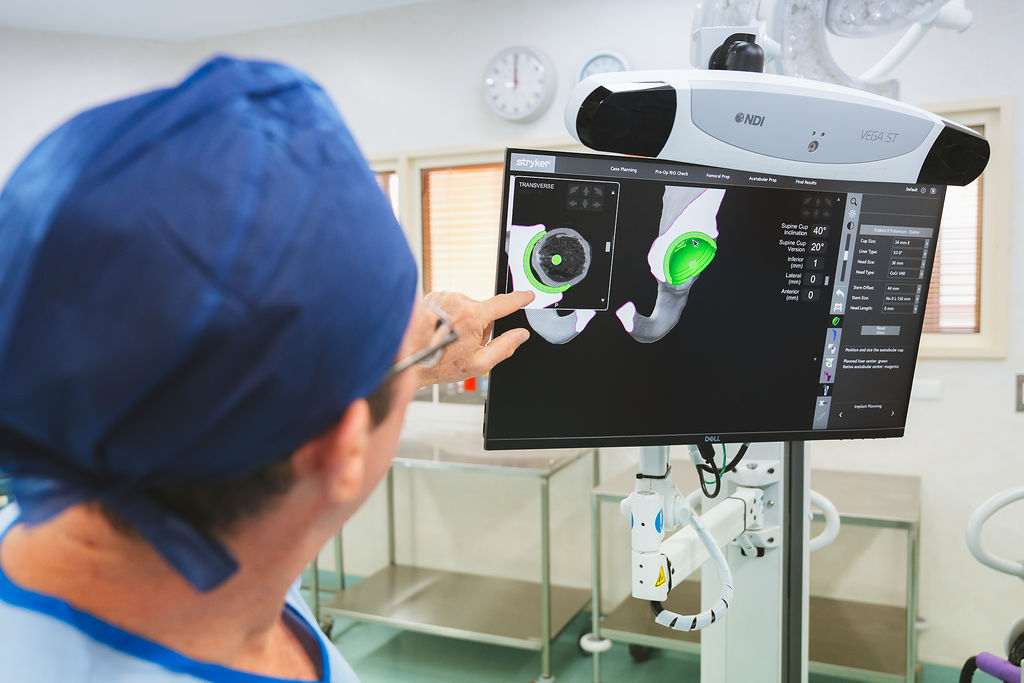
At the end of April, Kim had a CT scan where the measurements of the knee joint were taken. That data was used to create a 3D model to optimise implant size, and position and create a personalised surgical plan.
The following week, Kim was admitted to The Prince Charles Hospital. Once in the theatre, her right knee joint was replaced, while being cross-referenced with the CT scan and 3D model, ensuring the incisions were precise and the implant fit and moved as it should.
“I used a lot of ice therapy for six weeks post-surgery, which I think was invaluable for me. I’ve continued with the physio, so, yeah, still trying to improve and get 100% use back… but for the first time about 3 weeks ago, I took myself off to the shopping centre just to experiment, and it was like finding a new lease on life,” said Kim.
Robotic-assisted surgery enhances precision and personalises outcomes
Since 2019, more than 2700 robotic-arm-assisted joint replacement surgeries have been carried out at The Prince Charles Hospital, with 100 per cent of partial knee replacements and more than 60 per cent of total knee replacements performed with this machine.
“It’s a big step forward in getting personalised outcomes for our patients. We used to use rods and aligning guides to estimate where we wanted the implant and essentially make the knee fit the implants we were trying to put in. Now, with robotic surgery, we’re trying to put implants where they’re supposed to be to match a person’s knee, so it’s a lot more personalised to the patient,” said Dr Anthony Silva, Director of Orthopaedic Surgery at The Prince Charles Hospital.
“This robotic technology allows us to plan and execute an operation with unparalleled accuracy. We can do the operation with millimetre accuracy and a within a degree of precision from where we’ve planned it. We believe leads to better outcomes for our patients. We see our patients going home a lot faster from the hospital; our length of stay has dropped several days over the last several years.”
The state-of-the-art technology is also used for many elective hip replacement patients.
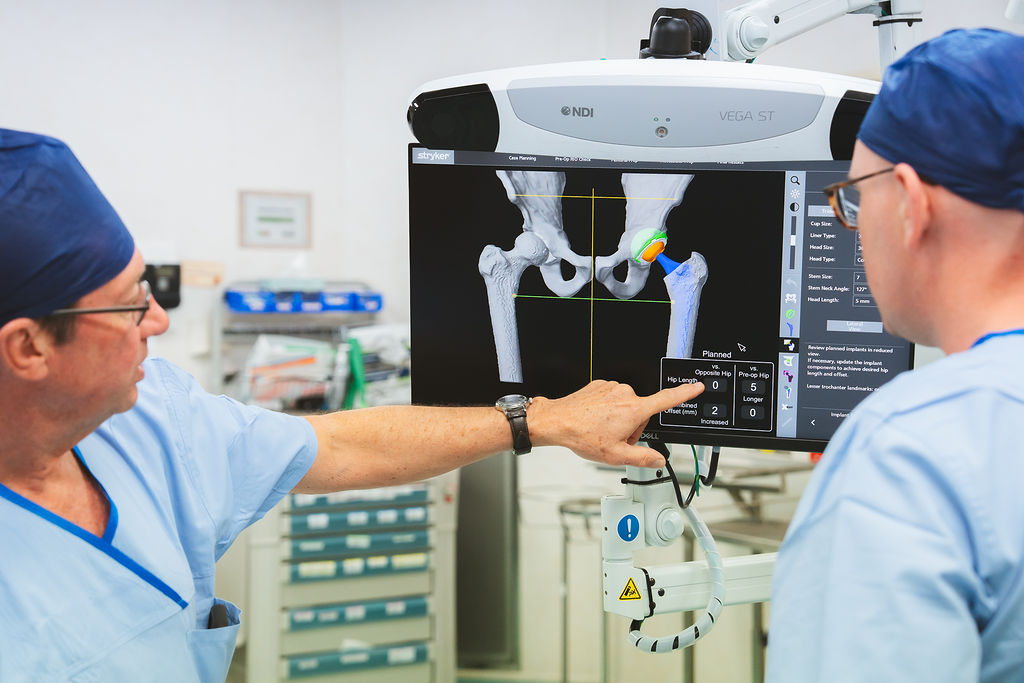
“It allows us to plan the whole operation before we’ve even started. When we’re doing a hip replacement, we’ve already decided the cup position and size, as well as the stem size and position. We can take the leg through a virtual range of motion before the patient is even in the operating room. With that information we can accurately restore leg length and offset, and know that the functional range of that hip replacement will be spot on before we even start,” said Dr Silva.
“These patients also benefit, with faster rehabilitation helping them regain independence more quickly.”
It’s just so nice to have a day without pain in my knee. So, it puts everything else into perspective.
– Kim Boyter
TPCH became the first public hospital in Queensland with this machine
In 2019, The Prince Charles Hospital was the first public hospital in Queensland to have this orthopaedic robotic arm machine and the only the second in the country.
The Foundation’s $2 million contribution was its largest single investment at the time.
“For 40 years, the generosity of our community has helped fund incredible equipment that has changed the way patients are diagnosed, treated and cared for. But medical technology never stands still. What was cutting-edge a decade ago continues to evolve, creating new opportunities to improve outcomes, make care more efficient and give patients a better quality of life,” said Steve Francia, Chief Executive Officer of The Prince Charles Hospital Foundation.
“We want The Prince Charles Hospital to have access to the very best innovations for the people who rely on them. By making a donation, you can help us fund the next piece of equipment that could change someone’s life.”
Donate today to support innovative equipment that helps people like Kim.
The impact of the hospital’s first robotic-arm machine has been so significant that it paved the way for a second – increasing access to this advanced technology for patients. “I don’t think we ever would have had robotic technology in this hospital seven years ago if it hadn’t been for the Foundation. It’s been invaluable in having the support to offer these procedures… and I don’t think we’d be anywhere near where we are now without that support to get our robotics program up and running in the first place,” said Dr Silva.
For patients across Queensland, this technology is more than innovation – it’s life-changing care that keeps people moving, active, and living well for longer.
“It’s just so nice to have a day without pain in my knee. So, it puts everything else into perspective,” said Kim.
“It’s had a huge impact on my mental wellbeing, the ability not to be able to do things that you would normally expect to be able to do. And then, after surgery, all of those things are coming back. You know, I’m starting to get out, I go to the gym, I swim, all of those things I couldn’t do before.”
We want The Prince Charles Hospital to have access to the very best innovations for the people who rely on them. By making a donation, you can help us fund the next piece of equipment that could change someone’s life.
– Steve Francia, Chief Executive Officer of The Prince Charles Hospital Foundation
Powering today, reinventing tomorrow – your support contributes to life-changing research and patient care initiatives. Donate today and help people live healthier for longer for the next 40 years and beyond.