
Korrin Barrett:
From ECMO to
Life Unlimited

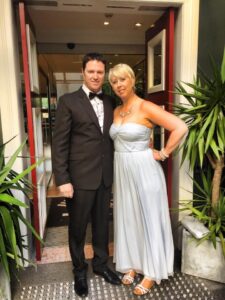 At the beginning of 2012, Korrin Barrett was 33, fit and active and didn’t have serious concerns about her health and well-being. However, within the space of a few months, she would experience unimaginable physical and emotional challenges in the face of grief.
Sadly, her mother passed away in March of that year. A few months later, she was promoted to a project manager role at work, and her stress levels were high.
During that time, she began experiencing some digestive issues, and following a colonoscopy, was diagnosed with ulcerative colitis, the symptoms of which can be exacerbated by stress, and was prescribed anti-inflammatory medications.
“Within two weeks of the diagnosis, I ended up in hospital. I couldn’t stand, I was basically crawling to the toilet, fevers… All sorts of things going wrong,” Korrin recalled.
She went to hospital, was put on pain medication and moved from ward to ward. Eventually, they discovered that her bowel had perforated. She was rushed in for emergency surgery to remove most of her large intestine, before an ileostomy bag was fitted.
After a few days in the Intensive Care Unit (ICU), and still in immense pain, Korrin was advised they needed to perform a wash out and she required further surgery.
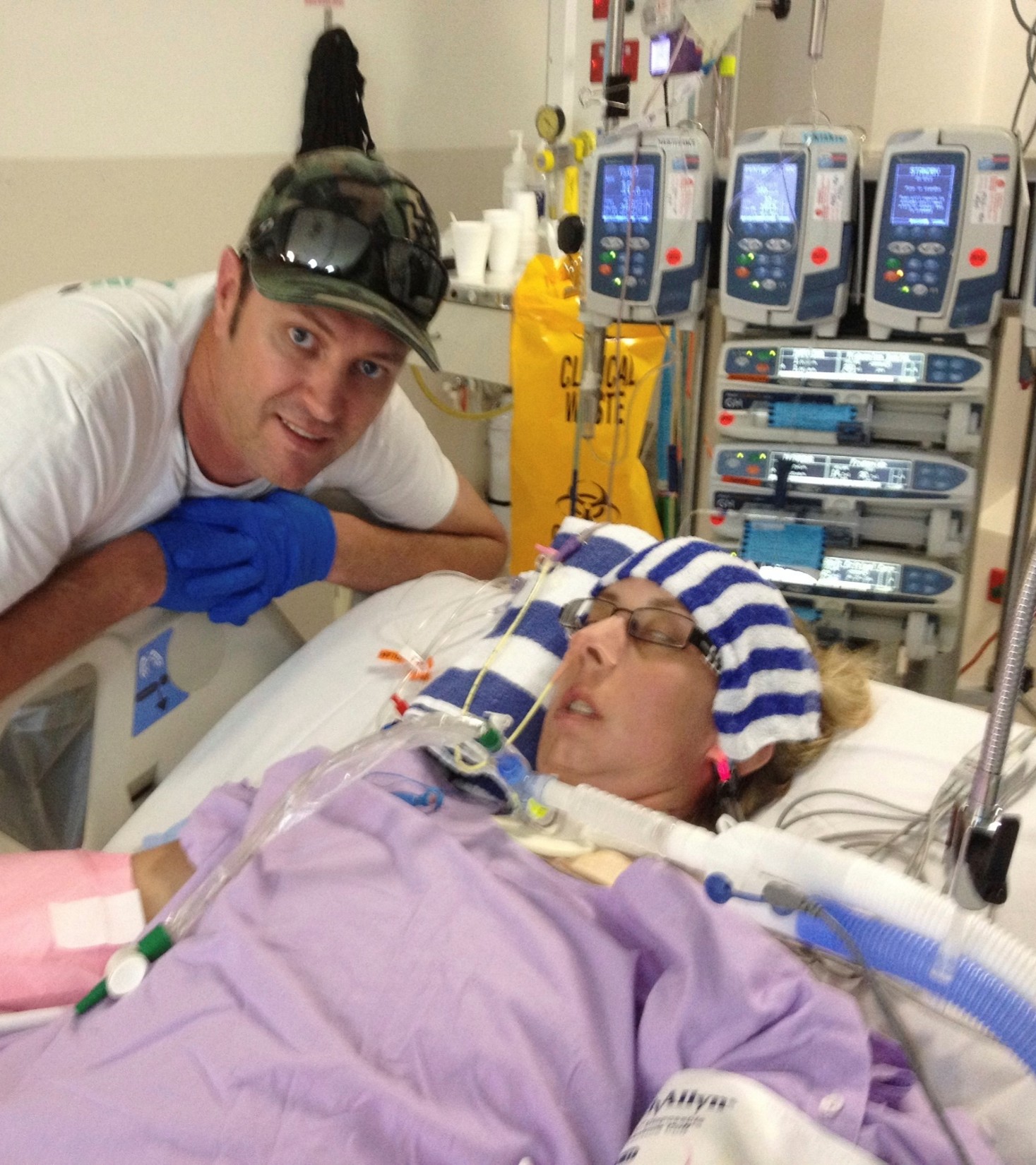
“Craig, my now husband, got into hospital just as I was being wheeled away to surgery. It all went wrong from there. I aspirated on the operating table. They had an ambulance waiting outside the hospital south of Brisbane, and they told Craig that if I survived the next surgery, I would be taken to The Prince Charles Hospital and placed on life support,” she explained.
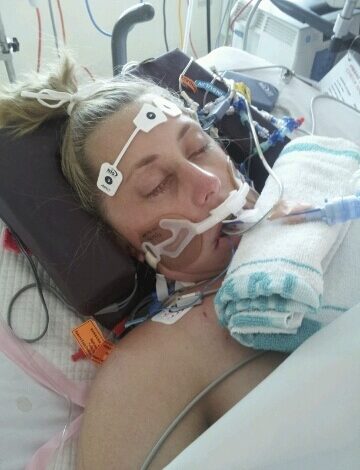
Fortunately, she survived and was taken to The Prince Charles Hospital in an induced coma.
“I arrived critically unwell with what I now know was sepsis and was placed on ECMO. At the time my chances of survival were incredibly slim – maybe 5 per cent,” said Korrin.
ECMO is a life-support system that takes blood out of the body, adds oxygen, removes carbon dioxide and pumps it back into the body, supporting the heart and lungs when they can’t function effectively on their own.
“The care I received at The Prince Charles Hospital was nothing short of extraordinary… The expertise, speed and commitment of the medical team gave me a chance when things could easily have gone very differently,” she said.
Korrin wakes from a coma in the Intensive Care Unit
When Korrin woke up nine days later, she was in the ICU at The Prince Charles Hospital.
“I had no idea what had happened, I couldn’t move or speak and had no idea what was going on or why I was in a different hospital,” she recalled.
“The expertise, speed and commitment of the medical team at The Prince Charles Hospital gave me a chance when things could easily have gone very differently.”
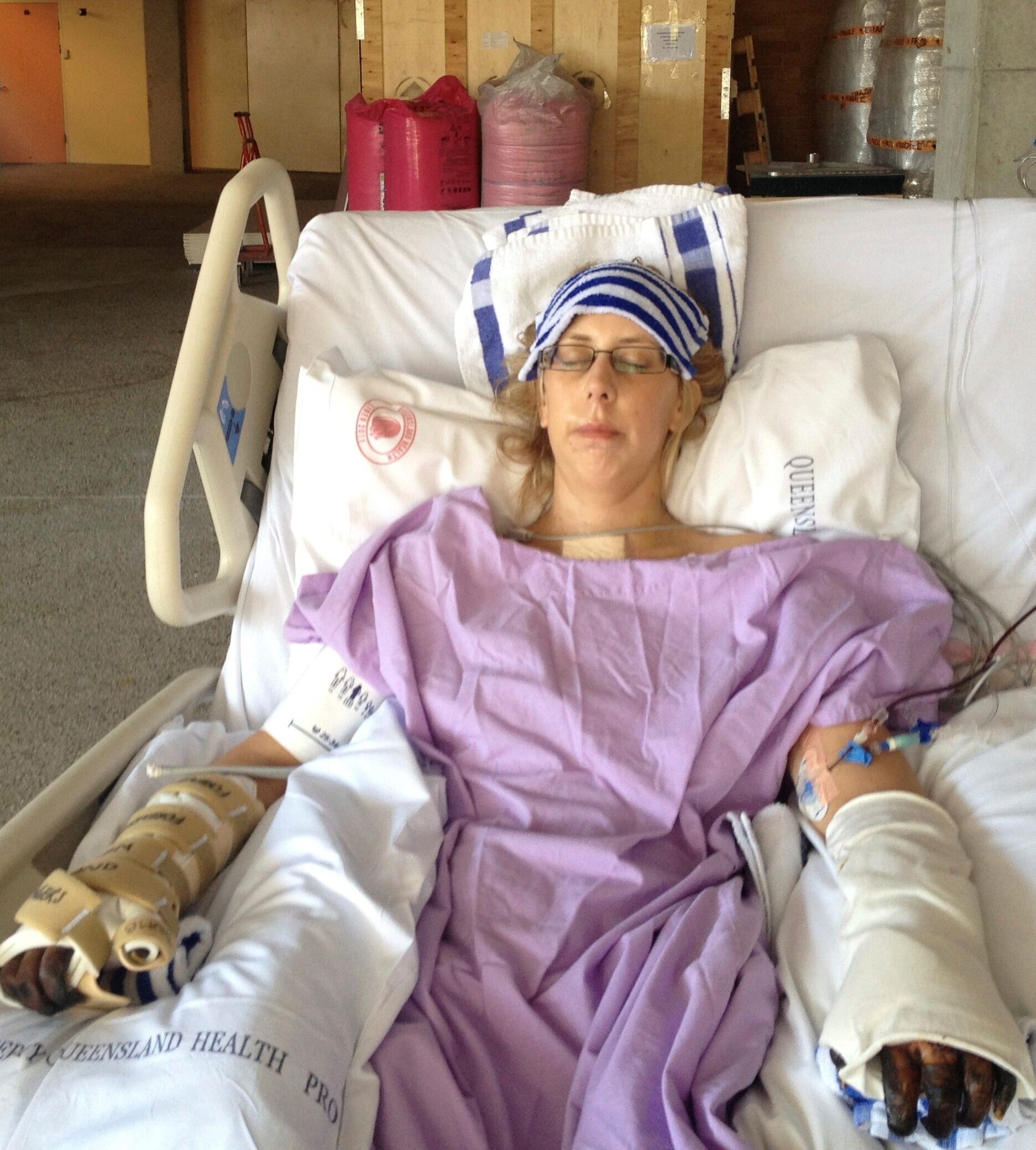
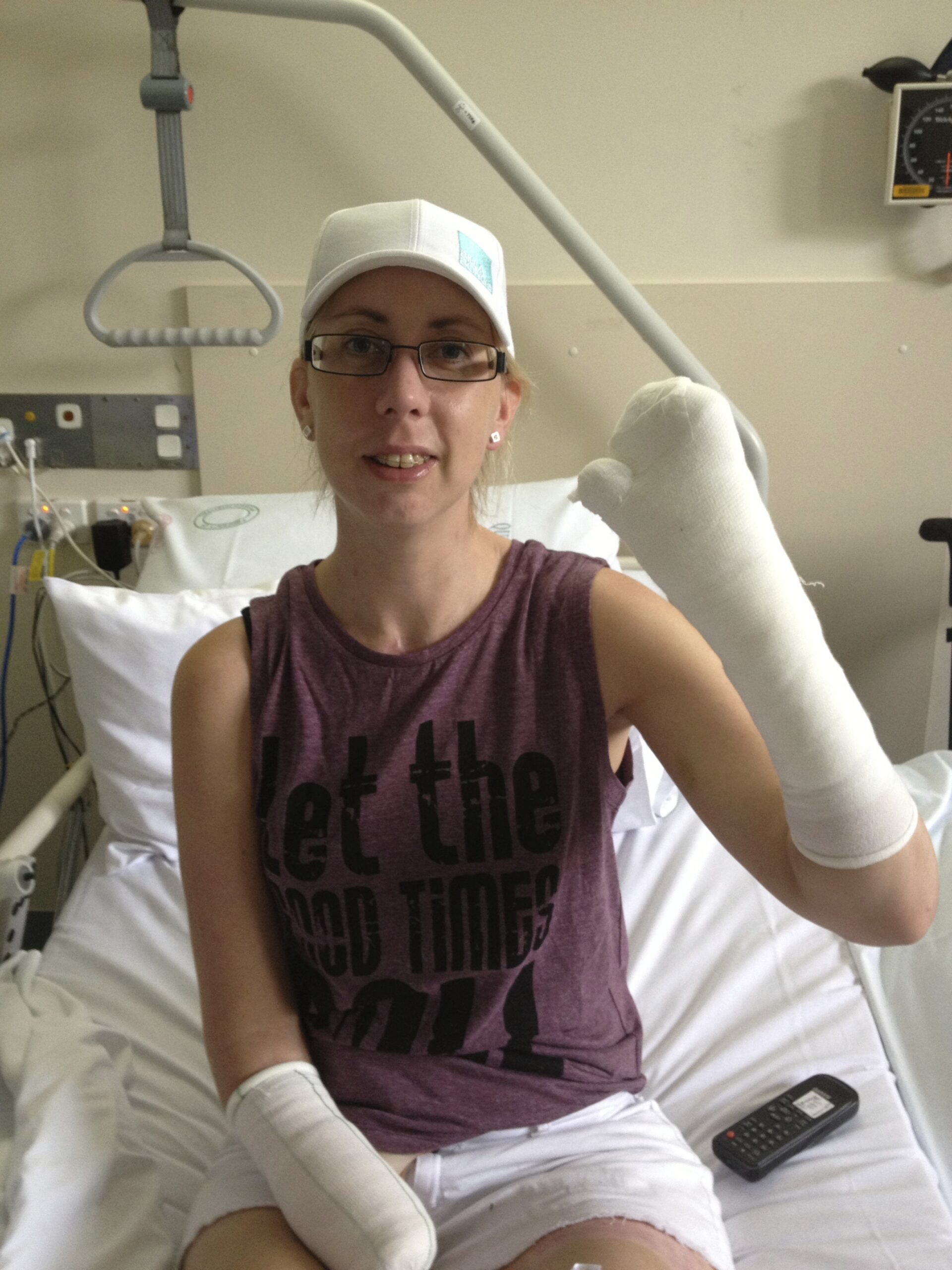
Her life had been saved, but when she had come out of a coma, she learned that her hands and feet had started to turn black due to the lack of blood flow and subsequent tissue death.
“I was on ECMO for an extended amount of time… I know I was in the ICU for four weeks, before I was moved down to the Infectious Diseases ward.”
There, she was given the news that her lower limbs could not be saved, and they were amputated on the 10th of October.
The medical teams worked hard to save her hands with methods such as massage, heat therapy and cold therapy.
The Prince Charles Hospital did not just save my life; it gave me the opportunity to build a life I never could have imagined, even if it was not exactly the one I had planned.
– Korrin Barrett, former TPCH patient
‘I survived something I probably shouldn’t have’
In November, Korrin was transferred to a different Southeast Queensland hospital, where she would later undergo amputations to her upper limbs as well.
She says her rehabilitation was long, confronting and that she had to take it one day at a time.
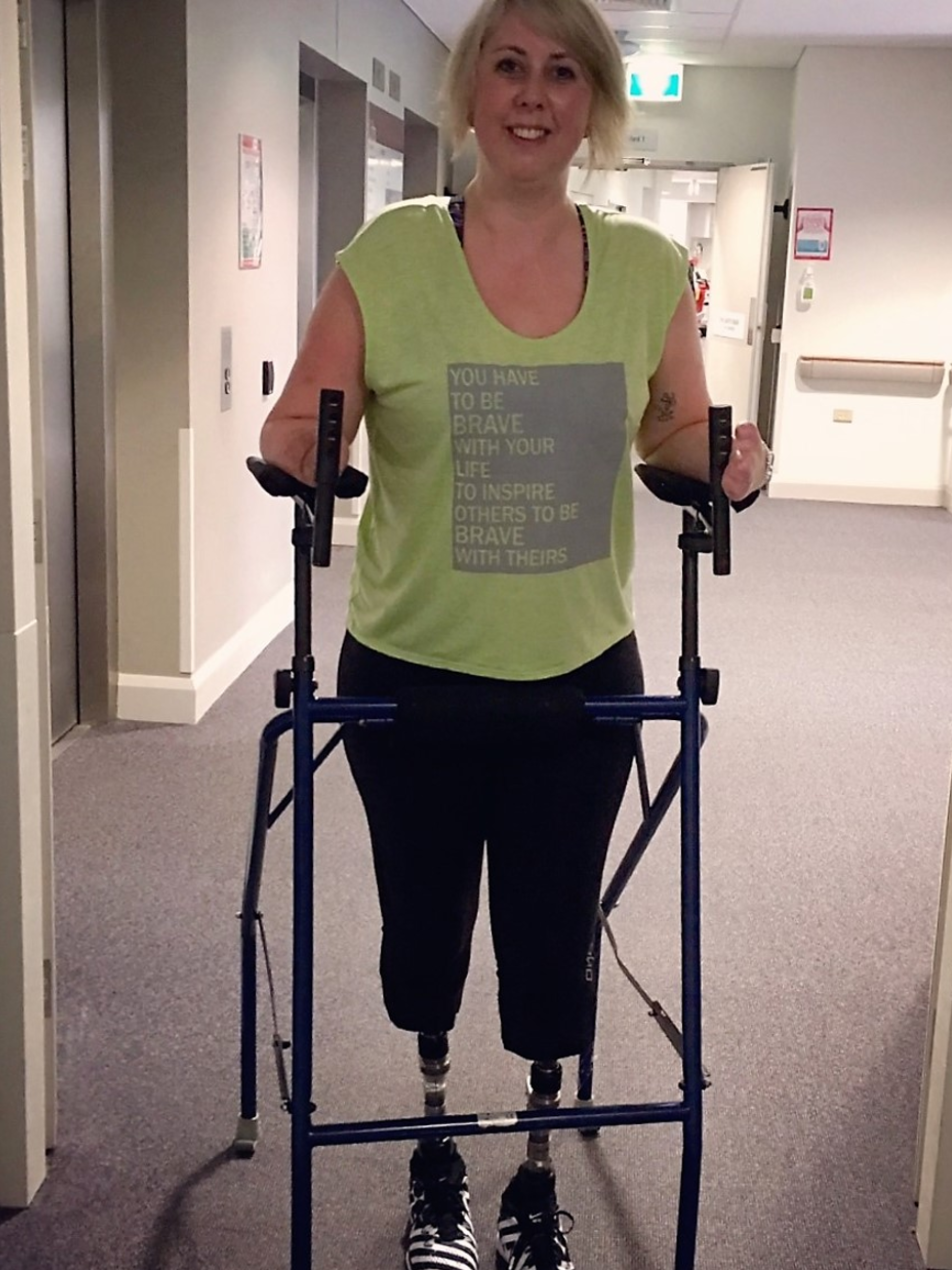
“I had to relearn so many things most of us take for granted: sitting up, transferring, standing, walking with prosthetic legs, driving, working and finding confidence in a body that looked and functioned very differently,” says Korrin.
“There were definitely dark moments when I was wondering why this had happened to me, but I was quite lucky that I managed to switch my mindset… I realised I’d survived something I probably shouldn’t have.”
Her boss visited her in the hospital, and she asked him if she’d have a job to go back to. He told her that no matter how long it took, her role would be waiting for her.
“That was a huge turning point in my recovery. I stopped focusing on things that had been taken away from me and what I couldn’t do anymore. Instead, I wrote a list on my phone of things I wanted to do, small, simple things like feeding myself and taking myself to the toilet,” she explained.
Life after 223 days in hospital
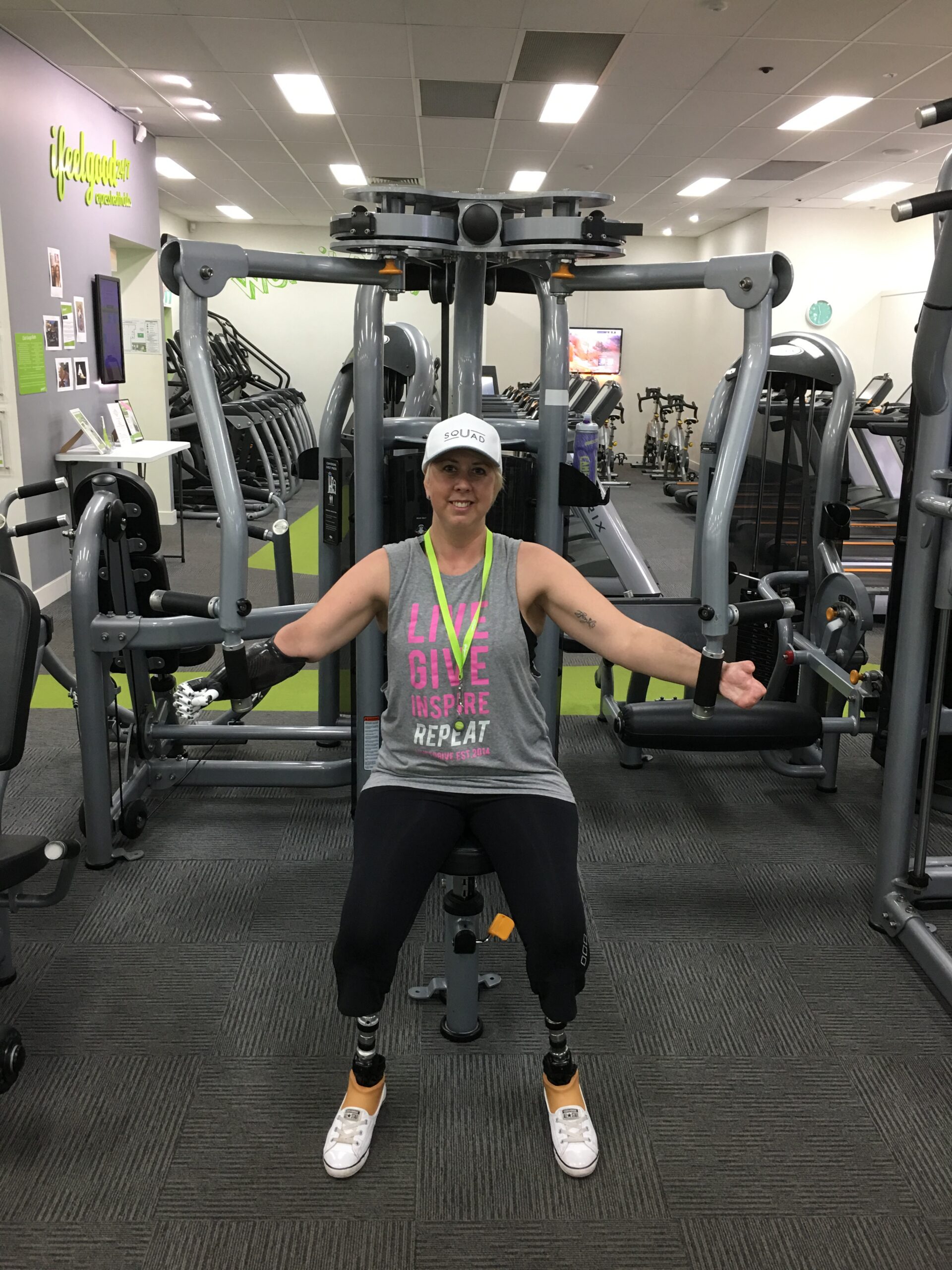
Korrin spent 223 days in hospital. Four days after being discharged, she returned to her job, initially in a part-time capacity eventually building back up to full-time.
She also wanted to ensure that she lived a full life after being given a second chance, and persevered to rebuild her identity, independence and confidence in all areas.
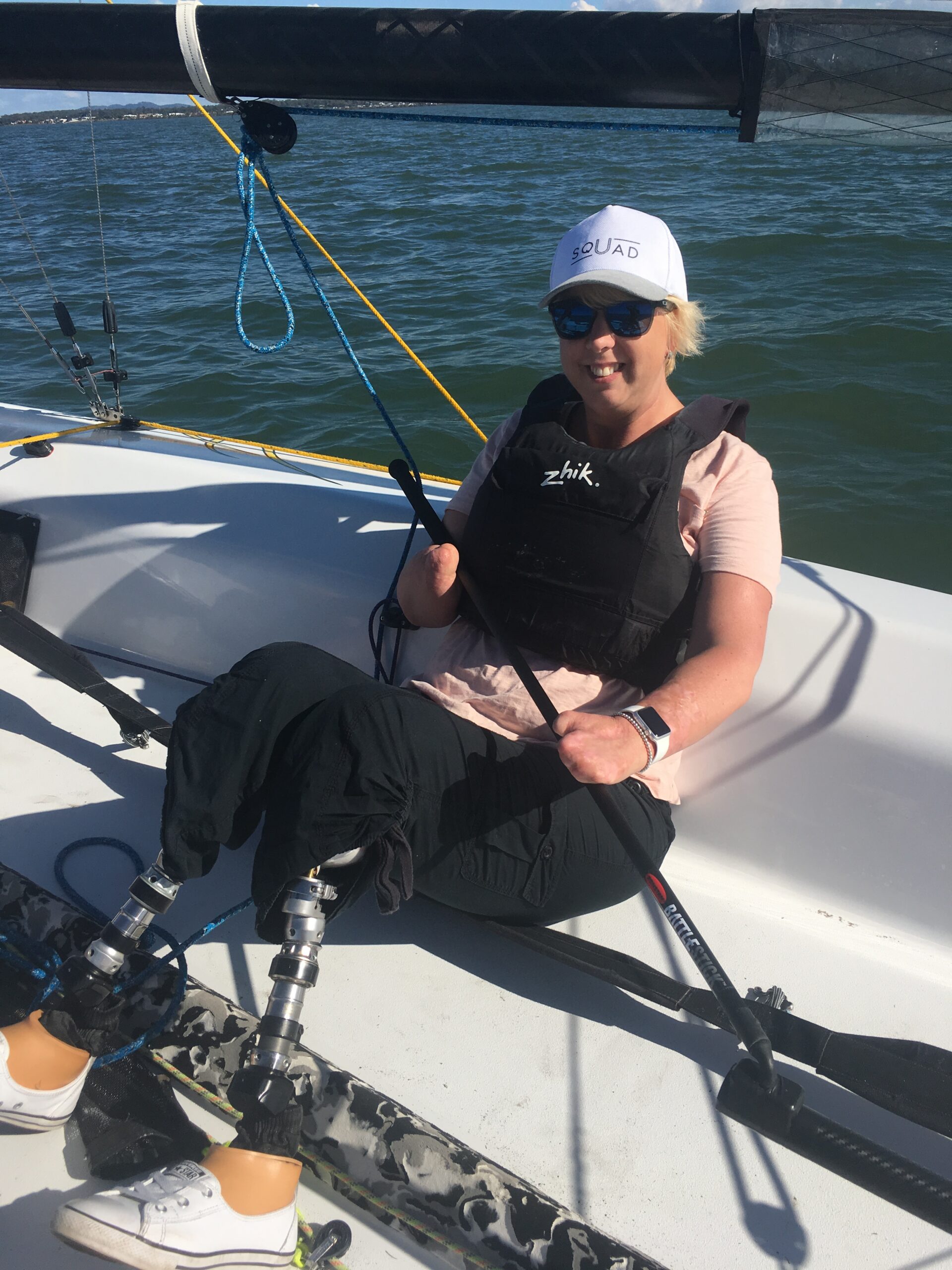
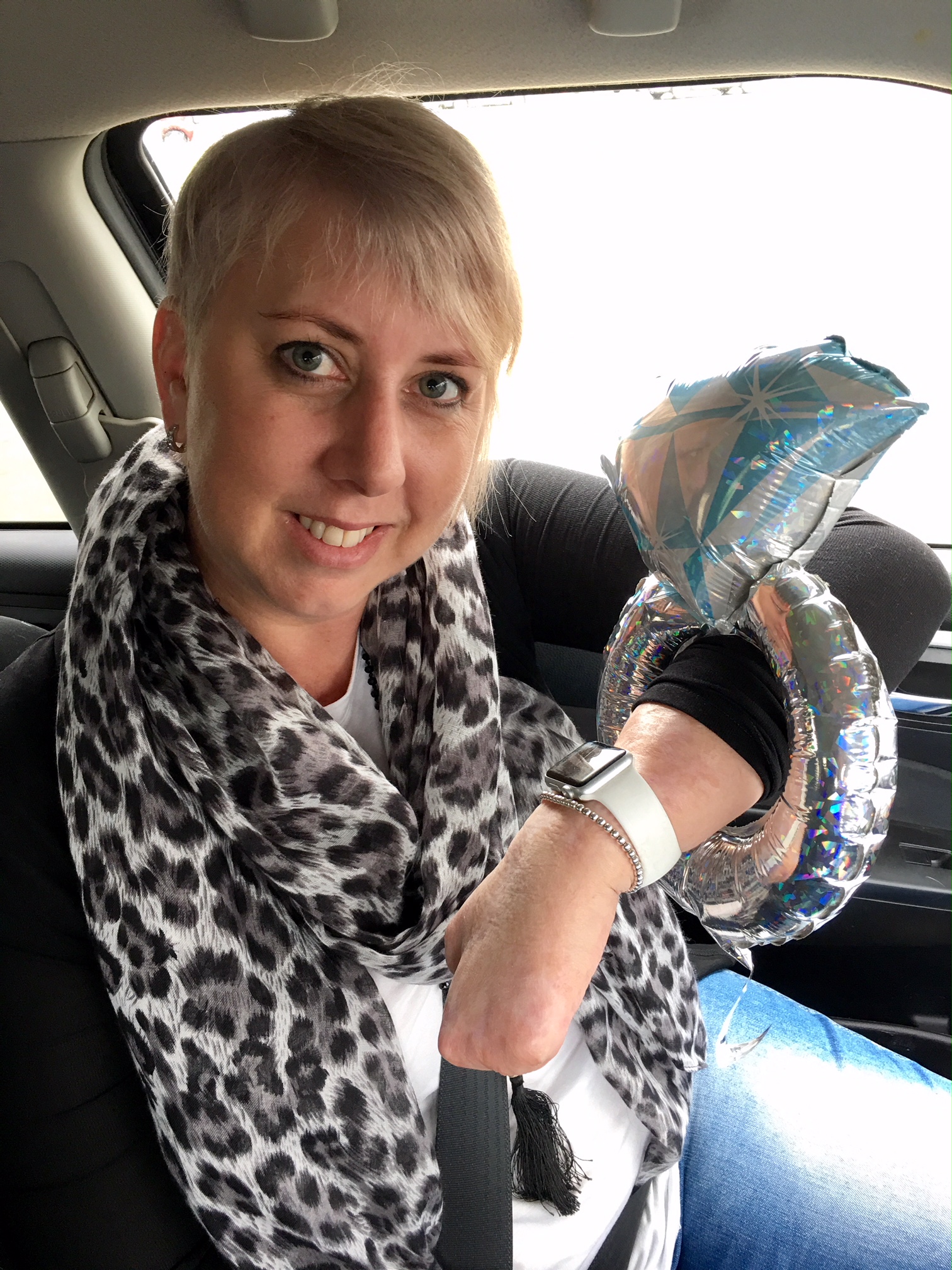
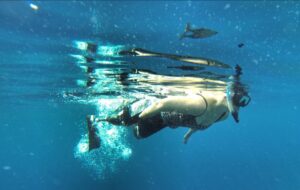
“Since leaving hospital in 2013, I have managed multimillion-dollar contracts from a wheelchair, become a keynote speaker and resilience coach, completed multiple 10km walk events, bungee-jumped, skydived and flown a plane,” she said.
“I’ve travelled worldwide, served on community and advocacy boards, gotten married and built a life I genuinely love. I have also had the privilege of sharing my story with thousands of people and have the privilege of supporting others through their own unexpected challenges.”
‘Medical research played a life-saving role in my treatment’
Korrin knows that neither her survival nor what she has achieved since becoming a quadruple amputee would have been possible without medical research and the clinical teams who cared for her during her hospital admissions.
“ECMO was the intervention that gave my body time to rest and recover when conventional treatment was no longer enough. Without the research, expertise and ongoing advances that made this technology possible, I may not be here,” says Korrin.
“I am living proof that extraordinary care, innovation and determination can change the course of a life.”

ECMO research supported by the Foundation
Past research has informed the care of today and extraordinary outcomes like Korrin’s, but there is still more work to be done.
In recent years, the Foundation has supported several “projects that strive to make ECMO safer and more effective.”
One of those projects completed in 2026 is titled Optimising VA-ECMO: A Pulsatile Flow Analysis based on Computational and Experimental Fluid Dynamics.
“Our research shows that delivering ECMO with a pulse during the heart’s relaxation phase (early diastole) improved unloading of the left ventricle compared with standard continuous ECMO flow in an isolated left ventricle simulation. In simple terms, the heart had to do less work under these settings. Returning a pulse to ECMO helps it mimic the body’s normal physiology and may help support faster recovery and improve long term outcomes,” said Dr Jessica Benitez Mendieta, Senior Engineer with the Critical Care Research Group (CCRG).
“We also developed computer models of blood flow in the aorta and ECMO system to better understand how different flow patterns affect blood movement. These simulations showed that pulsatile ECMO may help reduce the damage the system does to blood cells.”
Korrin says research offers people hope
She says research gives people and their families hope. She also says it gives clinicians the tools to turn that hope into action.
“Research is not abstract or distant when you are lying in an ICU bed. It becomes the reason a medical team has another option to try, another piece of knowledge to draw on, and another chance to offer a family,” Korrin says.
“My recovery has also been supported by ongoing advances in prosthetic technology, rehabilitation and multidisciplinary care.”
“Donations help ensure that future patients and families have access to the same expertise, technology and hope that I was so fortunate to receive.”
‘Fourteen years on, I still feel incredibly grateful to be here’
Korrin doesn’t take the opportunity she has been given to live an incredibly meaningful and exciting life for granted.
“I will be forever grateful to the doctors, nurses and wider team who fought for me when I could not fight for myself,” she said.
“What has stayed with me is not only the exceptional clinical care, but the humanity behind it. We were all supported through one of the most frightening times of our lives with compassion, honesty and kindness.
“The Prince Charles Hospital did not just save my life; it gave me the opportunity to build a life I never could have imagined, even if it was not exactly the one I had planned.”
You can support inspiring research to help more people like Korrin and their families by donating here.
I will be forever grateful to the doctors, nurses and wider team who fought for me when I could not fight for myself.
– Korrin Barrett
Powering today, reinventing tomorrow – your support contributes to life-changing research and patient care initiatives. Donate today and help people live healthier for longer for the next 40 years and beyond.