Using the heart to save the heart
Heart Disease

Using the heart to save the heart

Heart disease remains the number one killer in Australia. 30-50% of heart failure patients will die of sudden cardiac death caused by a ventricular arrhythmia – in which the heart begins to beat at an irregular rhythm – too fast, to slow, too early or irregularly, which can result in sudden death.

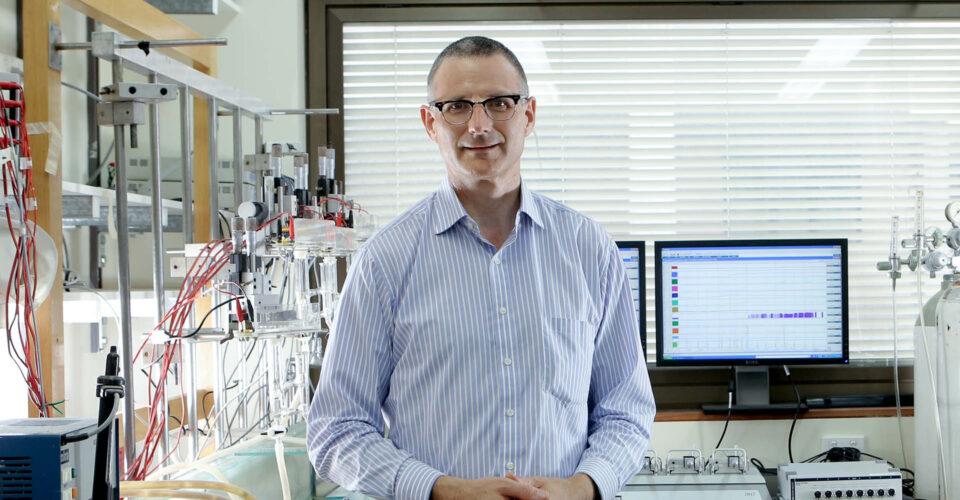
Peter Molenaar seeks to identify better use of medicines for the prevention of sudden, unexpected death in patients with heart failure by using the heart itself – sourcing small pieces of heart tissue from hearts with heart failure, from patients undergoing heart transplantation. So far, Peter’s team have identified one group of enzymes called phosphodiesterases (PDEs), which prevent ventricular arrhythmias, making them potential targets for new medicines.

One way of increasing the level of protection against the occurrence of arrhythmias is to increase the activity of the PDEs. So far it has been identified that medicines called beta-blockers can increase the level of PDEs and therefore provide better protection against harmful arrhythmias.

But not all beta-blockers are the same so it is important to determine which of these are best. This research works with beta-blockers and their interaction with PDEs to determine their effects and help to identify the best treatment for heart failure patients to try and prevent tragic and sudden death.

Support The Common Good here

The Prince Charles Hospital

Published: June 14, 2019

Related news & events

Professor Gregory Scalia AM

Researcher Stories

Professor Gregory Scalia AM

Professor Gregory Scalia AM

Find out more

Meet the 2025 Research Fellowship Recipients

Research Grants

Meet the 2025 Research Fellowship Recipients

In this blog, we introduce you to our 2025 Research Fellowship recipients and share insights into their work and why their investigations are so important.

Find out more

Key Indicators of Cognitive Impairment in Patients with Obstructive Sleep Apnoea

Ageing

Key Indicators of Cognitive Impairment in Patients with Obstructive Sleep Apnoea

“There’s emerging evidence that links poor sleep to the development of dementia – particularly Alzheimer’s disease,” said Dr Irene Szollosi.

Find out more

Carl Francia, PhD candidate

Researcher Stories

Carl Francia, PhD candidate

PhD candidate Carl Francia first observed the disproportionate impact of Acute Rheumatic Fever and RHD on Indigenous Australians while working as a physiotherapist in 2022.

Find out more

TPCH Researcher of the Year 2024, Dr Ieuan Evans

Researcher Stories

TPCH Researcher of the Year 2024, Dr Ieuan Evans

TPCH Researcher of the Year 2024, Dr Ieuan Evans

Find out more

Enhancing patient recovery with Memory Lane 

Ageing

Enhancing patient recovery with Memory Lane 

The hospital’s Occupational Therapy department enlisted the help of some fourth-year UQ students to complete a joint project aimed at promoting Memory Lane and gathering feedback on its usage.

Find out more

Jacarandas and The Prince Charles Hospital

The Common Good

Jacarandas and The Prince Charles Hospital

Over the past several decades on The Prince Charles Hospital’s campus, Jacaranda trees have offered shade and shelter from the elements, as well as a beautiful spot for people to gather outside the clinical environments.

Find out more

The Prince Charles Hospital’s 2025 Giving Day

The Common Good

The Prince Charles Hospital’s 2025 Giving Day

Over $162,000 was raised for The Prince Charles Hospital at our fifth annual Giving Day, thanks to our special community.

Find out more

National Safe Work Month 2025

Lung Disease

National Safe Work Month 2025

National Safe Work Month 2025: This campaign raises awareness of Workplace Health and Safety and provides workplaces around the country with guidance and resources. More here.

Find out more