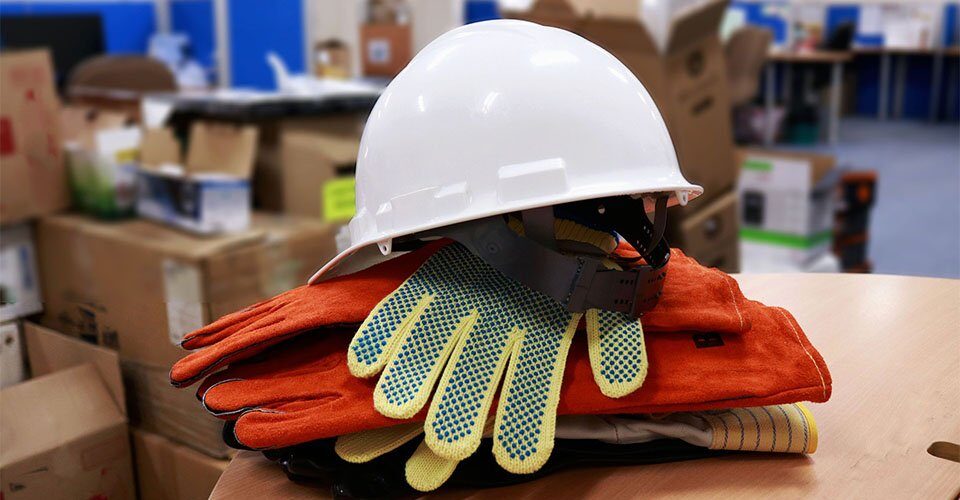
Everyone has the right to feel safe at work, yet all workplaces contain hazards of some description. As a result, there are a range of mental and physical conditions which occur due to a person’s job and the activities they must perform during their employment. Some of these conditions can be debilitating or even life-threatening.
In Australia National Safe Work Month is marked each year in October. It is a time when Safe Work Australia asks businesses, employers and workers across the country to prioritise health and safety in the workplace.
“All workers, regardless of their occupation or how they are engaged, have the right to a healthy and safe working environment,” said Michelle Baxter, Chief Executive Officer, Safe Work Australia.
“The impacts of work-related fatalities, injuries and illness are devastating for workers, their families and the broader community.”
The theme for National Safe Work month this year is ‘know safety, work safely’.
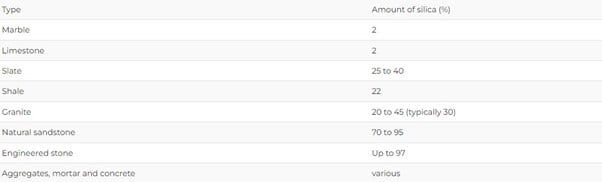
One of the biggest concerns for thousands of workers in Australia is their exposure to silica dust. Silicosis has been described as a new industrial health crisis and has been dubbed the “new Asbestosis”.
Who is at Risk of Silicosis?
Currently there are estimated to be approximately 584,050 workers exposed to silica dust in Australia. [1]
Those workers are in a range of roles and industries as silica is used in many construction and manufacturing products.
Safe Work Australia says the below activities can produce inhalable silica dust particles:
- Excavation and earth moving
- Fabricating and installing stone countertops
- Surfacing and paving
- Construction labouring activities
- Pottery making
- Hydraulic fracturing of oil and gas wells
- Chiselling, jack hammering and angle grinding of concrete or masonry
- Concrete, brick or stone cutting
- Abrasive blasting
Workers who breathe in silica dust particles could develop acute, accelerated, or chronic silicosis, kidney damage, emphysema, lung cancer, chronic bronchitis or scleroderma. [2]
Lung Foundation and National Safe Work Month 2022
This National Safe Work Month the Lung Foundation is striving to enhance awareness of the risks associated with silica dust exposure.
They are encouraging everyone who works with materials that contain silica, including engineered stone, concrete, and bricks, to take an anonymous Healthy Lungs at Work quiz to check in on their lung health.
Determining the Danger of Silica Dust
Safe Work Australia says that before the risks of silica dust can be managed, it must be determined whether silica dust is being generated and released into the air. If silica dust is airborne and workers can breathe it in then they are exposed.
“The workplace exposure standard for respirable crystalline silica (silica dust) that must not be exceeded is 0.05 mg/m3 (eight-hour time weighted average),” Safe Work Australia website.
“PCBUs should keep worker exposure to silica dust as low as reasonably practicable. Air monitoring must be conducted if there is any uncertainty that the exposure standard is being exceeded or to find out if there is a risk to a worker’s health.”
Measuring Silicosis in a Person’s Lungs
A world-first test to directly measure the amount of silica in a person’s lungs has been developed by Dr Simon Apte, a Research Fellow of The Prince Charles Hospital and Chief Scientist at the Queensland Lung Transplant Service.
“This method has recently been published in a highly respected scientific journal and we are already seeing other research centres start to use our method,” Dr Simon Apte, Queensland Lung Transplant Service.
Ground-breaking Whole Lung Lavage Treatment
Thanks to this world-first test, the success of a ground-breaking treatment for mild forms of silicosis can be measured.
This treatment is called a Whole Lung Lavage and involves washing a patient’s lungs with 25 litres of saltwater solution.
The procedure is performed under general anaesthetic and takes about three to four hours to complete.
This treatment was developed by Professor Dan Chambers, senior thoracic physician and head of research at the Queensland Lung Transplant Service.
If you would like to learn more about the research into silicosis at carried out by the talented team at The Prince Charles Hospital and the Queensland Lung Transplant Service, and supported by The Common Good, you can find out more here.
FOOTNOTES
[1] Lung Foundation Australia | Don’t trade in your lungs this National Safe Work Month – Lung Foundation Australia
[2] Safe Work Australia | Crystalline Silica and Silicosis | Crystalline silica and silicosis | Safe Work Australia