The Prince Charles Hospital Foundation was pleased to award six PhD Scholarships in 2025, to the value of more than $547,000.
Each of these recipients is passionate about research and improving patient outcomes in their respective fields. And this significant investment in their work would not be possible without the generosity of our wonderful community of supporters.
Below, we introduce you to these recipients and share a little bit about what they are trying to achieve through their investigations.
2025 PhD Recipients
Mrs Emma Williams, Critical Care Nurse, Caboolture Hospital
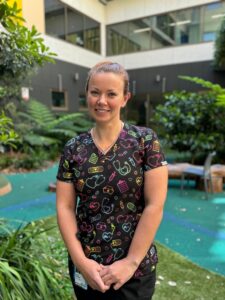
Title of project: Improving Infection Prevention and Control in Acute Patients with Complex Cognitive or Behavioural Needs
What is your research focusing on for your Doctor of Philosophy?
My research is looking at how we can better prevent infections in patients who experience behavioural challenges due to conditions like dementia, substance use, or other social and psychological factors. These patients often need extra care and attention, but infection prevention can be difficult because of their unique needs. The study will explore the experiences of patients and healthcare staff, identify barriers to safe care, and develop practical strategies that work in real hospital settings.
Why is this area of research important?
This group of patients is highly represented in our hospitals and faces a much higher risk of acquiring hospital-associated infections. Unfortunately, there is very little research on how to meet their specific needs in the acute care setting. Current approaches often fall short because they don’t account for behavioural or social factors, leading to gaps in care and safety concerns for both patients and staff. By addressing these issues, this research can help reduce infections, improve patient outcomes, and make hospitals safer and more supportive environments for everyone in our community.
How do you feel about the support from the foundation and its community of donors?
I am incredibly grateful for the support from The Foundation and its generous community of donors. This funding allows me to dedicate the time and resources needed to carry out this work. Without this support, exploring these complex issues and developing solutions that can be put into practice would not get the robust dedication it requires to ensure timely, beneficial improvements to our practices. Your contribution is helping us move closer to safer and more effective care for some of the most vulnerable patients in our hospitals.
Ms Sarah Mackay, Senior Dietitian, Nutrition and Dietetics, TPCH
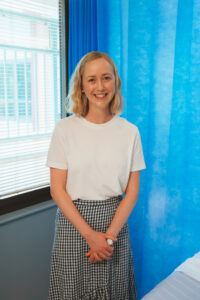
Title of project: Exploring perspectives on malnutrition terminology
- What is your research focusing on for your Doctor of Philosophy?
My research explores how patients, caregivers and health workers understand the words and messages used by health workers when talking about malnutrition.
- Why is this area of research important?
Malnutrition can happen to anyone. It affects up to half of adults in hospital and can be caused by medical problems that increase nutritional needs and reduce the body’s ability to absorb food and not eating enough. Malnutrition leads to poorer health and quality of life, and even a higher risk of death. Yet most people don’t know when they’ve been diagnosed with malnutrition. My goal is to help health workers explain malnutrition in a way that is easy to understand and meaningful to patients and caregivers, so they can make informed choices about their malnutrition care.
- How do you feel about the support from The Common Good and its community of donors?
I’m incredibly grateful for the support from The Common Good and its donors. This funding gives me the time I need to complete my PhD while also working as a clinical dietitian at TPCH. It also allows me to involve patients and caregivers in the research, making sure the findings truly reflect real-world needs.
Ms Annelise Kyriakou, Speech Pathologist, Caboolture Hospital

Title of project: External validation of cervical auscultation for the detection of aspiration in children in community practice
- What is your research focusing on for your Doctor of Philosophy?
As a speech pathologist, I work with children with swallowing difficulties to help identify and prevent food or fluid being swallowed the wrong way, also known as aspiration. Current assessments available are either unreliable or involve radiation (e.g. X-ray swallows) and support in hospital settings. My PhD is looking for other ways to detect aspiration in children. Specifically, I am looking at how speech pathologists can use swallowing sounds to more accurately detect swallowing difficulties and aspiration in children.
- Why is this area of research important?
Delayed or undiagnosed aspiration in children can lead to preventable illness and damage to the lungs. Results from my PhD will also help increase speech pathologists’ confidence when assessing swallowing difficulties for aspiration in children, as well as improve access to high-quality tools for speech pathologists working in rural and remote communities or settings where access to X-ray swallows is limited. As a speech pathologist working in private practice, I am passionate about supporting the continuity of care for all children, as children with neurological and developmental delays will often have fluctuating swallowing skills needing regular evaluation and management.
- How do you feel about the support from The Common Good and its community of donors?
I am so grateful and honoured to have received support from The Common Good and its community of donors for my research. Improving access to high-quality and accurate healthcare for all is a passion of mine, and something I strive to contribute to with my research through using cutting-edge artificial intelligence to develop an accessible, non-invasive swallow sounds assessment tool to improve the early detection of aspiration in children. As a woman working in science, the provision of financial support from The Common Good and its community of donors will provide me with job security and support, so I can focus on my studies and passion for research.
Dr Quentin Moyon, International Fellow of Critical Care Research Group
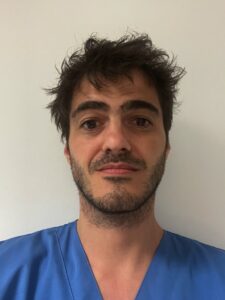
Title of project: An investigation on the benefits of pulsatile V-A ECMO in an animal model of cardiogenic shock
What is your research focusing on for your Doctor of Philosophy?
My PhD focuses on improving the way we support patients with severe heart failure using Extracorporeal Membrane Oxygenator (ECMO). ECMO is an advanced life-support technique that temporarily takes over the work of the heart or lungs by circulating and oxygenating the blood outside the body. At the moment, ECMO provides a continuous blood flow, which can increase the workload of the heart and contribute to complications. My research aims to develop and optimise a pulsatile ECMO system that better mimics the natural heartbeat and offers improved protection for the heart and other organs. The project combines in-vitro models, advanced monitoring and translational work in large-animal studies.
- Why is this area of research important?
Despite major progress, outcomes for patients on ECMO remain limited. The heart often struggles against the continuous flow of the pump, which can worsen its condition. By understanding how pulsatile flow interacts with the heart and circulation, we hope to develop strategies that reduce complications and improve patient recovery. This could benefit a wide range of critically ill patients in the future.
- How do you feel about the support from The Common Good and its community of donors?
I am extremely grateful for the support. This scholarship allows me to fully dedicate myself to the research and to join an outstanding team at the Critical Care Research Group. None of this work would be possible without the generosity of The Common Good and its donor community, and I truly appreciate their commitment to advancing critical care research.
Dr Matthew Bright, Cardiac Anaesthetist, Department of Anaesthetics, TPCH
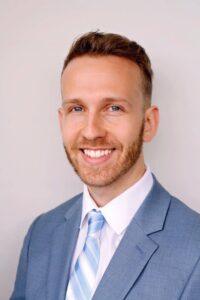
Title of project: Evaluation of intraoperative neuromonitoring to determine the lower limit of cerebral autoregulation
- What is your research focusing on for your Doctor of Philosophy?
My PhD is a large translational research program focused on improving how blood pressure is managed during surgery to better protect the brain and other vital organs. It brings together a series of six interconnected studies across both cardiac and non-cardiac surgery. These include patient observation studies, sub-studies within clinical trials, and a major review of the existing medical literature. Together, they use advanced brain monitoring and signal analysis to understand how the brain controls its own blood flow during anaesthesia.
- Why is this area of research important?
Complications related to anaesthesia and surgery remain one of the leading causes of death worldwide. Even brief episodes of low blood pressure during an operation can cause lasting injury to vital organs such as the brain, kidneys, and heart. These injuries can lead to serious complications, including stroke, delirium, kidney failure, prolonged recovery, and long-term cognitive problems. Despite these risks, current blood pressure management during surgery is largely based on general population targets. These one-size-fits-all thresholds do not reflect the wide variation between patients in how well their brains can tolerate reduced blood flow. Some patients may be safely protected at lower pressures, while others may be at risk of injury at the very same levels.
My research program directly addresses this problem by using real-time brain monitoring and advanced signal analysis to define each patient’s own individual lower limit of cerebral autoregulation. The ultimate goal is to prevent avoidable complications, improve recovery, and deliver safer surgery for patients.
- How do you feel about the support from The Common Good and its community of donors?
I am incredibly grateful to have the support of The Common Good and its donors. Their generosity is enabling advanced monitoring and analysis to translate into safer surgery, improved recovery, and better long-term outcomes for patients undergoing some of the most complex procedures in modern medicine. Without this assistance, delivering high-quality translational research and driving innovation in this area would simply not be possible. Beyond my PhD projects, the ongoing support of the Foundation and its donors further strengthens The Prince Charles Hospital as a centre for research excellence and fosters my development as an emerging clinician–researcher.
Mr Michael Garbutt, PhD Candidate, ICETLab
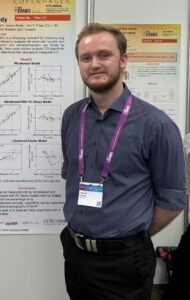
Title of project: Computational and Experimental Design of Extracorporeal Membrane Oxygenator (ECMO) Housing to Minimise Haemolysis and Thrombogenic Risk
- What is your research focusing on for your Doctor of Philosophy?
Despite providing lifesaving treatment to critically ill patients, current ECMO systems are limited by some significant complications, such as haemolysis (red blood cell damage) and thrombosis (formation of blood clots). These issues can result in reduced effectiveness of the treatment and serious clinical consequences for the patient. My research will focus on redesigning current ECMO housing geometries with a haemodynamic-focused approach to minimise the incidence of haemolysis and thrombosis. Through a combination of fluid dynamics simulations, physical prototyping and consultation with the wider research group, my goal is to create a safer, more efficient ECMO device that reduces the incidence of haemolysis and thrombosis, ultimately improving patient outcomes.
- Why is this area of research important?
Haemolysis and thrombosis result in a range of adverse outcomes for ECMO patients. These complications can result in prolonged hospital stays, increased healthcare costs and, most importantly, reduce the chances of survival. Improving ECMO technology has the potential to directly save lives and enhance the quality of care for patients in critical care. By addressing the underlying mechanical design and optimising to reduce haemolysis and thrombosis, this research aims to make ECMO safer, more accessible and more effective for patients who rely upon it during life-threatening illness.
- How do you feel about the support from The Common Good and its community of donors?
The support from The Common Good and its community of donors has been invaluable in the pursuit of my research. This scholarship allows me to fully dedicate myself to advancing ECMO technology and contributing to meaningful innovation within critical care medicine. I am deeply grateful for the belief they have shown in my work and their commitment to improving patient outcomes through research. Their support has enabled me to advance my academic journey by providing potential real-world impacts through this project.
Supporting researchers with their PhDs
At the Foundation, we are committed to backing research careers at every stage, and our PhD Scholarships are an important step in building the next generation of researchers.
Dr Rebekah Engel, Research Manager for The Prince Charles Hospital Foundation, says, “Having a diverse mix of grants ensures we’re nurturing talent at every stage – keeping promising researchers engaged, driving new discoveries, and making sure that important questions don’t go unanswered.”
You can help to support talented and dedicated researchers like those mentioned in our blog by making a donation.
Click here today to show your support.