Making more hearts available for transplant
Heart Disease

Making more hearts available for transplant

Up to 50,000 Australians right now would benefit from a heart transplant, and although over 400 hearts are made available for transplant each year only around 100 heart transplants are able to be carried out due to a range of factors that affect the donor heart after death. There is a desperate need for more hearts to be able to be transplanted for the thousands of patients in need every year.

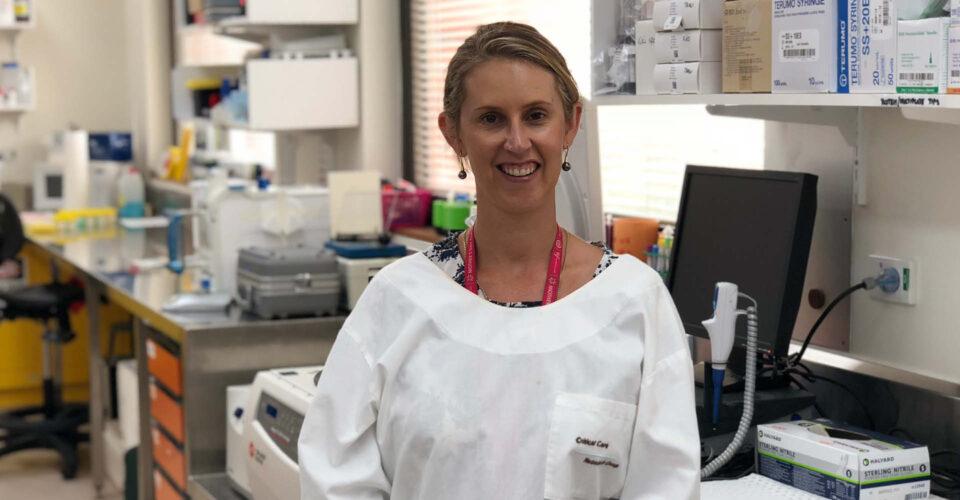
Generally, hearts are only sourced for transplant from donors who have experienced brain death rather than circulatory death – as the heart stays at body temperature for a longer period of time, making it more difficult to achieve a successful transplant. Louise See-Hoe believes if we could better understand what happens to the heart after death and discover a better way to store and treat the heart, we may be able to make more hearts viable for transplant and prolong this small window where a transplant is possible; increasing the available number of viable hearts for transplant.

As part of her research, Louise is working to increase the number of hearts available for transplant by investigating different storage techniques for transplant organs; assessing the way that the heart is stored during transport from donor to recipient.

Louise and her team are working with a device that aims to extend the time a donor heart can be stored, without causing undue damage or deterioration to the heart itself. Its success would mean instead of limiting donor heart storage and travel time to around four hours, this could be extended up to 24 hours. This would mean donor hearts from further afield could be kept ‘viable’ long enough to be transported and save the lives of more patients in need.

Louise is also looking at using different treatments to treat hearts during storage so that they are able to be used even if there is something “slightly” wrong with them. If they are able to improve the heart’s condition and function and make a thorough assessment well before it goes to a recipient, hearts that may have been previously turned away may now be able to be used to successfully save lives.

The results of this research will help to develop new ways of sourcing hearts from different types of donors, find more effective ways of storing and transporting donor hearts and figure out the best way to treat, and potentially improve, previously unusable hearts so that more patients can receive transplants.

In addition, we could see improvement in outcomes for transplant patients by helping to ensure that donor hearts are not damaged and are in the best condition for transplant.

More hearts available for transplant means more of our loved ones lives saved each and every year.

Support The Common Good here.
Published: June 25, 2019

Related news & events

Meet the 2025 PhD Recipients

Research Grants

Meet the 2025 PhD Recipients

The Prince Charles Hospital Foundation was pleased to award six PhD Scholarships in 2025. Click here to meet the recipients.

Find out more

Professor Gregory Scalia AM

Researcher Stories

Professor Gregory Scalia AM

Professor Gregory Scalia AMProfessor Gregory Scalia AM first stepped into The Prince Charles Hospital as a registrar in the early 90s. Now, as the hospital’s long-standing Director of Echocardiography, he has dedicated most of his career to ensuring that complex cardiac diagnoses are accessible to a much larger portion of the population through echocardiography

Find out more

Meet the 2025 Research Fellowship Recipients

Research Grants

Meet the 2025 Research Fellowship Recipients

In this blog, we introduce you to our 2025 Research Fellowship recipients and share insights into their work and why their investigations are so important.

Find out more

Key Indicators of Cognitive Impairment in Patients with Obstructive Sleep Apnoea

Ageing

Key Indicators of Cognitive Impairment in Patients with Obstructive Sleep Apnoea

“There’s emerging evidence that links poor sleep to the development of dementia – particularly Alzheimer’s disease,” said Dr Irene Szollosi.

Find out more

Carl Francia, PhD candidate

Researcher Stories

Carl Francia, PhD candidate

PhD candidate Carl Francia first observed the disproportionate impact of Acute Rheumatic Fever and RHD on Indigenous Australians while working as a physiotherapist in 2022.

Find out more

TPCH Researcher of the Year 2024, Dr Ieuan Evans

Researcher Stories

TPCH Researcher of the Year 2024, Dr Ieuan Evans

TPCH Researcher of the Year 2024, Dr Ieuan Evans, is working to develop a Therapeutic Drug Monitoring (TDM) program specifically for Trikafta.

Find out more

Enhancing patient recovery with Memory Lane 

Ageing

Enhancing patient recovery with Memory Lane 

The hospital’s Occupational Therapy department enlisted the help of some fourth-year UQ students to complete a joint project aimed at promoting Memory Lane and gathering feedback on its usage.

Find out more

Jacarandas and The Prince Charles Hospital

The Common Good

Jacarandas and The Prince Charles Hospital

Over the past several decades on The Prince Charles Hospital’s campus, Jacaranda trees have offered shade and shelter from the elements, as well as a beautiful spot for people to gather outside the clinical environments.

Find out more

The Prince Charles Hospital’s 2025 Giving Day

The Common Good

The Prince Charles Hospital’s 2025 Giving Day

Over $162,000 was raised for The Prince Charles Hospital at our fifth annual Giving Day, thanks to our special community.

Find out more