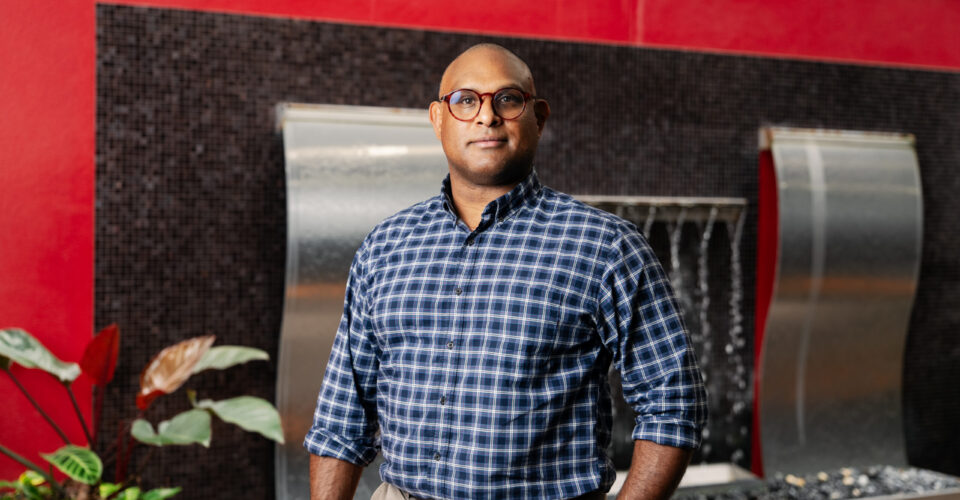
Research Fellow Dr Glenn Stewart says science and cycling are symbiotic in his life, and this year he’s making the most of that established relationship riding in the Australian Unity Tour de Brisbane and raising funds for transplant research.
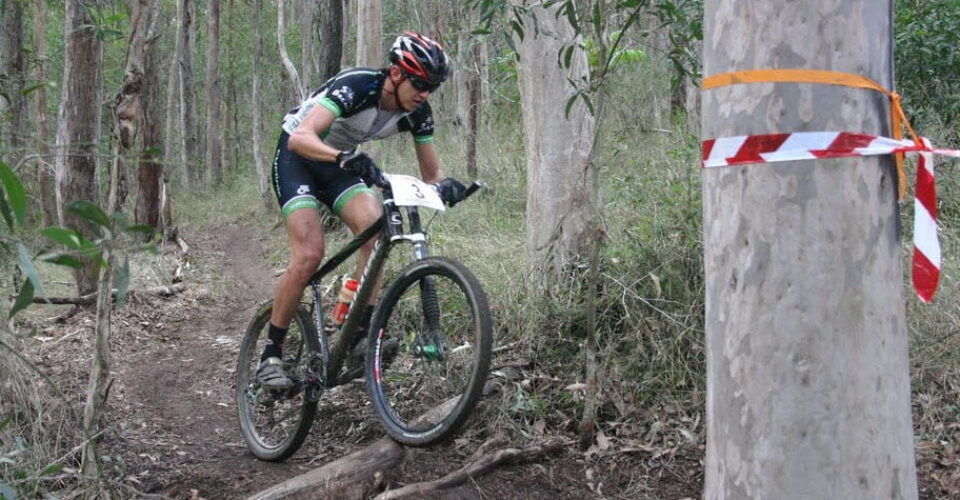
“Like most kids, I rode a bike, and probably, the difference is I never stopped. I just kept riding more and more, particularly mountain bike riding,” he said.
While this is Glenn’s first Tour de Brisbane event, it will be much more leisurely than rides he has completed in the past. At about 10-years-old, Glenn began competing in junior races; before progressing to regional-level, state-level, and national-level racing. In his mid-to-late teens, he picked up a sponsorship with a bike brand and was selected to be in the Australian Junior Mountain Bike team and represent Australia at the Mountain Bike World Championships.
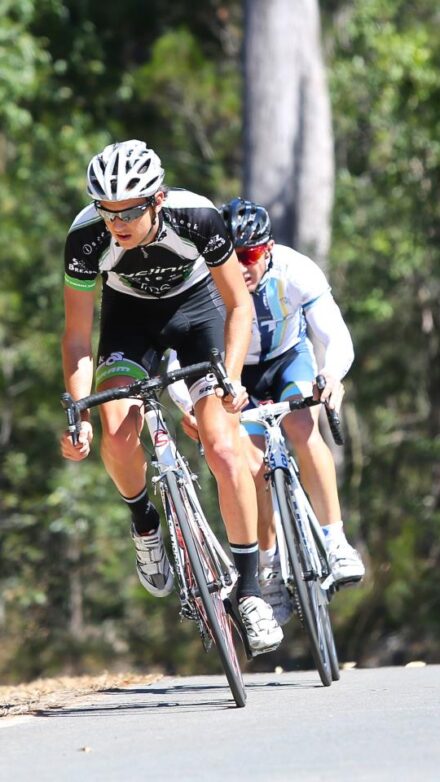
His passion for tackling varied terrain on two wheels spawned his love of exercise physiology.
“It was probably when I was about 16 or 17, they started saying you’ve got some promise, we want to test you and try to excel your performance, and that’s when it involved the science of sport,” he said.
This was the beginning of when cycling and science converged for Glenn.
Glenn spent a few years in the Australian cycling team, training occasionally at the Australian Institute of Sport and the Tasmanian Institute of Sport.
After school, he enrolled in an Exercise Science degree at Griffith University, where he volunteered in research studies undertaken by staff and PhD students and helped them with data collection. This sparked an interest in research: however, like most university students, he needed to find a job, so he also worked as a cardiac technician at a private hospital for several years.
After graduating with Honours, Glenn decided to complete a PhD studying the effects of endurance exercise training on an athlete’s heart.
“I wanted to know how we optimise the heart muscle like other muscles,” he recalled.
“We were pushing elite cyclists as hard as we possibly could in the lab as well as monitoring them in the normal training routines and then seeing what happens to the heart, how it adapts, where is it stressed, can it be stressed too much.”
The stars aligned for Glenn, and he met Professor Bruce Johnson, the head of the Human Integrative and Environment Physiology lab at the esteemed Mayo Clinic.
Professor Johnson invited Glenn to join his lab in the United States as their research themes overlapped. There, Glenn was involved in a human physiology research program, investigating how the heart and lungs are working or not working together in a clinical setting.
Along with these clinical studies, Glenn was introduced to environmental physiology, which involved expeditions to better understand how high altitudes and exercise impact humans. One of those expeditions was to Mount Kilimanjaro in Tanzania to study how healthy people respond to high altitude.
“Surprisingly, a healthy person at altitude can experience symptoms like those you see in heart failure,” said Glenn.
Another expedition to investigate endurance sports at high altitude took him to Hong Kong and Mount Blanc on the French-Italian border. It compared how ultra-marathon runners fared in flat terrain in Hong Kong with how they coped at an altitude of around 3000 m above sea level in France.
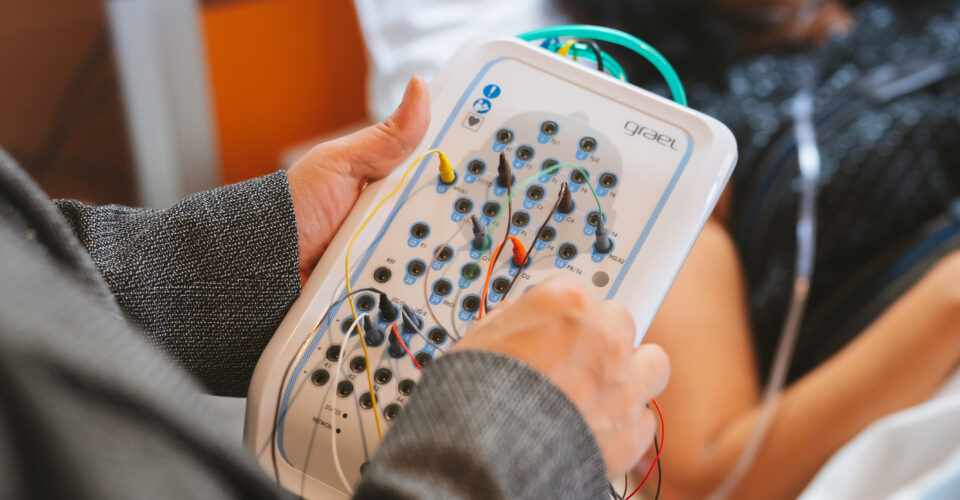
While Glenn’s passion for endurance sport led his research in one direction, he was also targeting a clinical impact with his studies in the hospital setting. While working alongside Prof Johnson, Glenn was fortunate to receive funding from the American Heart Association and a Mayo Clinic Foundation Research Award to develop some novel cardiac imaging techniques and expired breath assessment methods, and to stretch the limits of these new techniques while using them during cycling exercise. A key feature of Glenn’s research is using cycling exercise as a provocative ‘stress test’ and pushing the limits of new technologies to unmask early warning signs in people at risk of developing chronic heart and lung diseases, and to better understand the disease process itself.
After five years at the Mayo Clinic, Glenn decided it was time to return home and transition his program of research and learnings from abroad back to Australia.
He was able to do that in 2021 after receiving a 3-year fellowship at Griffith University and The Prince Charles Hospital, supported by The Common Good and its incredible donors.
When riders raise funds at the Australian Unity Tour de Brisbane, they are helping provide opportunities to people like Glenn – who has dedicated his career to understanding why some hearts grow big and strong, and some hearts fail; and what options are available to prevent this from happening.
“Now I can work towards making a difference for the next person with heart failure or the next person with a lung disease, or their father, mother, wife, or children.’
Click here to support Glenn on his Australian Unity Tour de Brisbane ride.