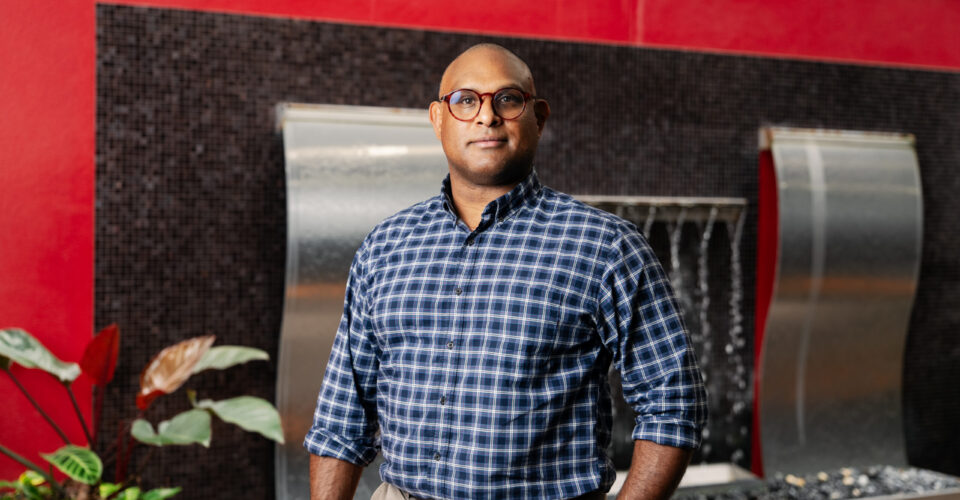
“The vast disparity in the burden of Acute Rheumatic Fever and Rheumatic Heart Disease between Indigenous and non-Indigenous Queenslanders necessitates an urgent and targeted response from government and communities toward prevention,” said PhD Candidate Carl Francia.
According to the Australian Institute of Health and Welfare, 7,192 people were recorded as having Rheumatic Heart Disease (RHD) on official registers across Queensland, Western Australia, South Australia, and the Northern Territory by the end of 2023. Notably, 79 per cent of those affected were First Nations people.
PhD candidate Carl Francia first observed the disproportionate impact of Acute Rheumatic Fever (ARF) and RHD on Indigenous Australians while working as a physiotherapist in the Intensive Care Unit at The Prince Charles Hospital in 2022.
“There was a period when we had a very young cohort of patients from across Queensland requiring advanced cardiopulmonary support due to decompensated heart failure caused by RHD,” said Carl. “These patients were in their late teens and early twenties, and most were Aboriginal, Torres Strait Islander, or Māori and Pasifika.”
Carl was struck by the fact that RHD is entirely preventable and has been virtually eliminated in the broader population due to improved living standards. ARF can develop following a group A streptococcal (Strep A) infection, meaning prevention begins with reducing exposure to these bacteria—particularly in infancy—through better living conditions related to hygiene, overcrowding, and poverty.
“If you catch ARF early—at the stage of a throat or skin infection—and treat it with antibiotics, you can prevent it from damaging the heart valves, which would otherwise lead to RHD and the potential need for open-heart surgery,” Carl explained.
Over the past two years, Carl has been using linked hospital and administrative data to study the epidemiology of ARF and RHD in Queensland. His paper, titled Incidence and Prevalence of Acute Rheumatic Fever and Rheumatic Heart Disease in Queensland (2017–2021): A Retrospective Data Linkage Study, was submitted to the Medical Journal of Australia in December 2024.
For the study, Carl created a novel population-level dataset by identifying all individuals under age 45 hospitalised or notified with ARF and those under 55 with RHD. He used linked Queensland-wide hospital, emergency department, mortality, and RHD registry records.
“Among people under 45, the age-standardised incidence of first-ever ARF in Indigenous populations was 60.2 times higher than in non-Indigenous populations, 68.6 times higher for total ARF cases, and 18.9 times higher for RHD,” Carl reported.
He outlined several challenges in diagnosing and treating ARF. The first is that diagnosis is difficult because no definitive test exists.
“In my dataset, only 8 per cent of those with RHD had a documented prior diagnosis of ARF,” he said. “That means most people aren’t being identified early, missing the window for treatment and prevention.”
The second challenge relates to ongoing treatment. Open-heart surgery does not prevent future Strep A infections, and the primary preventative measure—regular intramuscular antibiotic injections—suffers from poor adherence.
“These injections, administered every three to four weeks post-surgery, are thick and take about five minutes to deliver. Patients must continue this treatment for a minimum of 10 years or until they reach 40, whichever is longer,” Carl said. “That’s a heavy treatment burden. Surgery doesn’t cure the condition—it only addresses the damage. The underlying autoimmune response remains. If someone continues to get Strep A infections, they’re at risk of another ARF episode that can further damage the heart.”
To drive meaningful change, Carl emphasized the urgent need for further research and a coordinated, community-driven prevention strategy.
“Indigenous communities and health services in Queensland need access to accurate, disaggregated ARF and RHD data to develop effective, place-based prevention strategies,” he said. “We need approaches that address all levels of prevention—primordial and primary—in partnership with communities. If the community doesn’t take ownership, the strategies won’t succeed.”
Carl added that Queensland Health appears committed to working collaboratively with communities to co-design these solutions.