Using the patient’s own tissue to integrate heart pumps into the body
Heart Disease

Using the patient’s own tissue to integrate heart pumps into the body

Empire Industrial Estate know the value of medical discoveries, which is why they have adopted this research area!

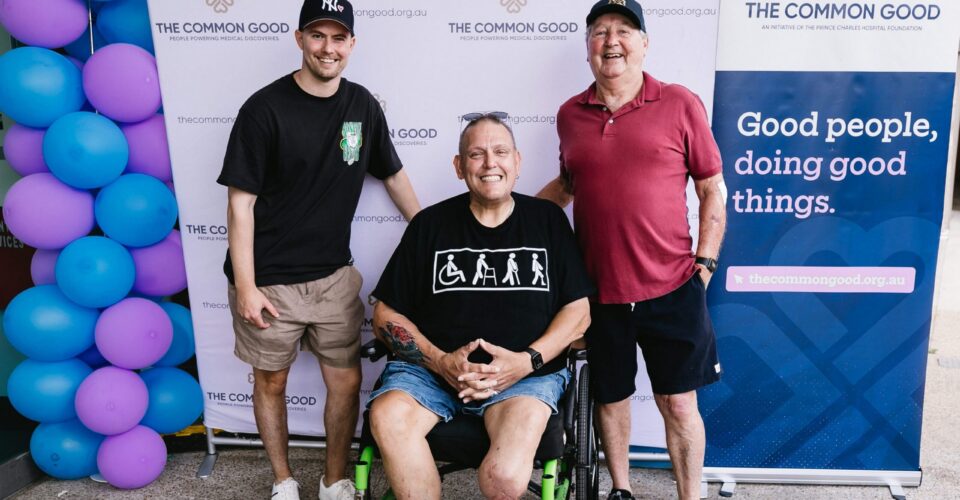
Heart transplant recipient and Company Director Tony Stephens is living proof of the value that medical research provides. After receiving a heart transplant at age 34, Tony knew that he had received a precious gift.

“Walking out of the hospital, the fresh air is again even better than winning the lottery, it’s freedom… You can’t put a price on it – you walk out into a brand-new world and it’s all fresh. It’s all new and you get a proper second chance of life.”

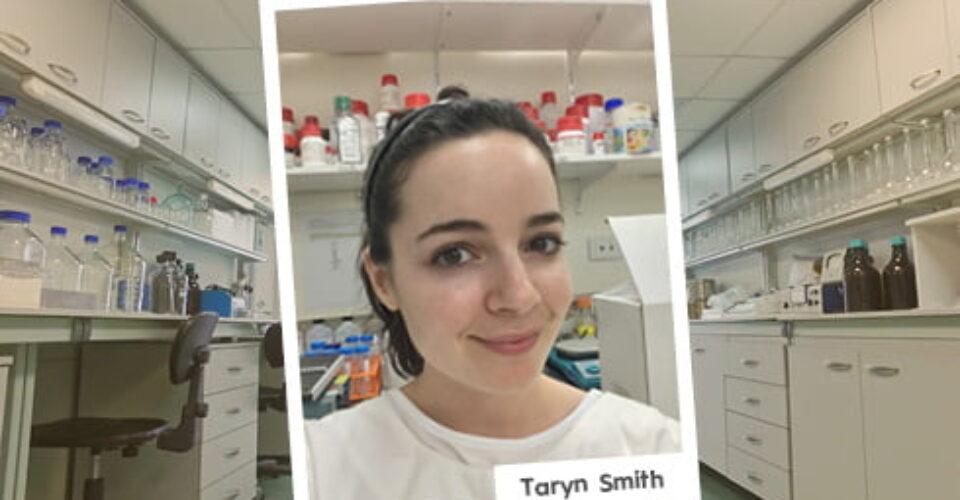
In the spirit of giving back, Empire Industrial Estate have decided to champion the research funding of Taryn Smith’s project into developing a suture-less cannula for artificial heart pumps.

When people are suffering from end-stage heart failure, their only options are to receive a heart transplant or to have an artificial heart pump inserted.

Due to the shortage of suitable organs in Australia, the waiting time for a new heart can take anywhere between a few weeks to a few years. While patients in need of a new heart wait, many rely on a technology called a ventricular assist device (VAD), which helps to keep the heart working until a suitable donor becomes available. It is essentially a small, implantable pump that keeps blood flowing throughout the body.

While life-saving, this technology still comes with its complications. A critical component of VAD function is the connection between the patient and the device, known as the inflow cannula (see picture).

The inflow cannula connects the ventricular assist device to the patient’s body

Our researchers, including Taryn, are currently working on an innovative suture less cannula, with the goal of easily connecting a VAD to the heart and reducing the hour-long surgery to just a few minutes. Reduced surgery time means a lower chance of life-threating complications and a much safer surgery.

Taryn is working on a project to optimise the integration of the suture-less cannula into the heart using 3D printing technology and tissue scaffolding.  Essentially, a 3D printed mesh will form a frame for the patient’s own tissue to grow on around the cannula entry point into the heart.  It is hoped that this natural tissue lining will reduce infections and risk of stroke, and integrate smoothly with the patient’s body.

With a lower chance of having life-threatening complications after surgery, Taryn’s research could improve the lives of the thousands of patients.

Support The Common Good here
Published: July 24, 2019

Related news & events

Meet the 2025 PhD Recipients

Research Grants

Meet the 2025 PhD Recipients

The Prince Charles Hospital Foundation was pleased to award six PhD Scholarships in 2025. Click here to meet the recipients.

Find out more

Professor Gregory Scalia AM

Researcher Stories

Professor Gregory Scalia AM

Professor Gregory Scalia AMProfessor Gregory Scalia AM first stepped into The Prince Charles Hospital as a registrar in the early 90s. Now, as the hospital’s long-standing Director of Echocardiography, he has dedicated most of his career to ensuring that complex cardiac diagnoses are accessible to a much larger portion of the population through echocardiography

Find out more

Meet the 2025 Research Fellowship Recipients

Research Grants

Meet the 2025 Research Fellowship Recipients

In this blog, we introduce you to our 2025 Research Fellowship recipients and share insights into their work and why their investigations are so important.

Find out more

Key Indicators of Cognitive Impairment in Patients with Obstructive Sleep Apnoea

Ageing

Key Indicators of Cognitive Impairment in Patients with Obstructive Sleep Apnoea

“There’s emerging evidence that links poor sleep to the development of dementia – particularly Alzheimer’s disease,” said Dr Irene Szollosi.

Find out more

Carl Francia, PhD candidate

Researcher Stories

Carl Francia, PhD candidate

PhD candidate Carl Francia first observed the disproportionate impact of Acute Rheumatic Fever and RHD on Indigenous Australians while working as a physiotherapist in 2022.

Find out more

TPCH Researcher of the Year 2024, Dr Ieuan Evans

Researcher Stories

TPCH Researcher of the Year 2024, Dr Ieuan Evans

TPCH Researcher of the Year 2024, Dr Ieuan Evans, is working to develop a Therapeutic Drug Monitoring (TDM) program specifically for Trikafta.

Find out more

Enhancing patient recovery with Memory Lane 

Ageing

Enhancing patient recovery with Memory Lane 

The hospital’s Occupational Therapy department enlisted the help of some fourth-year UQ students to complete a joint project aimed at promoting Memory Lane and gathering feedback on its usage.

Find out more

Jacarandas and The Prince Charles Hospital

The Common Good

Jacarandas and The Prince Charles Hospital

Over the past several decades on The Prince Charles Hospital’s campus, Jacaranda trees have offered shade and shelter from the elements, as well as a beautiful spot for people to gather outside the clinical environments.

Find out more

The Prince Charles Hospital’s 2025 Giving Day

The Common Good

The Prince Charles Hospital’s 2025 Giving Day

Over $162,000 was raised for The Prince Charles Hospital at our fifth annual Giving Day, thanks to our special community.

Find out more