
Rhys Hoole
The Prince Charles Hospital’s 500th heart transplant recipient

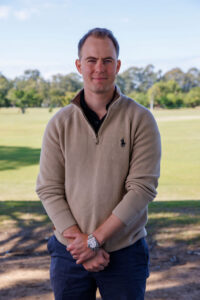 Rhys Hoole received the precious gift of a second chance at life in 2024 in the form of a donor’s heart. The now 26-year-old was the 500th heart transplant recipient at The Prince Charles Hospital. Prior to his transplant, his heart failed and left him fighting for life in the Intensive Care Unit for 80 days. Rhys and his family say he would not be alive today if it weren’t for medical advancements made possible through research and the wonderful care they received at the hospital.
The 15th of March 2022 was a day Sharon and Matt Hoole, the parents of Rhys, will never forget.
“My husband and I were out walking our dog on the day of his cardiac arrest. We were just past Stafford Tavern, actually, and my phone rang a couple of times, and I didn’t pick it up because I didn’t know the phone number that was calling me. In the end, the same number rang my husband. He answered, and it was someone from Rhys’ work saying that Rhys had collapsed on the footy field and they’d been working on him for 25 minutes,” his mother, Sharon, recalled.
Rhys was just 23 at the time.
“I think it’s every parent’s worst nightmare to get a call to say your child is in cardiac arrest… At that moment, we went into immediate panic, and fortunately, his boss from work came and picked us up because we didn’t have a car. He drove us to the PA Hospital, and when we arrived, they were still working on him. It was 55 minutes by then,” said Sharon.
While the day and the details of it are etched into Sharon and Matt’s memory, Rhys has a very limited recollection of what happened.
“I vaguely remember going off to football, but that was about it, and then the next thing I sort of remember is I’m up at the Princess Alexandra Hospital in the ICU and just waking up very confused. And yeah, then mum and dad spent the next couple of hours really trying to tell me what had happened, but it took a while to process. I thought I might have been in a car accident or anything really on the way there … and then to find out I’d had the cardiac arrest was a bit of a shock,” said Rhys.
The trajectory of Rhys’ life was changed at such a young age in a way that no one could ever plan for.
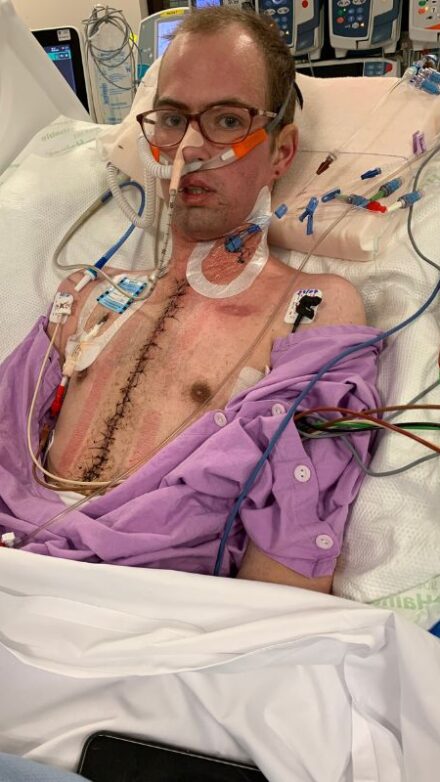 “We were thinking we’d lost him, and if we hadn’t lost him, that he may have some brain damage because he’d been in cardiac arrest for so long anyway. But by some miracle, they managed to revive him, and he was in the ICU for two nights there and then continued to recover from the cardiac arrest. Eventually, he had a defibrillator put into his chest because his heart was badly damaged at that point and he was at risk of further cardiac arrest,” said Sharon.
Rhys was in the hospital for another three weeks before returning home. He eventually went back to work for the remainder of 2022 and continued to work through 2023.
However, he was gradually becoming more tired and feeling more unwell as time went on because his heart failure was worsening.
“It was the second half of 2023 that I started to feel unwell. I had a couple of bouts of sickness back-to-back. I only live a couple of minutes down the road from The Prince Charles Hospital, so I made the decision to admit myself up there and get treatment through the hospital. That’s when I started to learn that my heart was deteriorating further. Plans were put in place towards the latter part of that year to try and do a transplant workup,” said Rhys.
“I always figured that it was probably going to end in a heart transplant at some point, but I didn’t know how long that was going to be, whether it was going to be a year, five years, ten years. In the end, it all happened pretty quickly when I got sick. I remember admitting myself in February 2024.
“I was feeling really unwell towards the end of that night and knew I needed some pretty urgent treatment. I remember spending time in the emergency department, then in the Coronary Care Unit (CCU) for a couple of weeks. When I started to get really sick in the CCU, that’s when the memory started to become sort of minimal from that point onwards.”
Rhys’ mother recalled, “He ended up in ICU about two weeks after he was initially admitted, and then yeah, the journey from there was incredibly scary.”
All the doctors and all the support staff – everyone up at the hospital plays such an important role. There really are so many people who played a massive role in my journey and in my recovery, and just want to say thank you to everyone.
– Rhys Hoole
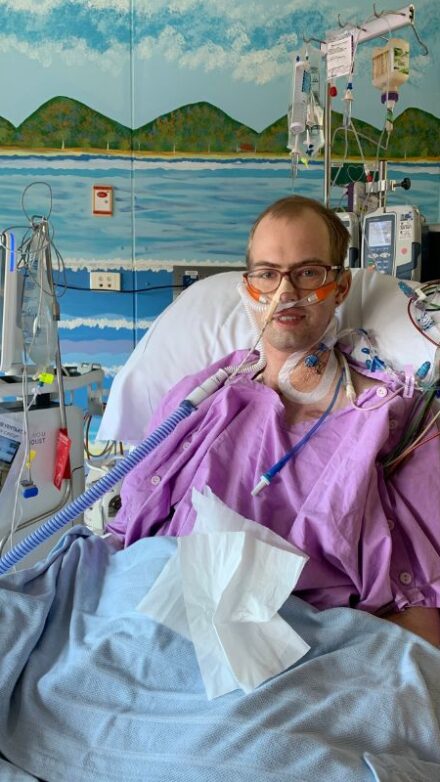 Rhys spent 80 days in the ICU.
During that time, he received a Left Ventricular Assist Device (LVAD) as a bridge to transplant.
He had his chest opened several times, was placed on intermittent dialysis, experienced sepsis, had a Right Ventricular Assist Device inserted, and was urgently listed for transplant a number of times.
Eventually, he did receive a stranger’s life-saving gift of a new heart. “The hospital staff were fantastic right from the start. The care has been amazing, the doctors and the support staff, the physiotherapists, therapists, right through have been really, really important, helping my recovery through ICU. Even before the transplant went ahead, getting ready to go, the treatment right through was amazing,” Rhys explained.
Sharon said, “Initially, when he came out of the hospital after the cardiac arrest in 2023, they said when people go into heart failure, a third get worse, a third stay the same, and a third get better. So, we went away hoping he’d be in the third that got better.
Unfortunately, he was in the third that got worse. However, having the defibrillator in did give us a little bit of peace of mind in that because his heart was scarred, he was at risk of going into a rhythm that they couldn’t get him out of again…I must admit, I used to go down and check on him every morning to make sure he was still breathing. I think I carried that with me for a long time. I’ve only just started to get to the point now where I can kind of breathe and think he’s going to wake up in the morning. So that was difficult.”
Rhys’ family have endless praise for the people who cared for him at The Prince Charles Hospital.
“The nurses and the doctors and the physios, the nutritionists, everyone, they are an incredible team of people. They work together so unbelievably well. I couldn’t fault the care that Rhys received. They treated him like they were his own. They never gave up on him, which there were times when I thought they were within their right to give up on him because he was so, so unwell… They were amazing, and they treated us like family, and they supported us through what were really terrible times. We’ve been back several times and seen them. Rhys quite regularly visits because he’s doing physio still to this day. And so, he pops up to the ICU and often goes and says hello to the staff.
“They absolutely love seeing him come in and see how well he’s doing because they often don’t get to see the results of their amazing work. So, to see someone come back in and be so well after being so sick, I think, is a great lift for them and really good motivation to keep doing what they’re doing every day.”
During Rhys’ stay, Sharon and Matt would also regularly visit The Café for The Common Good, receiving words of comfort and support from café staff who knew the journey the family was facing.
“I would just like to say thank you to everyone,” says Rhys.
Rhys is a firsthand recipient of incredible care as well as medical breakthroughs, only possible because of research.
“Research is vital. I mean, he had pretty much every machine known to man during his stay in the ICU … he was on ECMO, and he had an LVAD put in. There was so much involved in his care, and without the research that happens behind the scenes, that equipment would not be available, and he would not be alive today,” his mum, Sharon, said.
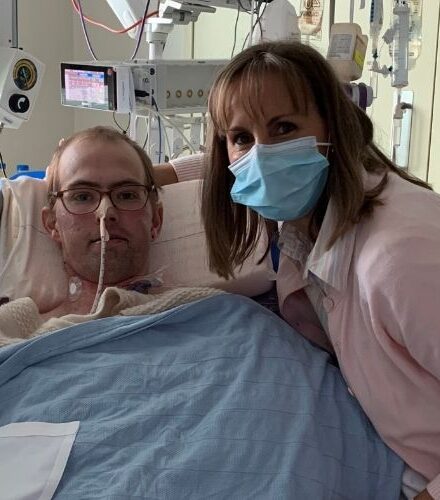 Rhys and his family are incredibly grateful for the research of the past that has given him more days with the people he loves.
“You know, the research, it’s behind every piece of machinery and every new surgical technique …There were so many times when research saved my life and as it gets better over time, it’ll go on to save even more. It’s not just saving lives, it’s helping people create memories and get back to living a full life. The impact research will have in the future is enormous,” Rhys said.
“I’d say to anyone thinking about donating to research – absolutely do it.”
Aligning with the hospital’s focus of cardiothoracic services, since the Foundation’s inception in 1986, heart-related research has been a main priority, with 44% of research supported in 2025 focusing on heart.
“For 40 years, the generosity of this community has made extraordinary heart research possible. So many people give because they’ve lived through heart disease themselves, and their support has created real hope for others,” said Chloe Nguyen, the Foundation’s Chief Communications and Philanthropy Officer.
“This research has changed what’s possible – from developing treatments for heart failure, to helping more donor hearts become viable, to bringing genetic counselling into everyday cardiology care. These are breakthroughs that start with philanthropy.”
Research and remarkable patient care have kept this family together, and it means an incredible young man has more days to do the things he loves with the people he loves.
“All the doctors and all the support staff – everyone up at the hospital plays such an important role. There really are so many people who played a massive role in my journey and in my recovery, and just want to say thank you to everyone.”
Rhys is one of the Foundation’s inaugural Community Ambassadors, so he can give back and inspire the community through his lived experience.
“People like Rhys remind us why this work matters. If we want more families to have stories like his, we have to keep backing this life-saving research for the next 40 years and beyond,” said Chloe.
Powering today, reinventing tomorrow – your support contributes to life-changing research and patient care initiatives. Donate today and help people live healthier for longer for the next 40 years and beyond.