
The Morton Family
On the establishment of The Prince Charles Hospital Foundation

 The Prince Charles Hospital Foundation was established on 20 November 1986 under the then-relevant legislation (the Hospital Foundations Act (1982), and over the past four decades, it has contributed to breakthroughs that have changed medical practice and treatment for the better, saving and improving countless lives.
Every single person who has been a part of this journey so far should be incredibly proud of what’s been achieved and excited about what is to come. The founding purpose was to raise funds to support the public hospital, The Prince Charles Hospital (TPCH), located at Chermside, Queensland, enabling medical research, equipment, and patient care improvements beyond what public funding alone could provide.
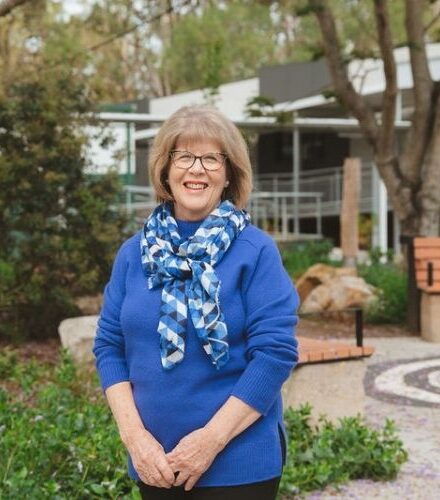
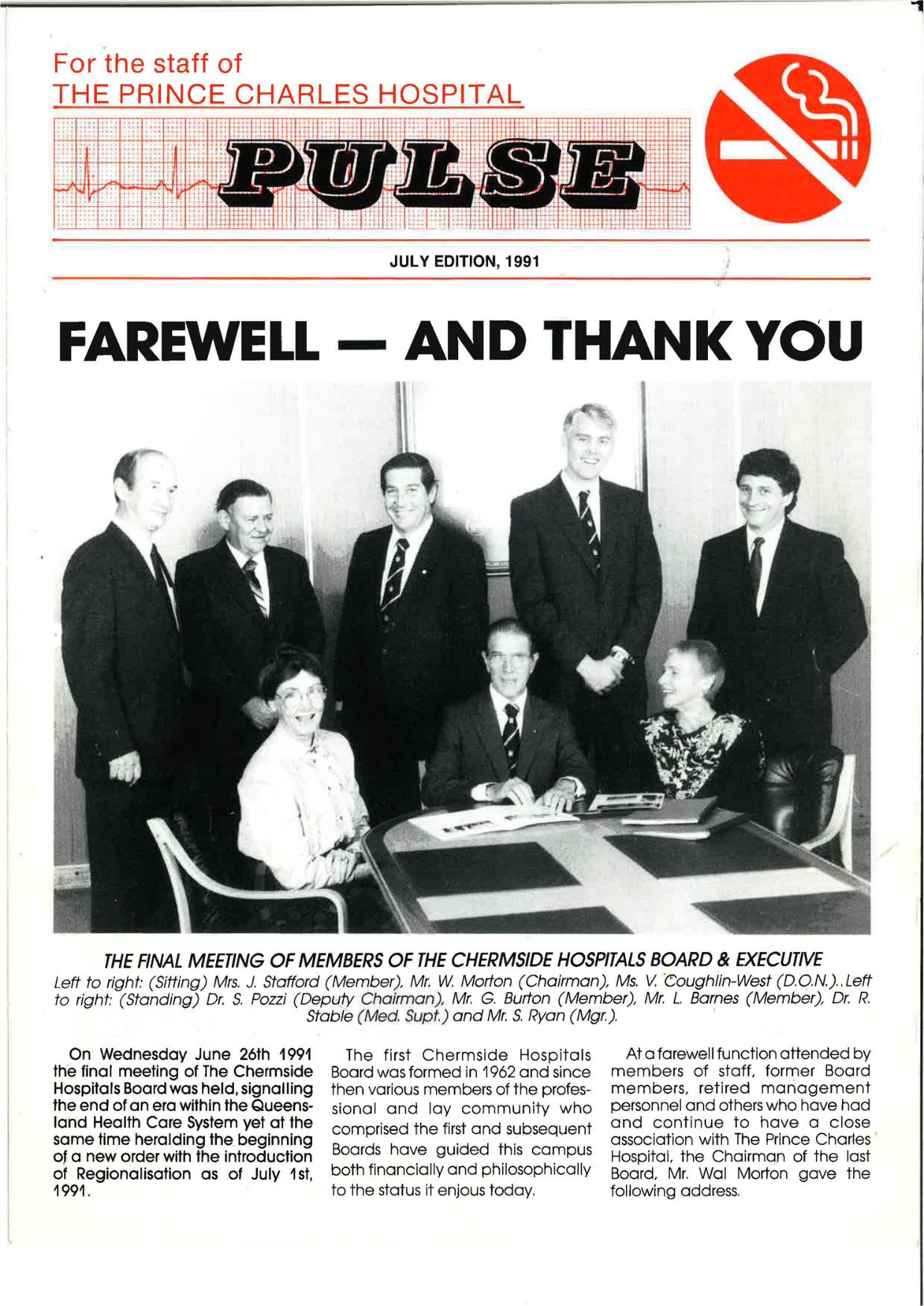
But how did this all begin? Margie Morton, Unit Manager of the Internal Medicine and Dementia Research Unit at The Prince Charles Hospital, has a very special family connection to the Foundation and its history.
She recently shared more about how the Foundation came to be and the hopes of the visionary leaders who established it for the common good.
I was in my 20s and working as a Registered Nurse at the Royal Brisbane Hospital. Dad was President of the Real Estate Institute of Queensland and President of the Chermside Rotary Club. He was asked if he would consider serving as Chairman of The Prince Charles Hospital board, which he did for 9 years until the Board was replaced. There were a number of prominent cardiac surgeons, thoracic surgeons, and medical staff working at the hospital, which was initially known as the “Chermside Chest Hospital”. They were very keen to undertake more complicated heart surgery and heart transplants. There was an early visit with Dr Christiaan Barnard, who did the first heart transplant in the world. He visited the hospital, worked with the medical staff and spoke to Dad and the board regarding future development in cardiology and research. He advised them to build the hospital as a “Centre of Cardiac Excellence and Research.”
Dad said Dr Barnard discussed the need for research to support the visions and the work undertaken by hospital staff, and the need to generate public funding to enable them to do so. The Board agreed to establish a research foundation with the aim of attracting public funding and supporting research and development.
Margie says her dad really made it his mission to establish the Foundation before he finished his term as chairman of the hospital’s board.
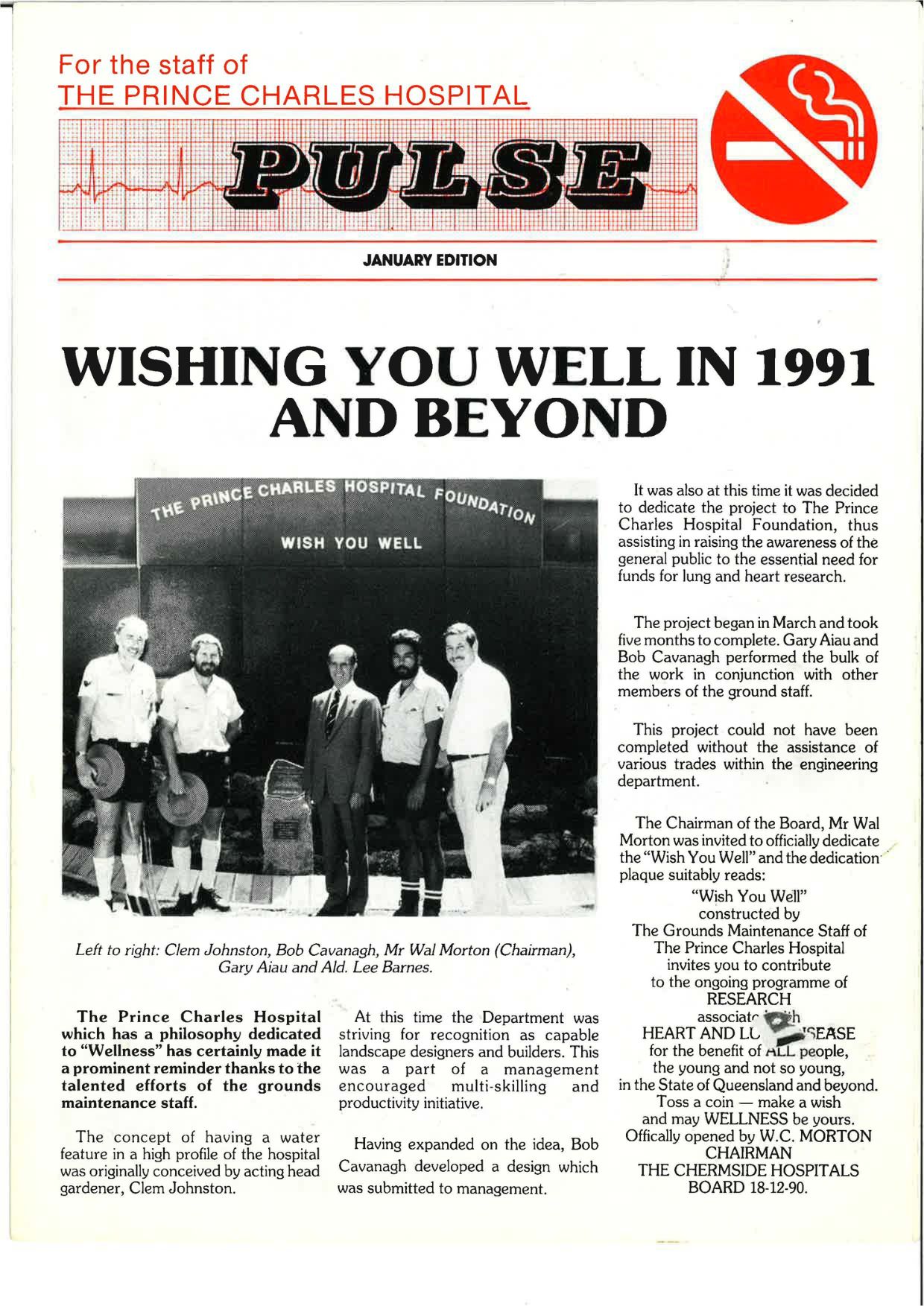
 Dad, who was an avid gardener, together with the hospital carpenters and gardeners, decided to design and construct a water feature in front of the hospital. It was called the “Wish you Well”, and you could toss coins into the pond and make a wish for the wellness of the patients. This began raising money for the establishment of the foundation. This project started the drive of fundraising, which my Mum and my siblings also became involved with. Mum and Dad were such soulmates, and whenever Dad needed her, she was there helping him and vice versa.
The medical staff were also doing a lot of fundraising themselves, some of whom formed the first members of the “Hospital Research Foundation”. They were the earliest volunteers and would have cake stalls, sweet stalls, fashion parades, and even an annual car wash at the back of the hospital. We also had an “annual staff concert” fondly called “Charlie’s Chuckles” with proceeds going to support the foundation. Each year, there was an “Open Day” for the public with talks and stalls to encourage support of the work undertaken at the hospital. It was this public awareness and public funding that were the building blocks of the Research Foundation.
It was not until Dad had passed away that I was told he had donated the stipends he received each year as “Chairman of the Board” to the foundation to help build it. So, obviously, it was of great importance to him to see the foundation develop.
I think everyone who has received benefits from the great work of the Foundation today would feel exactly the same way. And that was the aim of this early foundation, to attract funds for sufficient research to save lives and to support the medical, nursing and allied health staff, in all they do.
 Margie recalls that the board did change over to a regional authority, and it was around the same time that the hospital was removing some Jacaranda trees to make way for the demolition of Jacaranda Village, the former on-site aged care facility, to build the Cognitive Assessment and Management (CAM) Unit and neighbouring buildings.
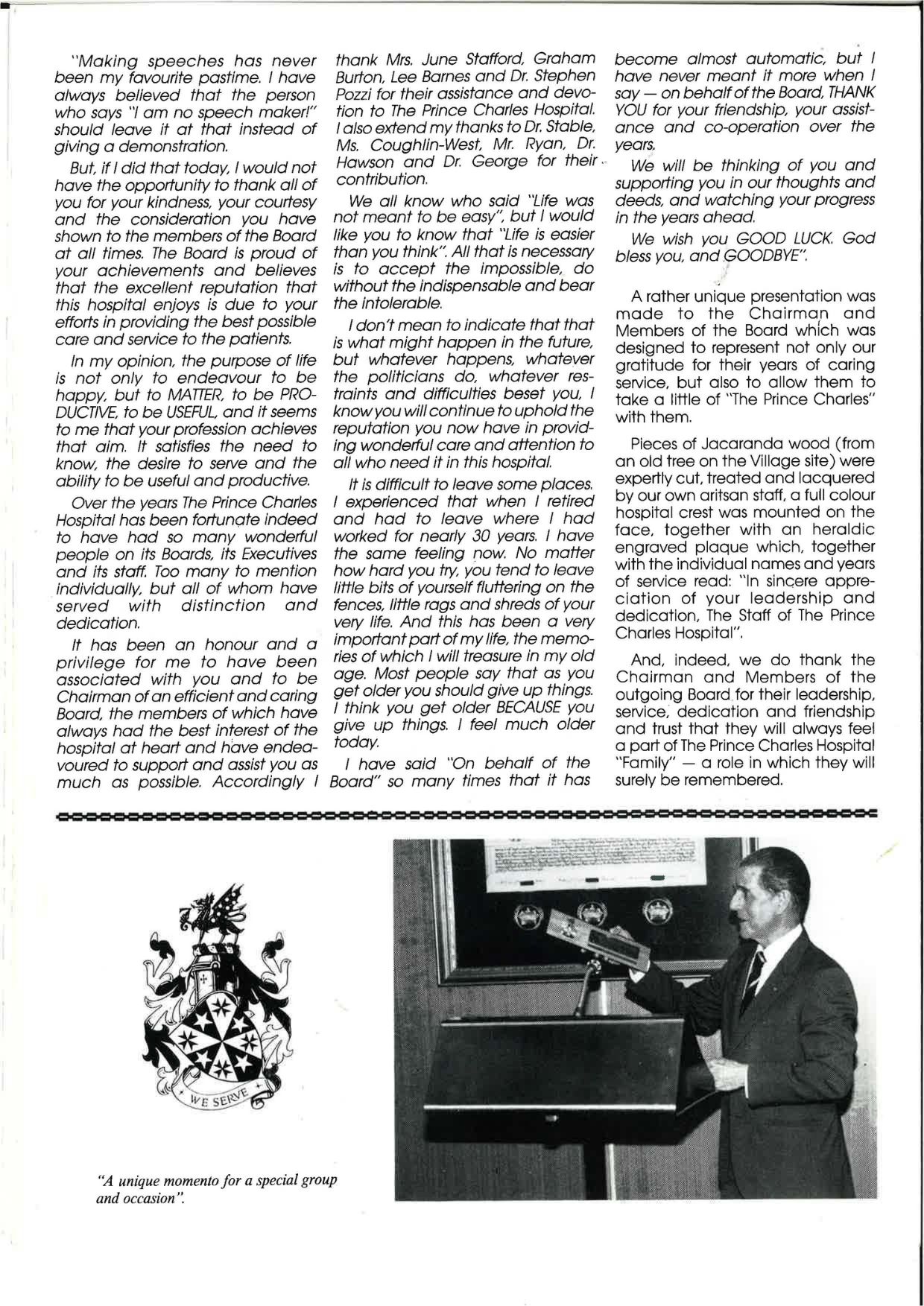
Following the removal of those special trees, a cherished keepsake was created for those on the original hospital board.
Jacaranda Village was located where the Cognitive Assessment and Management (CAM) Unit, Palliative Care Unit and Mental Health unit are now situated. There are a couple of the original Jacarandas at the back of the mental health unit as you walk past the Helipad, but they were once dotted all around the village, and each November, when in full bloom, they were truly a magnificent sight. The road, alongside the village, was called Jacaranda Drive, and it is still there today.
The carpenters and the groundsmen worked together to save the wood from the trees that were taken down and decided to make a memento for each board member. On the last day of the final Hospital Board Meeting, each member was presented with a piece of polished jacaranda wood with an engraved plaque. It was a truly beautiful gift.
Each piece of polished wood had the crest of the hospital placed on it with the TPCH motto, ‘We Serve,’ and a little note attached, explaining it was Jacaranda Wood from a tree on the village site. The gardeners collected the wood, and the carpenters assembled and polished the momento.
I think everyone who has received benefits from the great work of the Foundation today would feel exactly the same way. And that was the aim of this early foundation, to attract funds for sufficient research to save lives and to support the medical, nursing and allied health staff, in all they do.
– Margie Morton
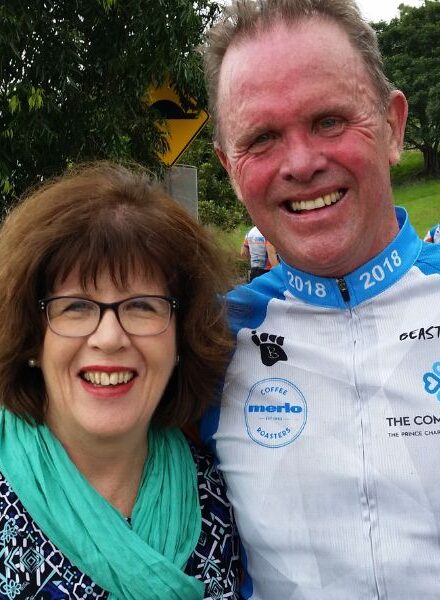 Margie Morton is now Unit Manager of the Internal Medicine and Dementia Research Unit at The Prince Charles Hospital, and her love for caring for the elderly began right here at the hospital decades ago.
I was working at the Royal Brisbane Hospital ED and loved it. However, I really wanted to work at TPCH. I applied for a position and was fortunate to work in ICU 3 for a while, as well as in the emergency department. However, my passion was caring for the elderly. When a position became available, I applied to work in Jacaranda Village, and worked in Wards 26 and 27 East, and loved it. I worked as a Clinical Nurse in the GAT ( now ACAT) before moving to the Rehab Unit. From there, I was invited to work in undertaking Clinical Trials in Geriatric Research and have now worked in the Internal Medicine & Dementia Research Unit for 24 years, which has been such a privilege. Research involves such a combination of unique challenges, but it can also have a potentially profound and positive impact for individuals and their families.
The compassion for others and the enhancement of care through research are of paramount importance for each member of the Morton family.
I think that is why history is important, as it is often those people who have laid the foundation who inspire us to do the same for our future generations. Dad and Mum taught each of us that we can contribute to making the world a better place in whatever we do, and they were both great examples of this.
What has been achieved in the past 40 years is only possible thanks to our remarkable community of supporters. And these days, the Foundation’s impact extends far beyond its Chermside origins.
In a significant honour to reflect the collective impact, The Prince Charles Hospital Foundation was recognised as the 2024 Queensland Gives Philanthropic Foundation of the Year.
Powering today, reinventing tomorrow – your support contributes to life-changing research and patient care initiatives. Donate today and help people live healthier for longer for the next 40 years and beyond.