
Thuy Frakking
Adjunct Associate Professor
Listening for the smallest signs

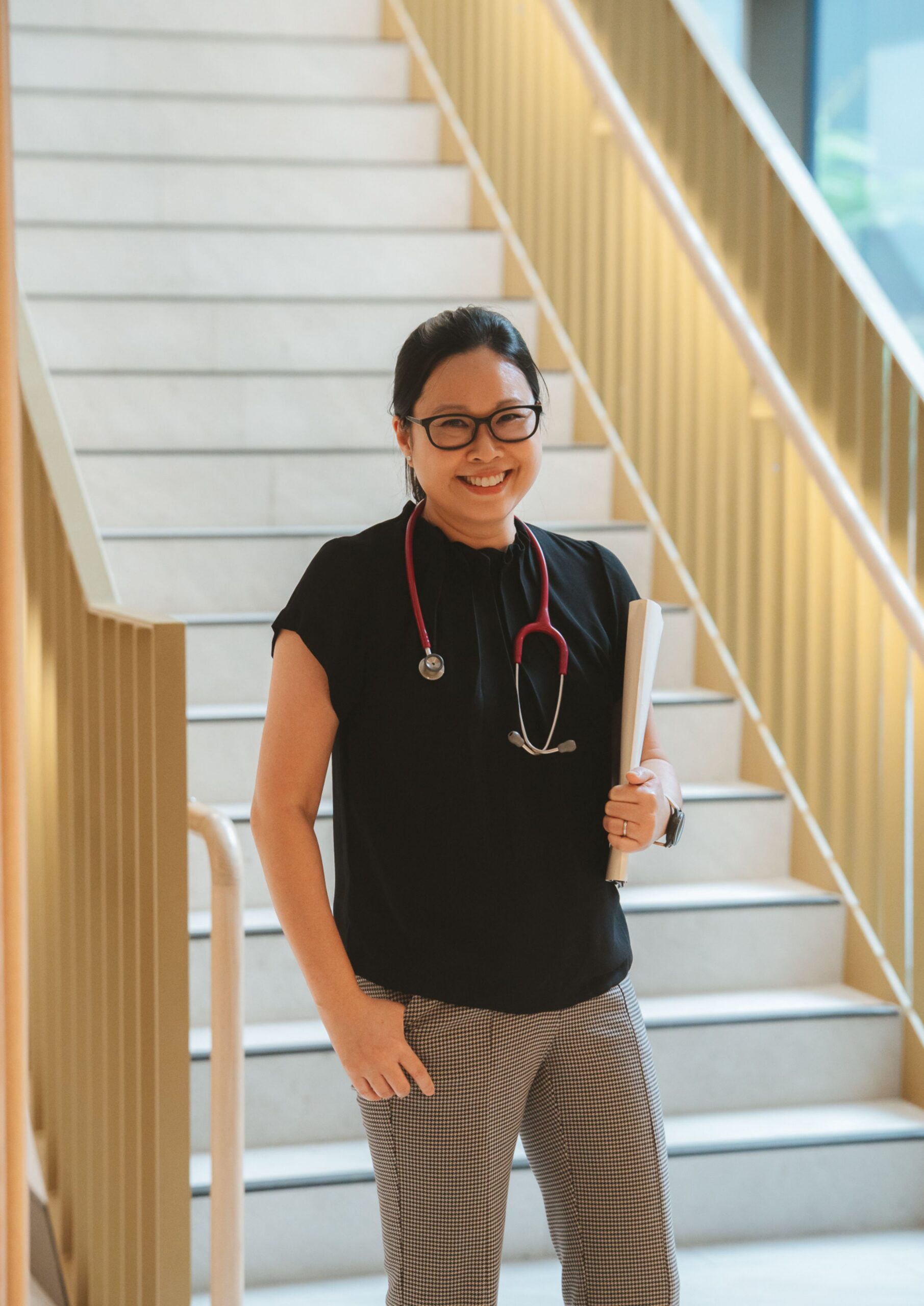 For Adjunct Associate Professor Thuy Frakking, some of the most powerful breakthroughs begin not with what can be seen — but with what can be heard.
Working in paediatric infectious diseases and respiratory care, Thuy has spent years supporting families whose children struggle silently with swallowing impairment. For premature babies and infants, even a slight disruption to the swallowing process can cause aspiration – when food or fluid enters the airway rather than the oesophagus. The consequences can be serious: repeated chest infections, chronic lung disease, poor growth, and long-term developmental challenges.
Yet the signs of aspiration are often subtle, easily missed, and difficult to diagnose quickly. For many families, this leads to unplanned presentations to emergency departments for short-term tube feeding, or ongoing reliance on specialist paediatric speech pathologists for long-term management. Thuy saw the toll this uncertainty placed on children, families, and clinicians. She believed there had to be a better way – one that put safety, accessibility, and early detection at the forefront.
The SUPERB Study: creating a better way to listen
Supported in part through a Caboolture Kilcoy Woodford research grant from The Prince Charles Hospital Foundation in 2022, Thuy led the Swallowing Sounds in Premature Babies (SUPERB) Study. The project set out to answer a deceptively simple question: Could we detect swallowing impairment in a non-invasive, repeatable, and more accessible way, just by analysing sound?
Functional swallowing skills are essential for infant feeding, growth, and development. But infants with medical or neurological complexities experience a high incidence of swallowing impairment. Traditional diagnosis relies on X-ray swallow assessments, which not only expose infants to ionising radiation but are difficult to repeat and depend on highly specialised equipment and personnel.
The SUPERB Study changed that.
“As a clinician, I was frustrated that our babies and children had to wait for an X-ray swallow to assess for swallowing impairment and aspiration. This procedure involves radiation, and the environment may not be reflective of their mealtimes, so there were many tears and refusals during clinic! I went into research to see if I could find better, more convenient ways of assessing for aspiration. I wanted to see if we can do better,” Thuy says.
In fewer than five years, Thuy and a multidisciplinary team of clinicians, engineers and academics harnessed modern machine learning, including deep learning, to develop world-first algorithms capable of analysing swallowing sounds and accurately detecting aspiration in infants and children.
This groundbreaking approach offers a gentle, non-invasive, and repeatable way to monitor feeding, providing clinicians and families with clearer, earlier insights into a child’s health.
“The algorithms can accurately detect 94% of preterm swallows and 81% of aspirating swallows,”Thuy says.
What could this breakthrough mean for families? The SUPERB Study has already delivered promising outcomes and future possibilities include:
- A non-invasive, radiation-free method to assess swallowing impairment
- Repeatable assessments, allowing clinicians to track feeding changes safely over time
- Reduced need for specialist imaging and equipment, lowering healthcare costs and easing pressure on regional hospitals
- Better guidance for mothers, including clearer advice about whether bottle feeding may be safer if challenges arise during breastfeeding
- Potential global application, once validated in larger studies – offering benefits far beyond Caboolture and Australia
A patent protection application has now been submitted, acknowledging co-invention across Metro North Health and Griffith University. This is an important step in bringing this innovation into routine clinical use.
“Our team have a provisional patent for the algorithms developed. As a researcher, we are always looking for more funding to support next steps, which in our case involves embedding our foundational algorithms into a digital swallow sounds app that caregivers and healthcare professionals can use,” Thuy says.
But for Thuy, the true measure of success lies in the lives it could change.
It’s about giving children the best possible chance. If we can prevent aspiration early, we can prevent lifelong consequences. That’s what drives me.
– Thuy Frakking
The Foundation’s role in bringing research like this to life
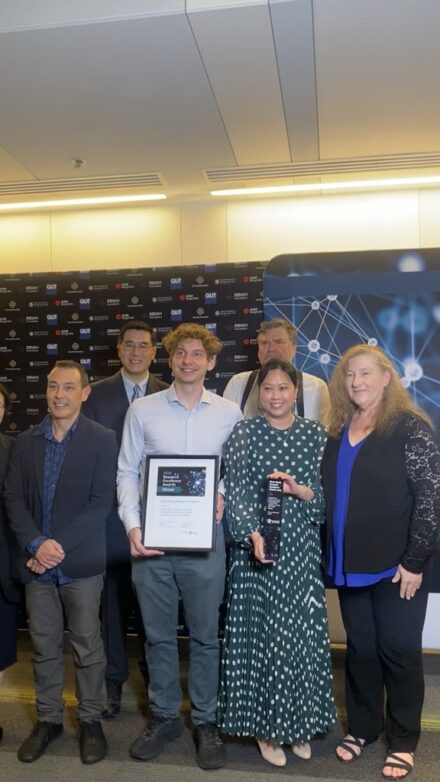 At The Prince Charles Hospital Foundation, supporting researchers who are improving health outcomes, here at home and across the globe, is a privilege we do not take lightly.
Each year, the Foundation invests in ideas that challenge assumptions, uplift communities, and push the boundaries of what is possible in health.
The SUPERB Study is one of those projects.
By funding early-stage innovation, especially in growing regions like Caboolture, the Foundation enables researchers like Thuy to explore new ideas, develop new tools and create long-term change – one small sound at a time.
Celebrating women and girls in science
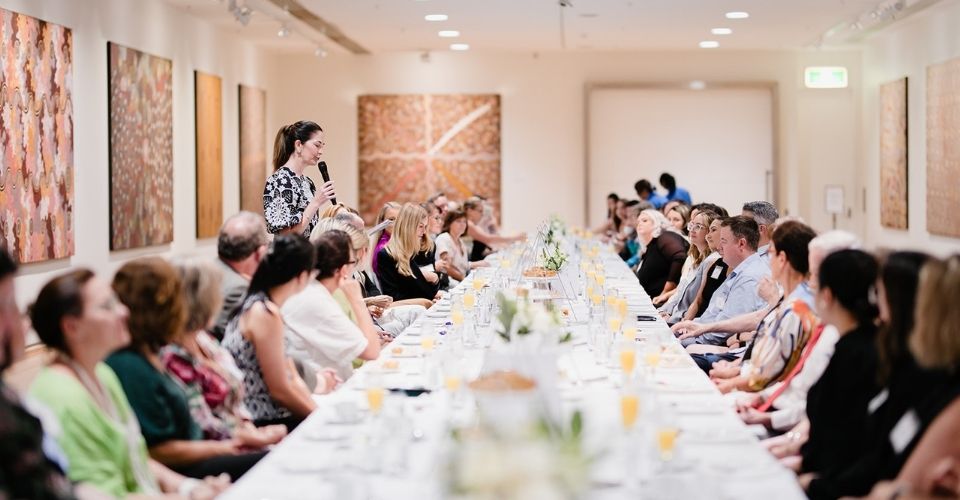
We mark the International Day of Women and Girls in Science on February 11 each year. And on this day, and every other day, we are proud to support dozens of female researchers who are as dedicated and talented as Thuy.
Of 194 research grants funded by the Foundation over the last 5 years, 95 were awarded to a female researcher (49%). During the calendar year of 2025, the Foundation funded 41 research grants. Of those, 20 were awarded to a female researcher (49%).
Thuy’s work stands as a powerful reminder of how compassion, curiosity and courage can reshape the future of healthcare. Her research not only advances paediatric care – it reflects the heart of what The Prince Charles Hospital Foundation stands for: helping people live healthier for longer.
With every breakthrough, with every infant helped and with every mother given clarity and confidence, Thuy is helping the world listen more closely to the smallest signs – and respond sooner to protect the most vulnerable among us.
Powering today, reinventing tomorrow – your support contributes to life-changing research and patient care initiatives. Donate today and help people live healthier for longer for the next 40 years and beyond.